Exploring the Course in Front of Cheongwadae
4 stops · 5 hours
The stone-wall path in front of Cheongwadae is an antique stone-wall walkway near Seoul's royal palaces, making it a wonderful path to stroll in autumn. Spending a day looking around the National Folk Museum of Korea near Gyeongbokgung Palace and the Site of Empress Myeongseong's Assassination to reflect upon our country once again, as well as appreciating and enjoying the artistic works of artists at the newly modernized Palais de Seoul, will give you much to think about. Source: Walking along Hanyangdoseong Following Stories
- Duration
- 5 hours
- Distance
- 4.98km
Along the way
- 1Gwanghwamun Gate
광화문
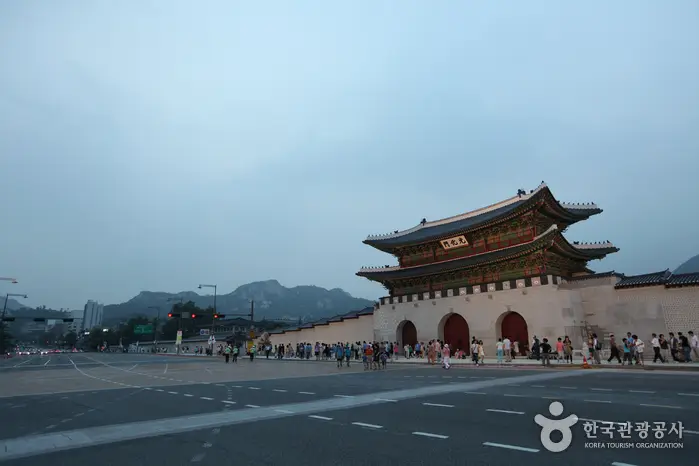
Gwanghwamun Gate is the south gate and the main gate of Gyeongbokgung Palace. While it served as the main entrance through which the king passed, it was also exceptionally grand and magnificent in scale and formality compared to the main gates of other palaces, as it was the main gate of Gyeongbokgung, the main legal palace of the Joseon Dynasty. In addition, Gwanghwamun was the only gate among the Five Grand Palaces of Joseon to possess a palace gate format with Dongsipjagak (East Watchtower) and Seosipjagak (West Watchtower) situated at the eastern and western ends of the wall, respectively. MoreLess
- 2
Site of Empress Myeongseong's Assassination
명성황후 조난지
This is the site where Empress Myeongseong, the consort of Emperor Gojong of Joseon, was brutally assassinated by the Japanese. After the Sino-Japanese War ended, when Empress Myeongseong rejected Japanese influence, Japanese Minister Miura led an operation on October 8, 1895 (August 20 by the lunar calendar, 32nd year of King Gojong's reign), in which Japanese intruders broke into Gyeongbokgung Palace and harmed many court ladies and Empress Myeongseong. This is the so-called Eulmi Incident. MoreLess
- 3The Street in front of Cheongwadae (The Blue House)
청와대 앞길
Opened to the public with the inauguration of the civilian government, the street in front of Cheongwadae extends from Hyoja Intersection in Hyoja-dong to Palpan Intersection in Palpan-dong. Following Hyojaro from Gyeongbokgung Subway Station to Hyoja Intersection, there are sites such as Hyoja Sarangbang, a fountain, Mugunghwa Dongsan, Yeonmugwan, Daegogak, and Yeongbingwan (State Guest House). MoreLess
- 4National Folk Museum of Korea
국립민속박물관
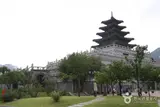
The National Folk Museum of Korea, located inside Gyeongbokgung Palace, is the nation's only national comprehensive museum on folk life history displaying about 4,000 folk relics related to traditional Korean lifestyles. Through research, collection, and preservation of folk culture, as well as cultural education and exhibitions of everyday culture, it serves as a site of cultural education that fosters national pride through a proper understanding of traditional culture, and as a cultural hall harmonizing tradition and modernity. It features three permanent exhibition halls and two special exhibition halls, along with facilities such as an archive and museum shop, and offers opportunities to participate in various cultural education programs and events. MoreLess
Source: Korea Tourism Organization (TourAPI) · Machine-translated