Walking Through Seoul's Historical Center
5 stops · 3 hours
Walking along the Seoul City Wall, you will come across Inwangsa Temple, an old temple located at the foot of Inwangsan Mountain. After visiting Inwangsa Temple, continue along Jeongdong-gil. Jeongdong-gil always offers a pleasant, scenic view that is perfect for a walk. Visit the Former Russian Legation and the Ryu Gwan-sun Memorial Hall, both steeped in modern history, and remember the hardships of the late Joseon period. Source: Walking along the Hanyang City Wall with Stories.
- Duration
- 3 hours
- Distance
- 4km
Along the way
- 1
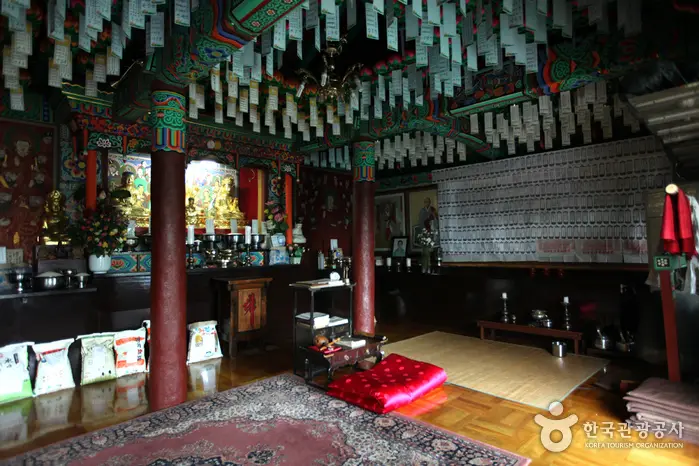
Inwangsa Temple (Seoul)
인왕사(서울)
Inwangsa Temple (仁旺寺) is a traditional temple located at the foot of Inwangsan Mountain in Muak-dong, Jongno-gu, Seoul. The path along the fortress wall winds through pine forests offering occasional glimpses of the cityscape of tall buildings before meeting a road leading into the secular world. Gazing at Inwangsan Mountain leaning against the fortress wall evokes a warm, familiar feeling akin to Jeong Seon's painting Inwang jesaekdo. It is the mountain closest to and most easily accessible from central Seoul. On its mid-slope stand Seonbawi Rock, rich with symbols of childbearing prayers and indigenous folk beliefs, and Inwangsa Temple, a sacred place of national protection. MoreLess
- 2
Former Russian Legation, Seoul
서울 구 러시아공사관
The Russian Legation began construction immediately after the ratification of the Joseon-Russia Treaty of Amity and Commerce in 1885 and was completed in 1890. It is an elegant two-story Renaissance-style brick building said to have been designed by the Russian architect Sabatin. The area where the legation was built was one of three horse pastures established by King Yeonsangun for convenient leisure trips outside the fortress walls. It is said that King Gojong positioned the Russian Legation adjacent to Deoksugung Palace, along with the American and British consulates, to keep Japan in check. The Russian Legation is called Agwan (俄館), a name well known to Koreans through the Agwan Pacheon (King Gojong's refuge at the Russian Legation) incident. MoreLess
- 3
Lunch (Korea Samgyetang)
점심식사(고려삼계탕)
Korea Samgyetang is a restaurant specializing exclusively in samgyetang (ginseng chicken soup) for over 40 years since opening at its current location in Seosomun-dong in 1960, and is now run by the second generation as a family business. As a hallmark of 'samgyetang' boasting a long history and tradition, Korea Samgyetang is well known among tourists from the United States, Japan, Southeast Asia, Taiwan, and beyond. MoreLess
- 4
Seoul Jeongdong First Methodist Church
서울 정동교회
Jeongdong Church is the first church established in Korea after Protestantism was introduced. In 1885, American Methodist missionary Appenzeller arrived in Korea and founded Baejae Haktang, initiating modern education in Korea. Although he held religious activities at the school, he purchased a building exclusively for worship, named it Bethel Chapel, and held the first service in 1887. As the congregation grew, a church building capable of accommodating about 500 people became necessary. Construction began in 1895, and a dedication service was held on December 26, 1897. This building is the only surviving 19th-century church building to this day. MoreLess
- 5
Ryu Gwan-sun Memorial Hall (Seoul)
유관순기념관(서울)
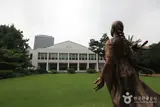
Since its completion in 1974, the building has undergone several expansions and now features an auditorium with 1,700 seats, where entrance and graduation ceremonies marking the beginning and end of Ewha students' journeys are held. In addition, various events including the Ryu Gwan-sun Award Ceremony are held here. Patriot Ryu Gwan-sun, born in 1904 in Cheonan, Chungcheongnam-do, enrolled in Ewha Haktang as a scholarship student in 1966 through the introduction of an American female missionary from the Christian Methodist Chungcheong-do Diocese Headquarters. When the school closed due to the March 1st Movement in 1919 while she was enrolled, she returned to her hometown, planned an independence demonstration, and visited schools and churches in Cheonan, Yeongi, Cheongju, and Jincheon to coordinate the protests.MoreLess
Source: Korea Tourism Organization (TourAPI) · Machine-translated