Walking Along the Lost Fortress Wall Trail
6 stops · 3 hours
This trail, stretching from Gwanghwamun Square to Deoksugung Palace in Seoul, is a course where you can visit two of the Five Grand Palaces within the Hanyangdoseong Seoul City Wall. It is best enjoyed when the streets are blanketed in golden ginkgo leaves. After visiting the Seoul Museum of Art, do not forget to stop by the historic site of scholar Toegye Yi Hwang's house. Source: Walking Along the Hanyangdoseong Seoul City Wall Following Stories
- Duration
- 3 hours
- Distance
- 2.89km
Along the way
- 1Gwanghwamun Square
광화문광장
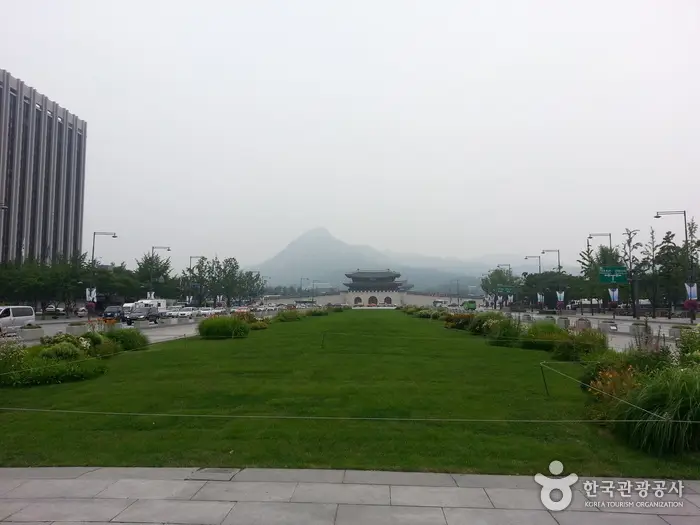
Opened to the public in a newly renovated look on August 1, 2009, Gwanghwamun Square transformed Sejong-ro—the central street of Seoul with a 600-year history—from a vehicle-oriented thoroughfare into a human-centered space. Newly designed to offer views of beautiful natural landscapes including Gyeongbokgung Palace and Bukhansan Mountain, it was reborn as a historical and cultural experience space by restoring Yukjo-geori (Street of the Six Ministries), the old appearance of Sejong-ro. MoreLess
- 2
Gyeonghuigung Palace
경희궁
Historic Site No. 271, Gyeonghuigung Palace was once the residence of King Taejo Yi Seong-gye, the founder of the Joseon Dynasty. It was also called Saemun-an Palace or Seogwol (West Palace) due to its location in the west. Later used as a private royal residence, King Gwanghaegun built a secondary palace here in the 8th year of his reign (1616) to suppress the royal energy (wanggi) believed to reside at the site of Saemun-an Palace, naming it Gyeongdeokgung Palace. However, Gwanghaegun was dethroned in the Injo Restoration, and in the 36th year of King Yeongjo (1760), the palace was renamed Gyeonghuigung Palace. MoreLess
- 3Seoul Museum of Art (Seosomun Main Branch)
서울시립미술관(서소문본관)
opened in July 2003 as a branch of the Seoul Museum of Art. The 600th Anniversary of Seoul Memorial Hall, located on the historic grounds of Gyeonghuigung Palace, was renovated into an exhibition space where diverse exhibitions by numerous art organizations are held amidst a spacious courtyard and historic grounds. With a structure of two stories above ground, it consists of two exhibition rooms and office space, featuring dynamic, curved interior structures and circular hallways that make for a distinctive exhibition environment. In particular, the Gyeonghuigung branch mainly operates rental exhibitions. MoreLess
- 4
Lunch (Jeongdong Guksi)
점심식사(정동국시)
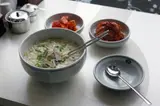
The restaurant features a rich broth made by boiling Korean beef leg bones (sagol) for 15 hours. The dedication of skimming off fat dozens of times during boiling adds a clean taste to the broth. Unlike typical restaurants, the mandu-guk (dumpling soup) also uses the same beef bone broth, offering a deep flavor. Dumplings are freshly made in the shop every day, boasting tender wrappers and soft, moist filling. Located in a culture and art district near Jeongdong Gallery, Jeongdong Theater, and Seoul Museum of Art, it is a great place to comfortably enjoy a meal while exploring surrounding cultural spaces. MoreLess
- 5Seoul Gyeonggyojang House
서울 경교장
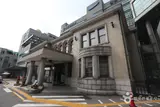
Located in Pyeong-dong, Jongno-gu, Seoul, this is a historic place used as the office and residence of Baekbeom Kim Ku, the leader of the Provisional Government of the Republic of Korea, from his return from China in November 1945 until his assassination on June 26, 1949. Along with Rhee Syngman's Ihwajang and Kim Kyu-sik's Samcheongjang, it is one of the three cradles that served as centers for nation-building activities prior to the establishment of the Republic of Korea government. Built in 1938 by Choi Chang-hak, who gained wealth from gold mining, as a Japanese-style building with a total floor area of 265 pyeong (one basement floor, two stories above ground) on a 1,584-pyeong lot, its original name was Jukcheomjang. After National Liberation on August 15, Choi Chang-hak offered it as a residence to Kim Ku, and Kim Ku renamed it Gyeonggyojang after a nearby bridge instead of the Japanese-style name Jukcheomjang. In 1968, Korea Hospital (now Kangbuk Samsung Hospital) acquired the building, which continues to this day. MoreLess
- 6Deoksugung Palace
덕수궁
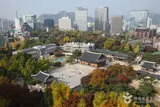
Deoksugung Palace, Historic Site No. 124, was not originally a royal palace. It was originally the private residence of Grand Prince Wolsan (1454–1488), the older brother of King Seongjong. However, when all royal palaces were burned down during the Japanese Invasion of Korea in 1592, it began to be used as a temporary palace (haenggung) in 1593. King Seonjo returned to Hanyang after taking refuge in Uiju and stayed at Deoksugung Palace. His successor, King Gwanghaegun, ascended the throne at this temporary palace in 1608, renamed it Gyeongungung Palace in 1611, and used it as the royal palace for seven years. When he relocated to Changdeokgung Palace in 1615, Queen Inmok, the second queen of the late King Seonjo, was confined here. In 1618, Queen Inmok's royal title was abolished, and Gyeongungung Palace was disparagingly referred to as Seogung (West Palace). MoreLess
Source: Korea Tourism Organization (TourAPI) · Machine-translated