On the Path to Meet the Ttalggakbari along the Foot of Namsan Mountain
4 stops · 3 hours
In the past, Namsan Mountain was both a fortress guarding Hanyang and a foundation of life for the common people. It was home to poor scholars known as 'Ttalggakbari' and also served as a hideout for thieves. As such, many stories are hidden within this area. Today, it houses parks and Jangchung Gymnasium, where various matches and events take place. Let's take a leisurely walk towards Namsan Hanok Village. Source: Walking along Hanyangdoseong Following Stories
- Duration
- 3 hours
- Distance
- 4.65km
Along the way
- 1Namsangol Hanok Village
남산골한옥마을
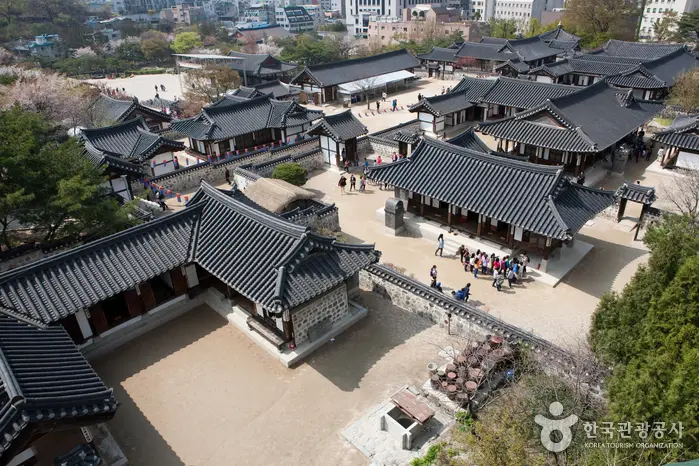
Opened on April 18, 1998, Namsangol Hanok Village covers a total site area of 79,934 m² (24,180 pyeong) and consists of five traditional hanok houses, a traditional craft exhibition hall, the Cheonugak Pavilion plaza, a traditional garden, and the Time Capsule Plaza. The Time Capsule Plaza was completed in 1994 as part of the 600th Anniversary of Seoul project, and the traditional garden was designed to reflect the atmosphere of Namsangol. The hanok village was created by relocating and restoring five traditional houses scattered across Seoul. This was built after the Capital Defense Command site was acquired in 1989 and its buildings were demolished as part of the Project to Restore Namsangol to Its Original State. MoreLess
- 2
Jangchungdan Park
장충단공원
Located at the northeastern foot of Namsan Mountain, Jangchungdan Park sits on the site of Namsoyeong, which defended the southern part of the capital during the reign of King Yeongjo of the Joseon Dynasty. On August 20, 1895, Empress Myeongseong was assassinated in Gyeongbokgung Palace by Japanese assassins. Designated as a neighborhood park by Ministry of Construction Notice No. 374 on September 22, 1984, Jangchungdan Park was absorbed and integrated as part of Namsan Park, a natural park. The Jangchungdan Park area can be described as a national park filled with patriotic devotion related to the anti-Japanese independence movement, featuring cultural heritages such as the Jangchungdan Monument, Supyogyo Bridge, Seungjeongjeon Hall, Gwanseongmyo Shrine, and Waryongmyo Shrine, alongside monuments such as the March 1st Movement Monument, the Monument to the Paris Petition of Korean Confucian Scholars for Independence, the Poetry Monument of Manhae Han Yong-un, and statues of patriotic martyrs like Yu Gwan-sun, Yi Jun, and Kim Yong-hwan. MoreLess
- 3
Gwanghuimun Gate
광희문
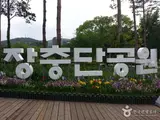
Gwanghuimun Gate is a small gate built in the southeast when the city wall was constructed in the 5th year of King Taejo (1396). Gwanghuimun practically served as the southern small gate (Namsomun) of the capital and was commonly called Sugumun (Water Channel Gate). Although the water outlet built where Cheonggyecheon Stream flows out was closer in distance to Dongdaemun Gate than Gwanghuimun, it appears to have been called Sugumun for convenience because the separate Namsomun was located on the hill leading from Jangchungdan Park to Hannam-dong. In practice, Sugumun was used as Sigumun (Corpse Gate), serving as the gate through which funeral processions inside the capital passed toward the east, along with Seosomun Gate to the west. MoreLess
- 4Jangchung Gymnasium
장충체육관
Located in Jangchung-dong 2-ga, Jung-gu, Seoul, Jangchung Gymnasium (奬忠體育館) is Korea's first domed indoor multi-purpose arena, which opened on February 1, 1963. In addition to domestic and international sports matches in ball games such as basketball, volleyball, and handball, as well as boxing, wrestling, weightlifting, and ssireum (traditional Korean wrestling), the gymnasium hosts various events including international competitions, concerts, and cultural performances like madangnori.MoreLess
Source: Korea Tourism Organization (TourAPI) · Machine-translated