From Myeong-dong to Itaewon: The Romance of Seoul...
4 stops · 4 hours
The area from Myeong-dong to Itaewon is a place where the romance of the past, carrying the history of the Enlightenment Period, intersects with the refined sensibilities of the present. From Myeong-dong, a great place for shopping and entertainment, to the well-preserved hanok village that feels like stepping back into the past, and Itaewon, where young artists freely express their talents today, experience the unique pleasures of the city. Source: Walking along Hanyangdoseong Following Stories
- Duration
- 4 hours
- Distance
- 7.90km
Along the way
- 1
Myth Jokbal Myeongdong
명동
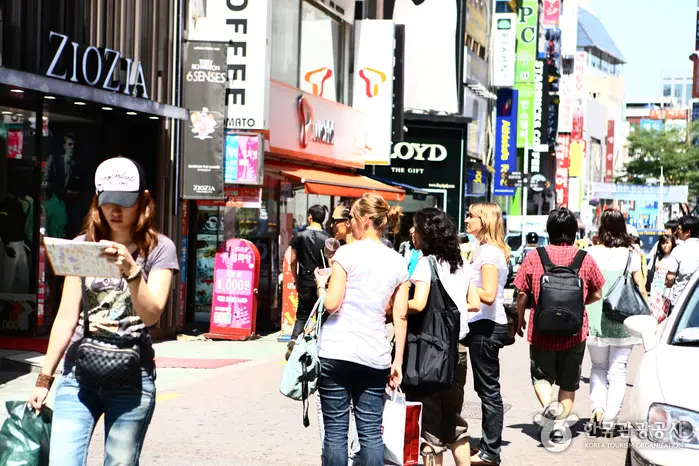
Myeong-dong is a space reminiscent of a massive shopping city. Generally, Myeong-dong Street refers to the approximately 1 km stretch extending from Myeong-dong Station on Subway Line 4 to Euljiro and Lotte Department Store. In addition to shopping, Myeong-dong offers plenty of food and entertainment. Myeongdong Donkatsu and kalguksu (Myeongdong Kyoja) are famous, so it is recommended to give them a try. Aside from that, Myeong-dong has numerous convenience facilities such as hair salons, banks, and theaters. In particular, a must-visit attraction in Myeong-dong is Myeongdong Cathedral. It is Korea's first Catholic parish church and boasts a very antique, pure Gothic style. Behind the cathedral, there is also a resting space within the bustling city center where visitors can unwind and relieve travel fatigue. MoreLess
- 2Namsangol Hanok Village
남산골한옥마을
Opened on April 18, 1998, Namsangol Hanok Village covers a total site area of 79,934 m² (24,180 pyeong) and consists of five traditional hanok houses, a Traditional Craft Exhibition Hall, Cheonugak Pavilion and Plaza, a traditional garden, and the Time Capsule Plaza. It features the Time Capsule Plaza, completed in 1994 as part of the project commemorating the 600th anniversary of Seoul as the capital, and a traditional garden designed to reflect the atmosphere of Namsangol. The hanok village consists of five relocated and restored traditional houses that were once scattered throughout Seoul. This was created as part of the Namsangol Restoration Project after acquiring the Capital Defense Command site in 1989 and demolishing the existing buildings. MoreLess
- 3Seoul Namsan Park
서울남산국악당
Located within Namsangol Hanok Village, Seoul Namsan Gugakdang is a dedicated gugak (traditional Korean music) performance hall built in the exterior style of a traditional hanok. With 330 seats, Seoul Namsan Gugakdang is equipped with optimal facilities suited for gugak performances, including acoustics, lighting, and stage equipment. As the only performance hall in Korea where audiences can appreciate the natural acoustic sound of traditional Korean music without electronic amplification, it offers a performance viewing experience distinct from other venues. In addition, it operates traditional musical instrument and traditional arts classes, youth cultural activities, and various experiential programs, providing a space where Seoul citizens can closely enjoy and appreciate gugak at any time. MoreLess
- 4Itaewon Special Tourist Zone
이태원관광특구
What is commonly referred to as Itaewon Street is the 1.4 km section spanning from Itaewon 1-dong to Hannam 2-dong. Densely packed within this section are approximately 2,000 commercial establishments, including shopping arcades selling shoes, clothing, and bags, as well as accommodations, various restaurants, nightlife and entertainment venues, trading companies, travel agencies, tourist hotels, and general hospitals. The formation of this commercial district in Itaewon dates back about 40 years. After liberation, people gathered one by one and made Itaewon the foundation of their livelihoods. Itaewon then grew rapidly into a representative shopping town of Korea around the 1980s and became the first area in Seoul to be designated as a Special Tourist Zone. MoreLess
Source: Korea Tourism Organization (TourAPI) · Machine-translated