Exploring Sungnyemun Gate, the Gateway to Seoul, and Its Surroundings
5 stops · 3 hours
This walking course takes you around Sungnyemun Gate, a symbol of Seoul, and nearby tourist attractions. Yakhyeon Catholic Church, built in 1891, was named Yakhyeon because there used to be medicinal herb fields nearby. Above all, Jeongdong-gil and the walking paths around Deoksugung Palace, beautiful in any season, still retain the charming atmosphere of the past. Source: Walking Along the Hanyangdoseong City Wall Through Stories
- Duration
- 3 hours
- Distance
- 8.03km
Along the way
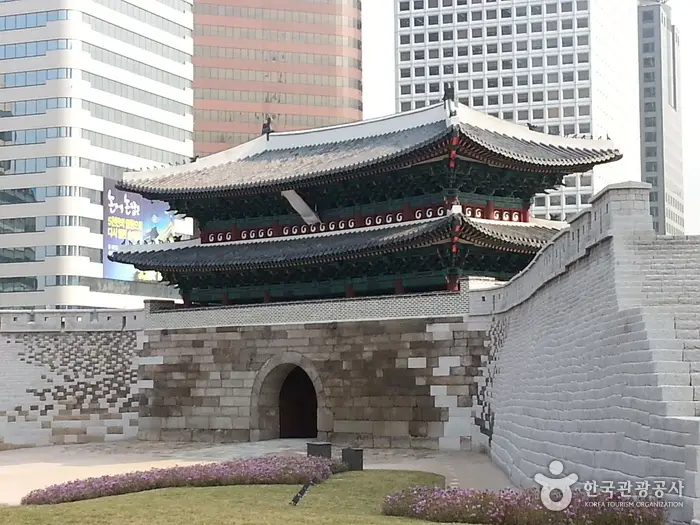
- 1Sungnyemun Gate
숭례문
Sungnyemun Gate (崇禮門) was first constructed in 1396, the 5th year of King Taejo of the Joseon Dynasty, and rebuilt in February 1398. As the main gate of the capital city of Hanyang during the Joseon Dynasty, it is located to the south among the Four Great Gates, so it is also called Namdaemun. It underwent major renovations in 1448. Namdaemun remained undamaged during the Imjin War and the Byeongja Horan (Manchu invasion). Although fortress walls were originally connected on both sides when it was first built, they were demolished in 1908 to clear way for roads, leaving the gate standing isolated like an island. Following restoration work completed in 2006, it regained its current appearance. In 1962, under the Cultural Heritage Protection Act, it was designated as National Treasure No. 1 from its previous status as a Treasure. MoreLess
- 2
Seoul Yakhyeon Catholic Church
서울 약현성당
Yakhyeon Catholic Church (藥峴 聖堂) is a small church building measuring about 32 meters long and 12 meters wide, covering an area of 396 m² (approx. 120 pyeong). After religious freedom was granted in 1886 during the 23rd year of King Gojong's reign and the number of Catholics grew, this building was established as a mission station under Myeongdong Cathedral. In 1891, Father Doucet, then head priest of Myeongdong Cathedral, acquired the land in Hap-dong, and Father Coste, the coadjutor bishop, oversaw the design and construction, leading to the completion of Yakhyeon Catholic Church the following year in 1892. The area where this church is located was once used for cultivating medicinal herbs, and it is said to have been called Yakjeonhyeon, meaning 'a hill with medicinal herb fields.' Later shortened to 'Yakhyeon,' it was used as the place name for the hill area crossing from Malli-dong to Seoul Station, giving the church its name. MoreLess
- 3Seosomun Neighborhood Park
서소문근린공원
This site was originally a Catholic holy ground known as the Martyrdom Site Outside the West Gate. A monument honoring the martyrs was originally erected in December 1984 and rebuilt on May 15, 1999. Made of granite, it consists of three towers: a 15-meter-high main tower and two 13-meter-high symmetrical towers on either side. Water flows over a glass-covered pedestal beneath the towers, contrasting water as a symbol of life with swords as a symbol of persecution and death. A bronze sculpture depicting the tragedy of martyrdom is mounted on the front of the main tower, and all three towers have seven golden lines flowing down from holes at the top to the center. These lines symbolize God's victory through death and the Seven Sacraments of the Catholic Church. MoreLess
- 4Deoksugung Palace
덕수궁
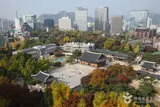
Deoksugung Palace, designated Historic Site No. 124, was not originally a royal palace. It was originally the residence of Grand Prince Wolsan (1454–1488), the older brother of King Seongjong. However, when all royal palaces were burned down during the Imjin War in 1592, it began to be used as a temporary palace in 1593. King Seonjo, who had fled to Uiju and later returned to Hanyang, stayed at Deoksugung Palace. King Gwanghaegun, who succeeded King Seonjo, was crowned here at this temporary palace in 1608, renamed it Gyeongungung Palace in 1611, and used it as the royal palace for 7 years. When he moved to Changdeokgung Palace in 1615, Queen Dowager Inmok, the second queen consort of the late King Seonjo, was confined here alone. In 1618, Queen Dowager Inmok's royal title was stripped, and Gyeongungung Palace was also demoted and referred to as Seogung (West Palace). MoreLess
- 5Jungmyeongjeon Hall
중명전
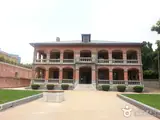
Following the stone-wall walkway around Deoksugung Palace (德壽宮) to the back, you will find Jeongdong Theater, and entering that alley leads to 'Jungmyeongjeon Hall (重明殿)'. Jungmyeongjeon was originally part of the residential quarters for Western missionaries in the Jeong-dong area, but it was incorporated into the palace when Gyeongungung Palace (now Deoksugung Palace) expanded in 1897. At that time, it was named 'Suokheon' and was primarily used as the imperial library (King's Library). After being destroyed by a fire in 1901, it was rebuilt to its current two-story brick exterior. The building was designed by A.I. Sabatin, a Russian architect who also designed Dongnimmun Gate and Jeonggwanheon Hall. MoreLess
Source: Korea Tourism Organization (TourAPI) · Machine-translated