Exploring the Water-Meandering Museom Village and Its Single Log Bridge
6 stops · 1 day
Yeongju is a region rich in the traces of ancient scholars, beyond just Buseoksa Temple and Sosu Seowon Confucian Academy. Most notably, Museom Village is a water-encircled village surrounded by water on three sides, offering a unique landscape like an island within the mainland. It is said that the Museom Single Log Bridge will soon disappear. Let's visit and walk across this single log bridge steeped in rustic charm.
- Duration
- 1 day
- Distance
- 80.14km
Along the way
- 1
Yeongju Museom Village
영주 무섬마을
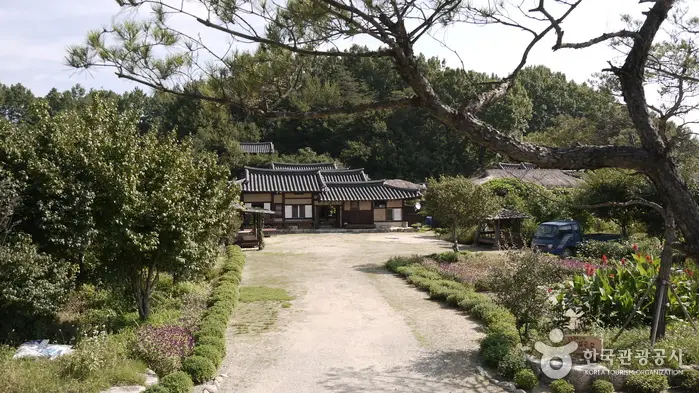
Located in Sudo-ri, Munsu-myeon, Yeongju-si, Gyeongsangbuk-do, Museom Village is one of Korea's representative water-encircled villages surrounded by water on three sides, alongside Hahoe Village in Andong, Hoeryongpo in Yecheon, and Seonam Village and Cheongnyeongpo in Yeongwol. Here, the Naeseongcheon Stream and Yeongjucheon Stream, tributaries of the Nakdonggang River, merge and wind around three sides of the village along the ridges of Taebaeksan and Sobaeksan Mountains, forming a village that resembles an inland island while preserving its long-standing traditions intact. MoreLess
- 2
Museom Single Log Bridge
무섬 외나무다리
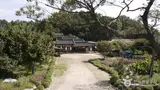
Museom Village in Sudo-ri, Munsu-myeon is a traditional village where beautiful nature and old historic houses are well preserved. The Naeseongcheon Stream wraps around three sides of the village, making it an inland island village floating like an island in the center. Up until 30 years ago, villagers connected logs to build a bridge across the Naeseongcheon Stream to go work in the fields on the mainland. When the monsoon season came, the bridge would be swept away by swollen waters, and the villagers rebuilt it every year. The current single log bridge served as the sole path connecting the village to the mainland for the past 350 years and is about 150 meters long. Although it disappeared after a modern bridge was constructed in 1979, the villagers and those who moved away joined forces to recreate it in its original form. MoreLess
- 3
Lunch (Jungnyeong Jumak)
점심식사(죽령주막)
Located at the summit of Jungnyeong Pass, the gateway to the Yeongnam region, this restaurant has been operating for 16 years, preparing dishes and pickles made with wild herbs from Sobaeksan Mountain. It won a gold prize at the 2012 Yeongju Samgye Cooking Contest with its "Red Ginseng Samgye Tteokgalbi" (Ginseng & Chicken Patty). Situated below Sobaeksan Mountain, the restaurant uses plenty of wild herbs to serve authentic local dishes such as seasoned wild herbs and pickled wild herbs. In particular, the special wild herb pancake (sannamul-jeon), offered exclusively in May and June, is a signature dish filled with the rich aroma of wild mountain herbs. MoreLess
- 4
Sudori Traditional Village
수도리 전통마을
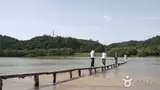
Sudo-ri in Munsu-myeon is a traditional village where beautiful nature and old historic homes are preserved in their original state. True to its name, Sudo-ri is embraced on three sides by the flowing Naeseongcheon Stream, floating like an island in the center. Reminiscent of Hahoe Village in Andong, this village features silver-white sand beaches stretching along the winding river, while low mountains covered with pine and evergreen forests line the opposite side embracing the river. Furthermore, a sturdy bridge spans the river to connect the villages. MoreLess
- 5
Seonbichon Village
선비촌
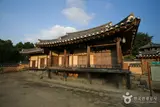
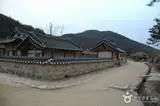
As the birthplace and center of Confucian culture, Seonbichon Village inherits the ancient spirit of seonbi (virtuous scholars), turning the scholars' pursuit of learning and recreated scenes of traditional life into tourism resources to promote forward-looking tourism and serve as a hands-on educational venue for Korea's traditional philosophies and lifestyles. Going forward, Seonbichon Village will serve as a living educational site linked with Sosu Seowon Confucian Academy to carry on the Yeongju scholar spirit, establish proper values, and solidify historical awareness. Visitors can experience high-caliber traditional culture that is being forgotten through past scholars' daily lifestyles via sensory exhibitions, participatory events, and various cultural programs provided regularly at Seonbichon Village. MoreLess
- 6
Sunheunghyanggyo Local Confucian School
순흥향교
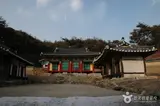
Sunheunghyanggyo Local Confucian School was originally established in Geumseong to the north of Sunheung-bu, but was relocated to Wiyadong to the east of the administrative district in the 44th year of King Sukjong of the Joseon Dynasty (1718), and moved again to its current location in the 26th year of King Yeongjo (1750), where it stands today. Crossing the Jewolgyo Bridge of Jukgye Stream from Geumseongdan Altar, taking the left road, and turning left again at the Cheongdari Village Hall leads up a short hill to the site facing south against the mountain and overlooking the water. In terms of architectural layout, passing Yeonggwiru Pavilion at the front brings you to Dongjae (East Quarters) and the administrative quarters in front of Myeongnyundang (Lecture Hall). Behind it in a separate walled precinct, the Naesammun (Inner Three Gates) stands in front, leading to Daeseongjeon (Main Shrine) situated on higher ground to the north. In front of Daeseongjeon, Dongmu and Seomu (East and West Shrines) face each other across the courtyard. MoreLess
Source: Korea Tourism Organization (TourAPI) · Machine-translated