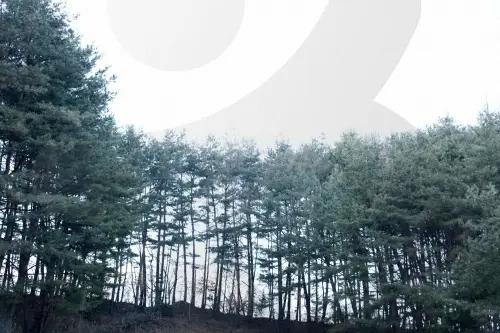
Strolling Through the Geumgangsong Pine Forest of Bonghwa
4 stops · 5 hours
Bonghwa is famous for its Geumgangsong pine trees. Walking among these straight, upright pines makes your body feel effortlessly light and refreshed. Bonghwa is an exceptionally peaceful and warm rural village. When visiting this region, you must not miss the Chunyang Market and the traditional house experiences. Take a stroll through the warmhearted Chunyang Market and explore the well-preserved inner quarters of traditional noble residences.
- Duration
- 5 hours
- Distance
- 18.74km
Along the way
- 1
Bonghwa Geumgang Pine Forest
봉화 금강소나무림
The Southern Regional Forest Service (led by Director Bae Yeong-don) established the "Geumgang Pine Eco-management Forest Led by Ecotourism" in three locations—Sogwang-ri in Uljin, Bonsin-ri in Yeongyang, and Goseon-ri/Daehyeon-ri in Bonghwa—to restore the Geumgang pine forest, which had been declining due to artificial logging and environmental changes, back to its lush state in the late Joseon period, while allowing the public to directly experience a healthy forest.\nMoreLess
- 2
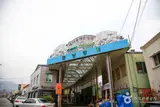
Chunyang Market (4th, 9th)
춘양장 (4, 9일)
Chunyang Market is held every month on the 4th, 9th, 14th, 19th, 24th, and 29th in the central area of the township. As the heart of Bonghwa-gun, it attracts visitors from across the county, as well as from Uljin-gun and Taebaek-si in Gangwon-do. Even about 20 years ago, large crowds gathered here from various areas; though the significance of market days has faded with the development of roads and transportation, it still carries on the tradition of the traditional market. At Chunyang Market, a variety of locally grown vegetables, livestock, medicinal herbs, grains, peppers, wild greens, highland vegetables, and miscellaneous goods from other regions are traded.\nMoreLess
- 3
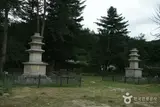
East and West Three-story Stone Pagodas in Seodong-ri, Bonghwa
봉화 서동리 동ㆍ서 삼층석탑
The stone pagodas located southeast of the sports field at Chunyang Middle & Commercial High School form a twin pagoda pair, consisting of an East Pagoda and a West Pagoda, on what is known to be the former site of Ramhwasa Temple from the Silla period. In the 16th year of King Munmu of Silla (676), the Great Monk Wonhyo is said to have closed Ramhwasa when he founded the present Gakhwasa Temple in Seokhyeon-ri, Chunyang-myeon, 6 km northwest of this site. The East and West Three-story Stone Pagodas are small pagodas of the same scale, style, and technique. As standard Silla-style stone pagodas, each features a three-story body resting on a two-tiered base, and judging by the style of each section, they are presumed to have been built in the 9th century during the Unified Silla period.\nMoreLess
- 4
Samijeong Valley
사미정계곡
Samijeong Valley is located in Socheon-ri, Beopjeon-myeon, Bonghwa-gun, one of the most secluded and pristine areas in northern Gyeongsangbuk-do, which is among the few untouched natural regions left in Korea. Nestled in a Y-shaped valley between Taebaeksan Mountain—the source of the Nakdonggang River—and Sobaeksan National Park, it boasts clear, cool streams, dense pine forests, and bizarre rock formations, making it a premier summer retreat. At the entrance to the valley stands a pavilion built by Jo Deok-in, who served as the Right Vice Royal Secretary (Ubusungji) during the reign of King Yeongjo of Joseon, in search of a scenic spot with fine waters and mountains. The pavilion was named Samijeong because his descendants renovated it at the Jeongmi hour on the Jeongmi day of the Jeongmi month in the Jeongmi year. The name Samijeong Valley originated from that time.\nMoreLess
Source: Korea Tourism Organization (TourAPI) · Machine-translated