Bonghwa, a Peaceful Rural Village
6 stops · 1 day
Bonghwa is located in the most mountainous region of Gyeongsangbuk-do, surrounded by rolling mountains. Because of this, the mountains are lush green and the skies are high and blue. Forming a typical countryside village, it is a great place to experience rural life and, above all, a village blessed with scenic beauty. This course allows visitors to appreciate the mountain landscapes and nature of Bonghwa as they are, making it perfect for healing.
- Duration
- 1 day
- Distance
- 42.73km
Along the way
- 1
Rock-carved Seated Buddha of Bukji-ri, Bonghwa
봉화 북지리 마애여래좌상
This stone Buddha is a rare, giant rock-carved seated Buddha statue from the Silla period that was originally created as the principal Buddha inside a niche. Although there are cracks here and there across the stone Buddha today, the dignified presence of the Buddha is still well-preserved. Carved in high relief close to a fully three-dimensional sculpture, its majesty stands out even more. Its notable characteristic is that, together with the transformed Buddhas (Hwabul) carved around it, it vividly showcases the majestic and merciful Buddhist aesthetic of the mid-7th century. Discovered in 1947 during site preparation, a single wooden hanok protective pavilion with a gabled roof was newly built to preserve and manage the statue, and dancheong (traditional multicolored decorative coloring) was applied to bring it to its present state. MoreLess
- 2
Gyesedang House in Gapyeong-ri (Birthplace of Seong I-seong)
가평리 계서당(성이성 생가)
Gyesedang is the place where Gyese Seong I-seong (1595–1664), a civil official of the mid-Joseon period, lived. Seong I-seong was from Changnyeong and the son of Buyongdang Seong An-ui, who served as the magistrate of Namwon. He passed the civil service examination in the 5th year of King Injo's reign (1627). He served as the governor of six towns, including the magistrate of Jinju, and was appointed as a secret royal inspector (eosa) four times, earning fame for his frugality and integrity. Later, he was posthumously awarded the title of Bujehak (Vice Director) and recorded as a Cheongbaengna (clean-handed and upright official). MoreLess
- 3
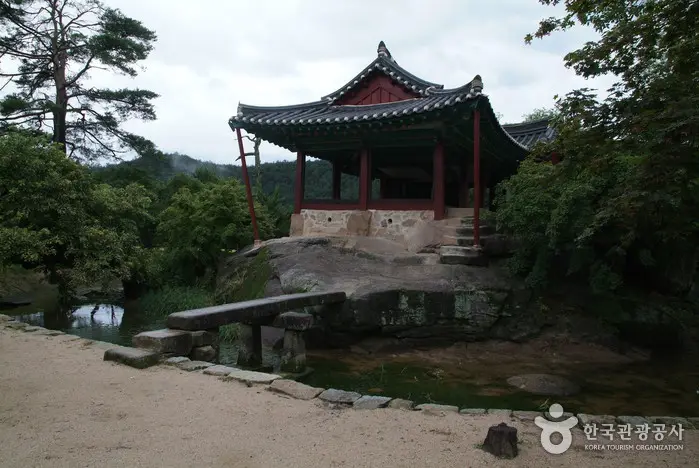
Cheongamjeong Pavilion, Bonghwa
봉화 청암정
Located in Dalsil Village, Yugok-ri, Bonghwa-eup, this pavilion is associated with Chungjeonggong Chungjae Gwon Beol (1478–1548), who passed the civil service examination in the 2nd year of King Jungjong's reign (1507) and rose to the position of Uchanseong (Right State Councilor). During the reign of King Myeongjong, when Yun Won-hyeong ousted the three key ministers—Yun Im, Ryu Gwan, and Ryu In-suk—Gwon Beol opposed it and was exiled to Sakju, where he spent the rest of his life. He was posthumously honored with the title of Yeonguijeong (Chief State Councilor) during the reign of King Seonjo.MoreLess
- 4
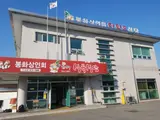
Bonghwa Merchants Association Hanyakwoo Restaurant & Butcher Shop
봉화상인회 한약우 식육식당
Bonghwa Merchants Association Hanyakwoo Restaurant is a restaurant and butcher shop established by forming a cooperative within the Bonghwa Permanent Merchants Association, selling Korean beef (Hanwoo) raised on medicinal herbs from the Bonghwa region.MoreLess
- 5
Ojeon Mineral Spring
오전약수탕
The village where Ojeon Mineral Spring is located was formerly called Aejeon (艾田), meaning "mugwort field," and there are two theories regarding the origin of the name. One theory is that because the area is a confluence of waters where the stream constantly flooded to form a wetland, it was called Sujeon (水田, meaning "water field"), or alternatively Ssubaengi, which later changed to "mugwort field." Another theory states that the mineral spring water was believed to be effective for skin diseases, so leprosy patients came to drink the spring water, bathe in it, and use mugwort from the area for moxibustion and decoction to cure their illness, leading to the name "mugwort field." MoreLess
- 6
Samijeong Valley
사미정계곡
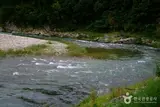
Samijeong Valley is located in Socheon-ri, Beopjeon-myeon, Bonghwa-gun, one of the most secluded remote areas in northern Gyeongsangbuk-do, which remains one of the few pristine regions in Korea. Situated as a Y-shaped valley between Taebaeksan Mountain (the source of the Nakdonggang River) and Sobaeksan National Park, it boasts clear, cool streams, dense pine forests, and unique rock formations, making it an exceptional summer retreat. At the entrance of the valley stands a pavilion built by Jo Deok-in, who served as Ubusungji (Right Royal Secretary) during the reign of King Yeongjo of the Joseon Dynasty, after searching for a picturesque scenic spot. It is named Samijeong because his descendants renovated the pavilion on the Jeongmi year, Jeongmi month, Jeongmi day, and Jeongmi hour. The name Samijeong Valley originated from that time. MoreLess
Source: Korea Tourism Organization (TourAPI) · Machine-translated