In Harmony with the Nature of Chilgok
3 stops · 7 hours
Embark on a healing journey deep into the mountains of Chilgok, centering around Gasansanseong Fortress built along the valley of Palgongsan Mountain, Gasanbawi Rock, and Sindong Standing Stone, the largest remaining standing stone in Korea. Stroll along the forest path of Songnimsa Temple dense with pine trees and recharge your energy to return to daily life.
- Duration
- 7 hours
- Distance
- 32.08km
Along the way
- 1
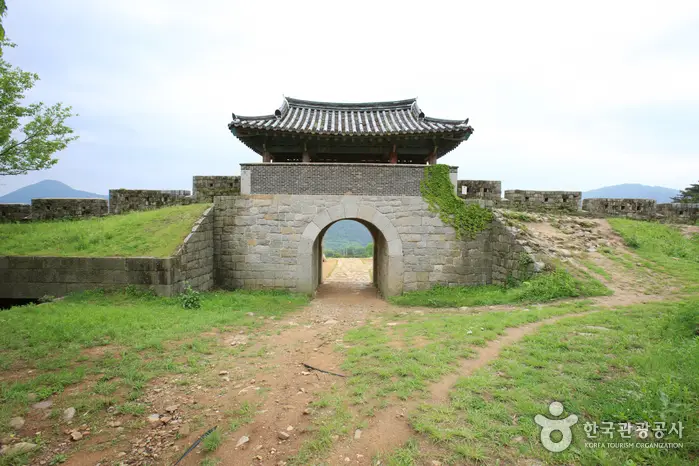
Chilgok Gasansanseong Fortress and Gasanbawi Rock
칠곡 가산산성 및 가산바위
A stone fortress built utilizing mountain valleys, it was constructed in 1640 (the 18th year of King Injo of the Joseon dynasty). Gasan Mountain, where Gasansanseong Fortress is located, stands 901 meters above sea level and about 10 kilometers west of the summit of Palgongsan Mountain, a renowned mountain central to the Five Sacred Peaks belief of the Silla period. Gasan is a famous mountain consisting of seven peaks, also known as Chilbongsan Mountain. At the top of the mountain lies a flat plain surrounded by seven low peaks, from which seven valleys branch out in all directions. MoreLess
- 2
Songnimsa Temple (Chilgok)
송림사(칠곡)
Located at the western foot of Palgongsan Mountain, Songnimsa Temple is surrounded by dense pine trees with a clear stream flowing through the neighboring valley. Situated right beside the road, visitors can take a relaxing break while breathing in the fresh air of Palgongsan Mountain without having to go on a strenuous hike. To the east of Songnimsa Temple lies Palgongsan Mountain, named in commemoration of eight loyal subjects of King Taejo Wang Geon of the Goryeo dynasty, including Shin Sung-gyeom. Since the introduction of Buddhism, Palgongsan Mountain naturally established itself as a sacred ground of Silla Buddhism and is a sacred mountain where Buddhist culture flourished. MoreLess
- 3
Sindong Standing Stone
신동입석
Sindong Standing Stone is the largest remaining menhir (standing stone) in Korea, measuring 4.5 meters in height and 2 meters in bottom circumference, with a tomb area of 897 m². The discovery of plain pottery and stone axes during land reclamation on the eastern side of this standing stone indicates that it is a Bronze Age dolmen. It is considered a relic left by prehistoric people who lived in the hilly areas along the Nakdonggang River, serving to worship ancestral deities or mark a gravesite. MoreLess
Source: Korea Tourism Organization (TourAPI) · Machine-translated