Cheongdo, a Place of Clear and Pure Waters
4 stops · 6 hours
Cheongdo is famous for its clean, high-quality water, and it is said that many people have lived long lives here since ancient times. A visit to the hot springs here is highly recommended, and there are many historical sites such as dolmens estimated to date back to the Bronze Age and a stone ice storage. At the agricultural tools museum, you can also explore interesting farming implements.
- Duration
- 6 hours
- Distance
- 17.91km
Along the way
- 1
Dolmens in Beomgok-ri, Cheongdo
청도 범곡리 지석묘군
These are tombs of Bronze Age people who settled along the Cheongdocheon Stream basin. Given the large number of dolmens, it indicates that a large settlement once existed nearby. It is also a site that demonstrates the collective power of the underlying group that formed the state of Iseoguk. The largest capstone among these dolmens measures 305 cm × 250 cm × 170 cm, which is not particularly large. MoreLess
- 2Cheongdo Stone Ice Storage
청도 석빙고
A seokbinggo (stone ice storage) is an underground facility built to store ice. Only four semicircular arch structures (hongye) connecting the two side walls remain, while the ceiling has completely collapsed, leaving it in an incomplete state. However, among the remaining stone ice storages in Korea, it is the second largest after the Gyeongju Stone Ice Storage (Treasure No. 66) and dates back to an early period. It was built in a long shape from east to west, with an entrance on the west side, and following the stairs inside leads to a gently sloping floor. MoreLess
- 3
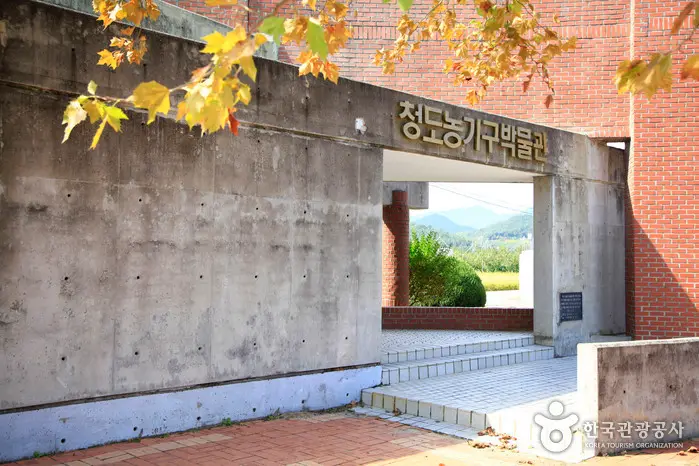
Cheongdo Agricultural Tools Museum
청도농기구박물관
Cheongdo Agricultural Tools Museum was established to preserve disappearing traditional farming tools and educate future generations. Opened on November 17, 1993, its outstanding building received the Korean Institute of Architects President's Award in 1994. It is located within Gaknam Elementary School. MoreLess

- 4
Cheongdo Yongam Well-Being Spa
청도 용암웰빙스파
Cheongdo Yongam Hot Spring is a high-quality germanium sulfur hot spring gushing from 850 meters underground. Known for its exceptional efficacy for arthritis, asthma, gastrointestinal disorders, anemia, and neuralgia, it attracts many hot spring visitors from Daegu and the Gyeongbuk region. Since ancient times, the neighborhood has been rumored to have many long-lived elderly and strong people, attributed to the superior water quality. In particular, with its sodium bicarbonate-type germanium content reaching 15 to 30 times higher than that of hot springs in other areas, the water is said to have outstanding effects not only for bathing but also on crops. MoreLess

Source: Korea Tourism Organization (TourAPI) · Machine-translated