A Journey Encountering the Treasures of Gyeongju
7 stops · 1 day
This tour offers a look at the treasured crystallization of Silla culture. Do not miss the exquisite beauty of the water-channel structure at Poseokjeong Pavilion Site—a quintessential stop in Gyeongju—as well as Bulguksa Temple, Seokguram Grotto, and the distinctiveness of Golgulsa Temple, an artificial rock-cave temple. A visit to the Silla Arts and Science Museum is also essential, as it explores the scientific roots behind Korea's cultural heritage.
- Duration
- 1 day
- Distance
- 55.57km
Along the way
- 1
Poseokjeong Pavilion Site
포석정지
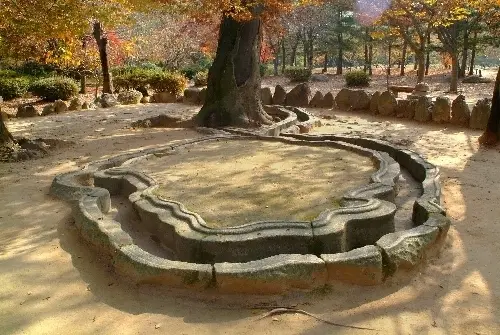
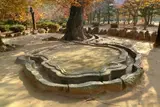
Poseokjeong was one of the detached royal villas where the king could enjoy drinks and banquets. The buildings are no longer standing, and only the abalone-shaped stone water channel remains. It is presumed to have been built during the Unified Silla period, though the exact date of construction is unknown. The channel measures about 35 cm in width, 26 cm in average depth, and about 10 m in total length. Poseokjeong originated from the banquet practice of floating wine cups along winding waters (yusang goksu-yeon), an ancient Chinese riverside ritual to summon spirits and drive away evil. According to the Preface to the Poems Composed at the Orchid Pavilion written by Wang Xizhi in 353, clear stream water was directed through nine curves, and guests floated wine cups on the water and wrote poems; if one failed to compose a poem before the cup passed the nine curves, they had to drink three penalty cups. At the time, the cups were horn-shaped. MoreLess
- 2
Gyeongju Namsan Mountain
경주 남산
Rising to the south of Gyeongju, Namsan Mountain has long been an object of faith and worship for the people of Silla. Formed by some 40 valleys and ridges descending from its two peaks—Geumobong (468 m) and Gowibong (494 m)—Namsan stretches 8 km north-to-south and 4 km east-to-west in an elongated oval shape, forming a right-angled triangle with its peak tilted slightly to the south. With about 100 temple sites, 80 stone Buddhas, and 60 stone pagodas scattered across it, Namsan is an open-air museum. Namsan has about 40 valleys and is divided into Seonamsan (West Namsan), the sacred cradle of Silla, and Dongnamsan (East Namsan), where countless Buddhas are carved and embedded in stones across Mireukgol, Tapgol, Bucheogol, and other valleys. MoreLess
- 3
Lunch (Yongsanhoesikdang)
점심식사(용산회 식당)
Yongsanhoesikdang is a restaurant specializing in hoedeopbap (raw fish bibimbap) located in Ijo-ri, Naenam-myeon, Gyeongju-si. Situated near the Naenam-myeon Administrative Welfare Center, Yongsanhoesikdang serves a single-item menu: hoedeopbap. MoreLess
- 4Tomb of General Kim Yu-sin
김유신 장군 묘
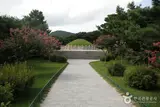
Crossing Seocheongyo Bridge beside the Gyeongju Intercity Bus Terminal and turning right leads to the Tomb of General Kim Yu-sin. This road, Heungmu-ro, was specially built for access to the tomb, and is a popular scenic drive in spring when yellow forsythias and cherry blossoms are in full bloom along the roadside. The tomb sits in a dense pine forest with a fine view where the ridge of Songhwasan Mountain extends eastward, and its magnificent appearance rivals that of any royal tomb. The tomb is a large circular mound reaching 30 meters in diameter, surrounded by 24 retaining stones (hobi) and stone railings, with the ground between the retaining stones and the railings paved with stone. The 12 zodiac guardian deities are carved into the retaining stones; while guardian deities protecting tombs are usually depicted wearing armor, the zodiac figures at this tomb wear ordinary robes and hold weapons. MoreLess
- 5Silla Arts and Science Museum
신라 역사 과학관
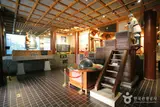
Established in 1988 starting as a private collection, the Silla Arts and Science Museum restores scientific cultural heritage of which only fragments remain. It explores the principles behind their creation, analyzes and tests their structural and aesthetic origins through models, and demonstrates scientific preservation methods, establishing itself as an engaging educational site. MoreLess
- 6
Bulguksa Temple
불국사
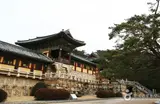
In the 2nd year of King Gongmin of Goryeo (1385), National Preceptor Jinjeong founded Yaksajeol Temple. In the late Joseon period, Emperor Gojong bestowed the name Bulguksa Temple with the wish of realizing the Buddhist Pure Land. During the Korean War, the temple was destroyed with only the Bhaisajyaguru (Medicine Buddha) surviving, and it was rebuilt in 1964 by Master Punggok. MoreLess
- 7
Golgulsa Temple
골굴사
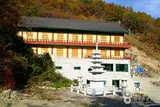
At Golgul-am Rock at the foot of Hamwolsan Mountain, 12 rock caves are set into a massive limestone cliff dozens of meters high, and a rock-carved seated Buddha is sculpted in relief at the highest point of the cliff. The Beopdang-gul (Main Buddha Cave) has a front wall and tiled roof that make it look like a building from the outside, but inside, both the ceiling and walls are entirely rock. A niche was carved into the north wall to enshrine a Buddha statue, but it is heavily worn, making the facial expression indistinguishable. The Beopdang-gul and other caves vary in size from small chambers barely fitting one person to spacious ones accommodating three or four people, enshrining various Buddhist statues ranging from cute novice monks to dignified elderly monks. MoreLess
Source: Korea Tourism Organization (TourAPI) · Machine-translated