Meeting General Jeong Gi-ryong, the Undefeated Legend of the Imjin War
6 stops · 8 hours
Sangju was a place travelers had to pass through on the road from Busan to Hanyang (Seoul). This course lets you trace the footsteps of General Jeong Gi-ryong, the undefeated legend often called 'the Yi Sun-sin of the land,' who recaptured Sangju during the Imjin War (the Japanese invasions of 1592). Let's take this chance to deeply reflect on the loyalty and righteousness woven through Sangju's long history.
- Duration
- 8 hours
- Distance
- 86.04km
Along the way
- 1Seongjubong Natural Recreation Forest
성주봉자연휴양림
Seongjubong Natural Recreation Forest is located at the foot of Seongjubong (606m above sea level), where dense forest, clean air, clear water, and beautiful scenery all come together in harmony. Spanning 200ha, it has been fitted with only the minimum basic facilities needed for recreation and rest within the forest, so as to remain in harmony with the natural landscape. \nMoreLess
- 2Sangju Museum
상주박물관
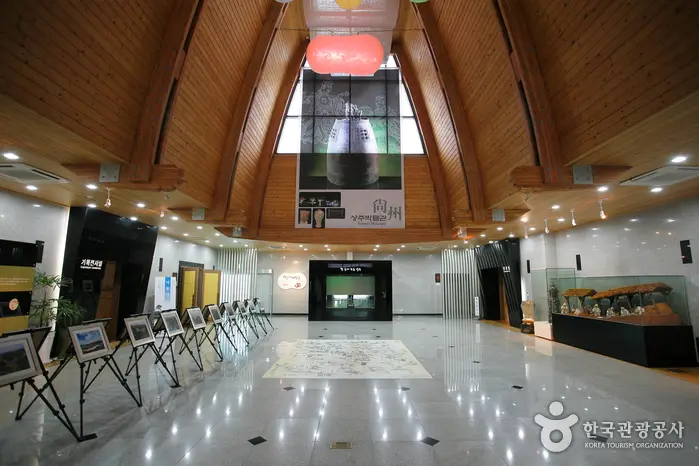
Sangju was one of Silla's Nine Provinces (Ju) and one of Goryeo's Eight Mok, and in the Joseon dynasty it was the seat of the Gyeongsang Provincial Office, making it a place steeped in history. To systematically preserve the region's cultural heritage, carrying the wisdom and spirit of its ancestors, construction of a museum began in 2003, and it opened on November 2, 2007. \nThrough its permanent and special exhibitions, the Sangju Museum lets visitors take in the distinctive features and excellence of Sangju's culture at a glance, while outdoors it offers stone relics, an ecological pond, and a clock tower decorated with traditional patterns, providing a variety of things to see and a place to rest. \nMoreLess

- 3
Nakdong River Gyeongcheondae
낙동강 경천대
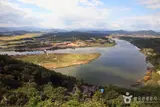
Along the roughly 1,300-ri course of the Nakdong River, Gyeongcheondae is a place that has preserved the mystery of ancient times so strikingly that some regard it as the source of the river's very name. Formed by sheer cliffs and old pine trees, its scenery is outstanding; it is also called Jacheondae ('Terrace Sent Down by Heaven Itself'). But after the scholar Chae Deuk-gi carved the inscription 'Daemyeong Cheonji, Sungjeong Ilwol' (an expression of loyalty to Ming China) here, the name was changed to Gyeongcheondae.\nMoreLess
- 4
Tomb of King Sabeol
전사벌왕릉
The Tomb of King Sabeol is a massive ancient burial mound on the southern slope of Dunjinsan, Hwadal-ri, Sabeol-myeon, northeast of the Hwadal-ri Three-Story Stone Pagoda (Treasure No. 117). Though it is said to be a royal tomb, there is no record of it in the official histories, so it is difficult to say for certain whose tomb it is. Legend holds that it is the tomb of Bak Eon-chang, fifth prince of King Gyeongmyeong, the 54th king of Silla. Bak Eon-chang was enfeoffed as Grand Prince of Sabeol-ju, but is said to have later declared the state of Sabeol and ruled for 11 years as a self-proclaimed king, before being defeated by an invasion from Gyeon Hwon and buried here. \n\nMoreLess
- 5General Jeong Gi-ryong Historic Site (Chunguisa Shrine)
정기룡장군유적지(충의사)
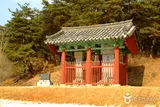
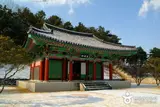
Chunguisa Shrine enshrines the spirit tablet of General Jeong Gi-ryong, a military commander under King Seonjo of Joseon who won great renown as a brilliant land-battle general during the Imjin War. Along with the Chunguisa Shrine, its spirit-path stele, and the general's tomb, it was designated Local Cultural Heritage Monument No. 13 in 1974. In 1978, as part of a project to restore sites of national defense heritage, the original roughly 16.5㎡ shrine was expanded and refurbished on a site of about 13,223㎡ into a shrine hall, exhibition hall, and administrative office, becoming a sacred site of patriotic devotion. \nMoreLess
- 6
Hamchang, Ian, and Gonggeom, Sangju, Gyeongbuk [Slow City]
경북 상주 함창·이안·공검 [슬로시티]
Sangju was officially certified as a Slow City in June 2011 at the general assembly of Cittaslow International held in Poland. With broad plains, moderate rainfall, high summer temperatures, and abundant sunshine, the area offers excellent conditions for growing crops, and the city designated Hamchang-eup, Gonggeom-myeon, and Ian-myeon as its core Slow City area. Sangju is a place with a history as an old capital tied to Silla's Seorabeol and Gaya's Goryeong Gaya kingdom, and its agriculture and food culture are well developed — 42% of all households in the city are farming households. It is also a leading bicycle city, home to the Sangju Bicycle Museum.\n\nMoreLess
Source: Korea Tourism Organization (TourAPI) · Machine-translated