Setting Off to Find Gimcheon's Beautiful Scenery and Traditional Culture
4 stops · 7 hours
This long-standing land of scholars has as many stories as it does old hanok houses. Walk around Jikjisa Temple, filled with the wishes of ages past, trace the history of world ceramics at the World Ceramic Museum, and spend a leisurely day amid the quiet of Jikji Culture Park, with its flowing musical fountain, and the beautiful scenery of Somssi Village.
- Duration
- 7 hours
- Distance
- 36.33km
Along the way
- 1
Jikjisa Temple
직지사
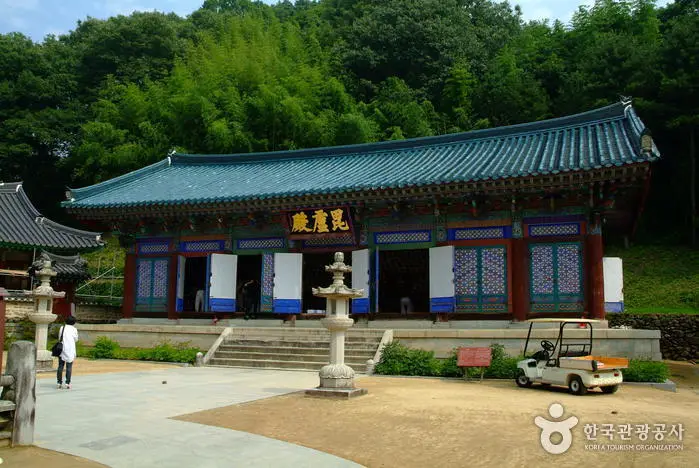
Jikjisa Temple, at the foot of Hwangaksan, 12km west of Gimcheon Station, was founded by the monk Ado in 418, the 2nd year of King Nulji of Silla. Its scenery is stunning, with dense old pine trees, clear water in deep valleys, and autumn foliage all around, blending beautifully with the surrounding landscaping. Within the temple grounds stands Birojeon Hall (also called Cheonbuljeon, or 'Hall of a Thousand Buddhas'), where a thousand small Buddha statues sit enshrined in rows; the Iljumun Gate, its pillars said to be made from thousand-year-old arrowroot vine and bush clover wood; Daeungjeon Hall, a representative building of the Joseon dynasty; and a 1.63m stone seated Buddha of Medicine (Bhaisajyaguru) from the Unified Silla period, designated Treasure No. 319. In addition, an International Buddhist Training Center able to accommodate 5,000 people was completed in May 1994.\n\nMoreLess
- 2
Gimcheon World Ceramic Museum
김천 세계도자기박물관
The Gimcheon World Ceramic Museum stands at the entrance to Jikjisa Temple in Gimcheon. It was established after Fukuda Eiko, a second-generation Korean resident of Japan, donated 1,019 pieces of Western porcelain, crystal, and other works to the city of Gimcheon. With the opening of this museum, Gimcheon has further raised its reputation as a city of high-level culture and art. Experiencing firsthand the splendid yet elegant beauty of these rare, exquisite ceramic pieces at the Gimcheon World Ceramic Museum will make for a meaningful visit.\nMoreLess
- 3
Lunch (Gyeongdong Sanchae Restaurant)
점심식사(경동산채식당)
With a tradition of flavor spanning more than 50 years, this restaurant specializes in wild mountain greens (sanchae) cuisine. It buys in wild greens to prepare various raw and seasoned sanchae dishes, with the menu changing by season (spring — greens, autumn — mushrooms). Rice is cooked from Tap Rice brand rice and served to guests. It was designated the first Model Restaurant in 1979 and has also appeared on KBS. \nMoreLess
- 4
Jikji Culture Park
직지문화공원
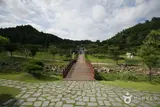
This park, located in Gimcheon, Gyeongsangbuk-do, was built to prevent haphazard development around the area, preserve the traditional temple, develop tourism resources, and provide a resting space for citizens. Centered on a musical sculptural fountain, Jikji Culture Park is equipped with general park facilities including three plazas; a large two-tiered waterfall 25m wide and 17m high; a 330m stream facility that channels clear water straight from the grounds of Jikjisa Temple into the park; ten kinds of children's play equipment; and a 3,600m walking path made of acupressure paths, decomposed granite, and clay block paving, along with pavilions and pergolas of varying shapes, benches for resting, and various other amenities. \nMoreLess
Source: Korea Tourism Organization (TourAPI) · Machine-translated