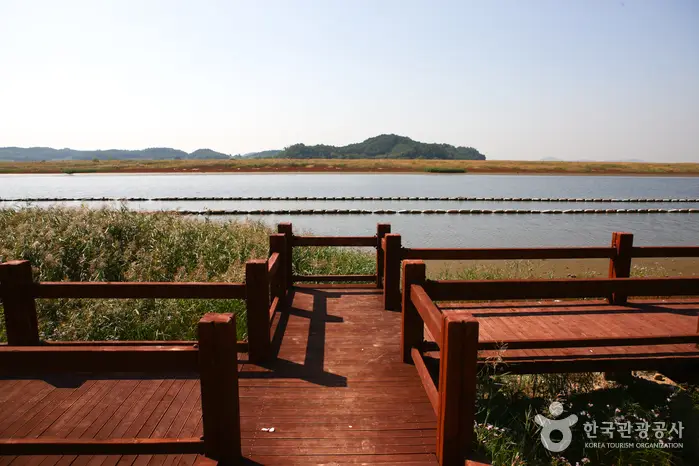
Play with the Kids at Daebudo on the West Sea
4 stops · 8 hours
Centered on Daebudo on the west coast and stretching to Lake Sihwa, a stopover for migratory birds, there is plenty to see and enjoy along the way. Kids especially will love the Hwaseong Dinosaur Egg Fossil Site, where dinosaur eggs were discovered. The mudflat experience at Daebudo and the unusual glass museum, where you can try fascinating glasswork, will also make for a special memory for adults.
- Duration
- 8 hours
- Distance
- 76.55km
Along the way
- 1
Hwaseong Dinosaur Egg Fossil Site
화성 공룡알 화석지
This site was discovered on April 25, 1999, in the reclaimed land south of Lake Sihwa, during a basic survey of ecosystem and geological changes around Gojeong-ri, Songsan-myeon, Hwaseong, following the land reclamation of the Sihwa tidal flats. Before the seawater was dammed off, this area was an uninhabited island; its sediment layers formed during the Cretaceous period of the Mesozoic era (estimated at around 100 million years ago). The dinosaur eggs were mainly exposed on the island's surface after the water of Lake Sihwa receded and the surface, now exposed on land, was worn away by weathering and erosion. So far, surveys at 12 locations have found roughly 30 to 200 dinosaur eggs across various nests, and it is expected that more fossils will be found once the areas still covered in mud are thoroughly surveyed. \nMoreLess
- 2
Lake Sihwa
시화호
Lake Sihwa is an artificial lake bordering Ansan, Siheung, and Hwaseong, with 11,200ha of reclaimed tidal land, a 12.7km sea dike (the Sihwa Tidal Barrage), a total storage capacity of 322 million tons, and two drainage sluice gates (Banghameori and Tando). With a tidal power plant planned for the site, it is set to become a new tourist attraction. Lake Sihwa is drawing attention as a new ecological habitat, home to species such as the black-winged stilt, a globally rare bird; the whooper swan, Natural Monument No. 201; and the black-headed gull (Eurasian oystercatcher), a rare resident bird and protected Natural Monument species. The surrounding tidal flats are a treasure trove of biodiversity, home to a total of 214 species including large invertebrates, polychaete worms, crustaceans, and mollusks. \nMoreLess
- 3Daebudo
대부도
Known as the Hawaii of Ansan, Daebudo is an island connected to the mainland by the Sihwa Tidal Barrage, yet it still retains the romance and lyrical charm of an island in many corners. Above all, the road to Daebudo offers a distinctive drive linking island to island, and the surrounding islets each have their own unique character: Tando, said to have black stones; Buldo, said to be where a Buddha appeared; Seongamdo, said to be where immortals once roamed; Yukdo, so named because six islands sit shoulder to shoulder in the West Sea like siblings; and Pungdo, known for the unique lifestyle of its residents, who move to nearby Dorido each winter to gather oysters and clams and return before the Lunar New Year the following year. \nMoreLess
- 4Ansan Glass Island Museum
안산 유리섬박물관
This themed destination introduces glass art and shares glass art culture through exhibitions and hands-on experiences with glasswork. It features a themed exhibition hall recreating nature in glass and special exhibitions by contemporary glass artists, and at the glass craft demonstration hall, visitors can watch glass artists demonstrate the making of glass pieces three times a day.MoreLess
Source: Korea Tourism Organization (TourAPI) · Machine-translated