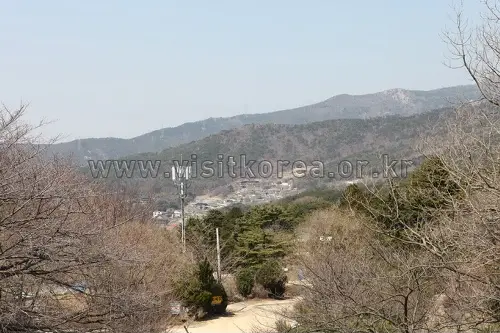
Emptying the Mind at Busan's Geumjeongsan
5 stops · 5 hours
Founded by the great Silla monk Uisang, Beomeosa Temple is counted, along with Haeinsa and Tongdosa, as one of the three great temples of the Yeongnam region. It is recorded in old temple histories and records as one of the ten temples of the Hwaeom school, founded during the reign of Silla's King Heungdeok. Yet, overshadowed by Busan's most famous tourist spots, Haeundae and Nampo-dong, it remains relatively less known. It pairs well with a trek through Geumjeongsan, on Busan's northern outskirts, though it can also be reached by car — the road up to Sanseong Village makes for a fine drive in its own right. After tasting Sanseong Village's local specialties, makgeolli and grilled goat, head to Dongnae Hot Springs to wash away your fatigue. Why not round off the day with dongnae pajeon, a savory pancake packed with seafood and green onion?
- Duration
- 5 hours
- Distance
- 10.29km
Along the way
- 1
Geumjeongsan
금정산
Historically regarded as a mountain that protected the nation, Geumjeongsan is home to Beomeosa, one of Korea's leading temples devoted to national protection, and the largest mountain fortress in the country, Geumjeongsanseong. Centered on its main peak, Godangbong (elevation 801.5m), Geumjeongsan stretches from Janggunbong (727m) to the north down to Sanggyebong (638m) to the south, extending all the way to Baegyangsan (642m) behind Seongjigok, forming a series of peaks along the way including Wonhyobong, Uisangbong, Mireukbong, Daeryukbong, Paryubong, and Dongjebong. MoreLess
- 2Beomeosa Temple
범어사
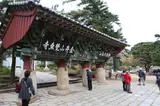
Located halfway up the eastern slope of Geumjeongsan, Beomeosa was founded in the 18th year of King Munmu, the 30th king of Silla (678), by the great monk Uisang. Renowned along with Haeinsa and Tongdosa as one of the three great temples of the Yeongnam region, it is one of the ten temples of the Hwaeom school. Entering the temple grounds, visitors can see a wisteria colony designated Natural Monument No. 176. Making use of Geumjeongsan's slopes in the classic style of a mountain temple, Beomeosa is also home to its Ilju Gate, designated City Tangible Cultural Property No. 2; a flagpole support designated City Tangible Cultural Property No. 15 and a stone lantern designated No. 16; the three-story stone pagoda of Beomeosa, Treasure No. 250; the Samguk Yusa (Treasure No. 419-3); and the Daeungjeon main hall, Treasure No. 434. MoreLess
- 3
Lunch (Dongnae Byeoljang)
점심식사(동래별장)
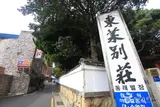
Today, having inherited the traditions of royal court cuisine, this restaurant carries on the taste and elegance of Korean tradition, recreating royal court dishes. Amid a garden filled with magnificent trees, it offers a special and meaningful setting for an elegant, once-in-a-lifetime traditional wedding. It is also an ideal venue for major family occasions such as 60th and 70th birthday celebrations, first birthday parties (dol), and large banquets. MoreLess
- 4
Geumgang Botanical Garden
금강식물원
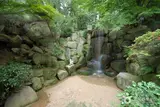
Korea's first privately run botanical garden, it was created in September 1969 by Jeong Tae-seong, chairman of Seongchang Corporation, to provide a place of rest for the citizens of Busan. Covering 194,480㎡, the garden holds about 2,300 plant species, including more than 560 tropical species — among them some 20 varieties of palm and about 540 succulent species such as cacti. MoreLess
- 5
Dongnae Hot Spring Open-Air Foot Bath
동래온천 노천족탕
One of Korea's oldest hot springs, with a water temperature of 63℃, it is a mildly alkaline saline spring said to help with chronic stomach ailments and weak digestion when the spring water is drunk, in addition to bathing. It is also known as a health-giving hot spring effective for rheumatic conditions, movement disorders, neuralgia, arthritis, fatigue recovery, and poor blood circulation. MoreLess
Source: Korea Tourism Organization (TourAPI) · Machine-translated