Enjoy Jeonju's Time-Honored Charm to the Fullest!
7 stops · 8 hours
Jeonbuk has an old-world charm all its own. Jeonju Hanok Village and Geumsansa Temple, the finest old temple in Honam, are the pride of this region, and the famous sights of Jeonju Hanok Village need no further introduction. With the lotus flowers of Deokjin Park and Jeonju Zoo, this makes for an even more enjoyable outing with children.
- Duration
- 8 hours
- Distance
- 30.29km
Along the way
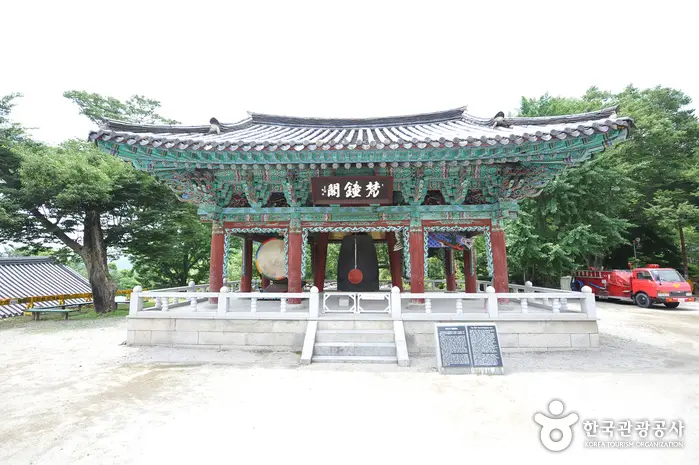
- 1Geumsansa Temple (Gimje)
금산사(김제)
Standing tall at the entrance to Moaksan Provincial Park, Geumsansa Temple was founded in the first year of King Beop of Baekje (599) and rebuilt by State Preceptor Jinpyo in 776, taking on the character of a great temple complex. The temple grounds hold more than ten designated cultural properties, including Mireukjeon Hall, designated National Treasure No. 62, along with many auxiliary buildings, making it renowned as the finest old temple in Honam. MoreLess
- 2Jeonju National Museum
국립전주박물관
The Jeonju National Museum, an institution under the Ministry of Culture and Tourism, has worked since opening in 1990 to become a central institution of regional culture, actively promoting domestic and international cultural exchange through collecting, preserving, researching, exhibiting, and educating on the cultural heritage of Jeollabuk-do. In particular, it opened a Social Education Hall in November 2002, running a creative educational space where visitors can directly experience traditional culture. MoreLess
- 3Jeonju Zoo
전주동물원
Exiting the main gate of Deokjin Park and heading east about 1km along the pond, you'll find a sports park with facilities such as a soccer field and volleyball courts, along with the Sori Arts Center, and further east, Jeonju Zoo, which includes an amusement facility (Jeonju Dreamland). Opened on June 10, 1978, Jeonju Zoo is the only regional zoo to house a large number of animals such as tigers, lions, giraffes, hippos, bison, wildebeest, camels, chimpanzees, and kangaroos, and currently exhibits about 670 animals of 106 species, including rare animals such as Asiatic black bears, zebras, and jaguars. MoreLess
- 4
Jeonju Hanok Village [Slow City]
전주한옥마을 [슬로시티]
Jeonju Hanok Village is located in Pungnam-dong and Gyo-dong, Jeonju. Some 800 hanok, traditional Korean houses, are clustered densely here. Preserving the old amid a rapidly changing city, Jeonju Hanok Village is famous as a place to experience Korea's old traditions.MoreLess
- 5
Deokjin Park
덕진공원
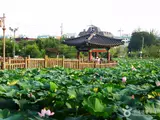
One of the sights that leaves the strongest impression among Jeonju's attractions is the lotus flowers that bloom at Deokjin Park. The pond at Deokjin Park is that much of a local icon. Located along Paldal-ro, the road leading from Jeonju IC into the city, Deokjin Park was formed from a natural lake dating to the Goryeo dynasty, designated a city park under an April 1978 citizens' park decision, and, along with Chwihyangjeong Pavilion, is a place steeped in history. MoreLess
- 6Jeonju Zoo
전주동물원
Exiting the main gate of Deokjin Park and heading east about 1km along the pond, you'll find a sports park with facilities such as a soccer field and volleyball courts, along with the Sori Arts Center, and further east, Jeonju Zoo, which includes an amusement facility (Jeonju Dreamland). Opened on June 10, 1978, Jeonju Zoo is the only regional zoo to house a large number of animals such as tigers, lions, giraffes, hippos, bison, wildebeest, camels, chimpanzees, and kangaroos, and currently exhibits about 670 animals of 106 species, including rare animals such as Asiatic black bears, zebras, and jaguars.MoreLess
- 7
Jeonju Hanok Village [Slow City]
전주한옥마을 [슬로시티]
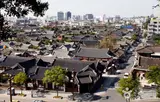
Jeonju Hanok Village is located in Pungnam-dong and Gyo-dong, Jeonju. Some 800 hanok, traditional Korean houses, are clustered densely here. Preserving the old amid a rapidly changing city, Jeonju Hanok Village is famous as a place to experience Korea's old traditions. MoreLess
Source: Korea Tourism Organization (TourAPI) · Machine-translated