Walking Along Gangbuk's Old Streets
4 stops · 5 hours
Hyehwa-dong's Daehangno is a street of culture and art that symbolizes the romance of university students. Walking from Gilsangsa Temple, halfway up the hill in Seongbuk-dong, along Daehangno, you can feel your spirits lift naturally. On a fine spring day, take a walk through Marronnier Park.
- Duration
- 5 hours
- Distance
- 10.11km
Along the way
- 1
Gilsangsa Temple
길상사
Located halfway up the hill in Seongbuk-dong, Seoul, Gilsangsa Temple stands on the former site of Daewongak and opened in 1997 after the owner of Daewongak donated the land and buildings. Though its history is short, being located within downtown Seoul makes it easy for both Korean and foreign visitors to stop by, and it also serves as a cultural space in the heart of the city through programs such as temple experiences, Buddhist practice programs, and retreats. Gilsangsa Temple has “Gilsang Seonwon,” a practice hall for lay practitioners, and “the House of Silence.” MoreLess
- 2
Lunch (Naksan Garden, Istanbul)
점심식사(낙산가든, 이스탄불)
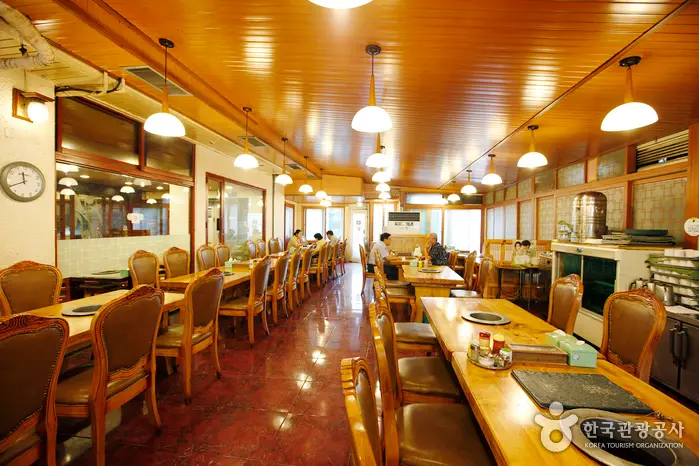
Lunch [Naksan Garden] Open for 23 years, this restaurant always strives to satisfy its customers, with long-serving staff who put both body and heart into preparing the food. All ingredients have been purchased directly as top-quality goods for 20 years, and natural seasonings are used in every dish in an effort to bring out the true taste of nature. Lunch [Istanbul] After opening the country's first Turkish restaurant in Uijeongbu, Istanbul, now located in today's Daehangno, has built up many regulars over more than a decade. Located especially in Daehangno, a street known for its youthful energy, it is one of the places many young people visit to taste Turkish cuisine, one of the world's three great culinary traditions. MoreLess
- 3Naksan Park
낙산공원
Naksan is one of the four inner mountains (Namsan, Inwangsan, Bugaksan, and Naksan) that shaped the topography of Seoul, and in feng shui terms it corresponds to the Left Blue Dragon of Bugaksan, the main mountain. Despite holding such precious natural surroundings and cultural heritage, Naksan suffered considerable destruction and loss from the Japanese colonial period through to the present, and especially during the reckless urban development of the modernization process from the 1960s onward, apartments and houses encroached on the mountain and it was left neglected for a long time, losing its function as a historic site. MoreLess
- 4
Daehangno
대학로
Running 1.1km from the Jongno 5-ga intersection to the Hyehwa-dong roundabout in Jongno-gu, Seoul, this street took on the name “Daehangno” (“University Street”) as it was opened up as a street of culture and the arts, drawing on the character of the area. Centered on Marronnier Park, Daehangno — home to a dense cluster of arts organizations such as the Korea Culture and Arts Foundation and the Culture and Arts Center, along with performance halls and galleries — has grown into a street of art and culture. MoreLess

Source: Korea Tourism Organization (TourAPI) · Machine-translated