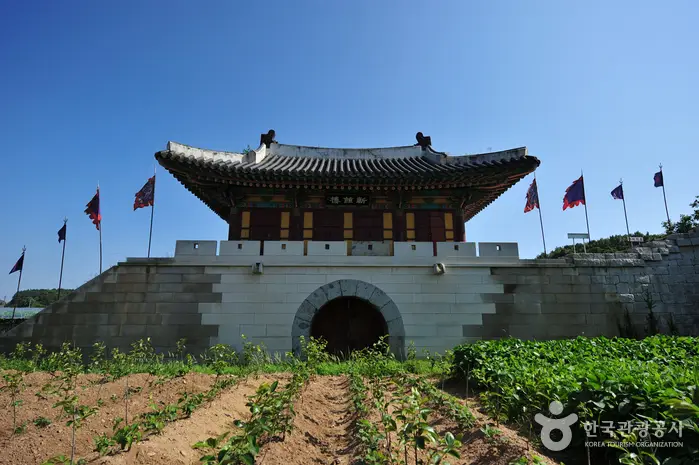
Walk the Scenic Coastal Path of the National Defense Battery Trail
5 stops · 4 hours
Starting from Gapgot Battery, this course follows an embankment path along the coastal road, offering beautiful scenery in spring and fall. The batteries along the way carry a long history of resistance and conflict. The batteries along the way carry a long history of resistance and conflict. At low tide, there's also the fun of walking around the rocky coastal path, and there are plenty of great photo spots along the way. Most of the course runs along flat embankment paths, making it an easy, comfortable walk.
- Duration
- 4 hours
- Distance
- 14km
Along the way
- 1
Yongjinjin Fort
용진진
Driving along the coastal ring road from the history hall, you'll come upon a pavilion on your left — this is Yongjinjin. Yongjinjin is said to have been established in the 42nd year of King Sukjong's reign and oversaw three dondae (batteries). The garrison fort itself was built in 1656, the 7th year of King Hyojong of Joseon. Yongjinjin was originally under the command of a Byeongma Manho (military commander), and was garrisoned by a total of 101 troops — 24 officers, 59 soldiers, and 18 garrison troops — with facilities including 4 cannon emplacements and 26 gun positions.MoreLess
- 2
National Defense Battery Trail
호국돈대길
Ganghwa Nadeulgil refers to a network of trails linking the batteries (dondae) that sit about every 1.3km along the coast with Ganghwa Fortress, as well as paths that wind around the Goryeo royal tombs. It's also a trail where you can walk while enjoying both nature — mountains, fields, and the sea — and cultural heritage together. Ganghwa has so many historic sites that the entire island could be called a museum.MoreLess
- 3Gwangseongbo Fort
광성보
In 1618, the 10th year of King Gwanghaegun of Joseon, the Goryeo-era outer fortress wall was repaired, and Gwangseongbo was established in 1656. Its batteries were built in 1679, and the Odu, Hwado, and Gwangseong batteries, along with the Odujeong gun battery, were placed under its command. Gwangseongbo was the site of the fiercest fighting during the Sinmiyangyo (1871 U.S. expedition to Korea). On April 24, 1871, when American Admiral Rodgers led a fleet of 1,230 troops demanding trade relations, the landing force occupied Chojijin and Deokjinjin forts before reaching Gwangseongbo, where hand-to-hand combat broke out.MoreLess
- 4Deokjinjin Fort
덕진진
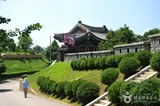
A strategic point on the outer fortifications guarding the Ganghwa Strait during the Goryeo period, this was originally a fort (jin) under a Cheomsa (garrison commander) subordinate to the naval command. In 1677 a Manho commander was stationed here, along with 26 officers, 100 soldiers, 12 battery troops, and 2 ships. Built in 1679, the Yongdu and Deokjin batteries were placed under this fort's command, including Namjang Battery — Ganghwa's largest, with 15 cannon emplacements — and Deokjin Battery, equipped with 10 cannons.MoreLess
- 5
Chojijin Fort
초지진
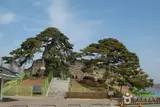
Built in 1656 to defend against enemy incursions from the sea, Chojijin included the Chojijin, Jangjapyeong, and Seomam batteries, all built in 1679. As garrison commander, a Byeongma Manho was in place in 1666, and a Cheomsa was appointed in 1763. The fort was staffed with 11 officers, 98 soldiers, and battery troops (donggun), with 183 vessels stationed there.MoreLess
Source: Korea Tourism Organization (TourAPI) · Machine-translated