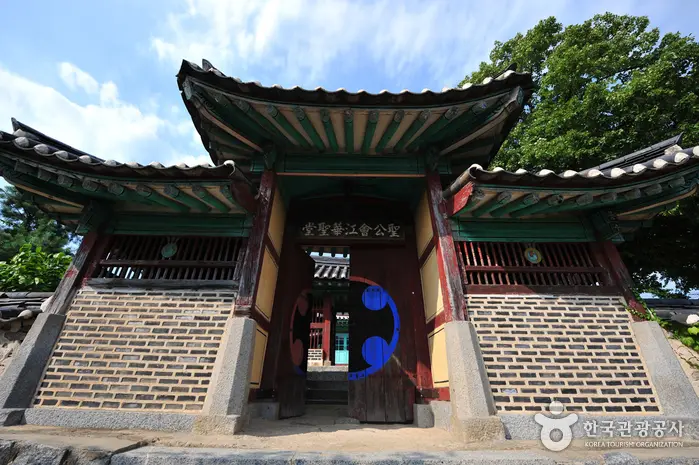
Walking Along Simdo's Historical and Cultural Path
8 stops · 4 hours
This course starts from Ganghwa Bus Terminal and tours the major cultural heritage sites within Ganghwa town, so plan to spend plenty of time exploring at the start. Take a sip of spring water and a short rest at Oeup Spring, then continue on to Yeonmijeong Pavilion with the light steps of a stroll. Along the way, Yeonmijeong is where you can get a meal, and at Gapgot Battery we recommend a quiet, leisurely look around.
- Duration
- 4 hours
- Distance
- 14.5km
Along the way
- 1
Anglican Ganghwa Cathedral
성공회강화성당
Ganghwa Cathedral is a building consecrated in 1900 by Bishop Charles John Corfe, the first Anglican bishop in Korea, and was named the Cathedral of St. Peter and St. Paul. The construction was led at the time by a master carpenter who had worked on royal palace buildings, and although the cathedral has undergone several repairs since, its original appearance has been preserved. The building's layout follows the shape of a ship, to clearly express its meaning as an ark that saves the world.MoreLess
- 2Yongheunggung Palace
용흥궁
This was the home of King Cheoljong (r. 1849-1863), the 25th king of Joseon, before he ascended the throne. Once he became king, Jeong Gi-se, the governor of Ganghwa, had the building rebuilt and named it Yongheunggung. It has a hip-and-gable roof, with the sides shaped like the Chinese character for 'eight' (八), and is built in the jusimpo style, where the bracket sets supporting and decorating the roof sit only atop the columns. Following the style of residential houses — much like Yeongyeongdang and Nakseonjae within Changdeokgung Palace — Yongheunggung has a simple, unadorned feel. Within the grounds stand a memorial stele and its stone pavilion, marking this as the former home of King Cheoljong.MoreLess
- 3
Goryeo Palace Site
고려궁지
In the 19th year of King Gojong of Goryeo, the royal capital was moved to Ganghwa to resist the Mongol invasion. Later, in the 11th year of King Wonjong, the Goryeo royal court made peace and returned the capital to Gaeseong. During the Joseon dynasty a royal detached palace stood here, and in 1637, during the Byeongja War, Ganghwa Fortress fell to Qing forces, suffering great humiliation. Afterward, buildings of the Ganghwa Yusubu (regional government office) were built on the former Goryeo palace site; today the Dongheon (government hall) and Ibangcheong remain. The Dongheon, a building of the Ganghwa Yusubu, was constructed in 1638, the 16th year of King Injo. The Goryeo Palace Site as it stands today was restored and refurbished in 1977.MoreLess
- 4
Lunch (Wangjajeong Mukbap House)
점심식사(왕자정묵밥집)
Wangjajeong specializes in mukbap and other acorn-jelly dishes. Its location offers a full view of the Goryeo Palace Site, making for great scenery in every season, and especially in spring, when the cherry blossoms are in full bloom, adding to the enchantment. It can seat about 130 people, all on heated ondol floor seating. Its signature dish is mukbap (acorn jelly rice soup). The acorn pancake, served on a pizza pan, is a specialty you can't find elsewhere, and the seasoned acorn jelly salad is delicious as well.MoreLess

- 5
Ganghwa Hyanggyo (Confucian School)
강화향교
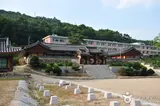
This hyanggyo was first established in Ganghwa town in 1127, the 5th year of King Injong of Goryeo. It is said that later, in 1624, the 2nd year of King Injo of Joseon, Sim Yeol, then governor of Ganghwa, rebuilt it at the foot of Mt. Songak, outside Sodongmun Gate. It now stands next to today's Ganghwa Girls' Middle and High Schools, and plays its part as one of the cultural heritage sites of Ganghwa town.MoreLess
- 6
Oeup Spring
오읍약수
Passing through the north gate of Ganghwa Fortress and following a forest path leads to Oeup ('Five Weeping') Spring. According to legend, this spring water was bestowed by heaven in answer to a rain-prayer ritual held during the construction of the north gate in the reign of King Gojong of Goryeo.MoreLess
- 7Yeonmijeong Pavilion
연미정
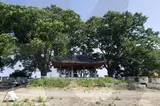
Located in Wolgot-ri, Ganghwa town, Yeonmijeong is a pavilion designated Incheon Metropolitan City Tangible Cultural Heritage No. 24 on March 1, 1995. Its exact founding date is unknown, and it suffered repeated damage through the Imjin War, the Byeongja War, and the Korean War, having been restored to its current form each time. It has a double-eaved, octagonal roof and is a mindori-style building with ten wooden pillars set atop stone bases. It was named Yeonmijeong ('Swallow-Tail Pavilion') because the confluence of the Imjin River and Yeomha River resembles the shape of a swallow's tail, and standing atop Wolgot Battery, it offers a sweeping view over Paju, Gimpo, and the Gaepung-gun area of Hwanghae-do in North Korea.MoreLess
- 8
Gapgot Battery
갑곶돈대
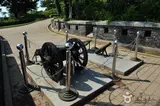
Gapgot Battery was an important fortress that guarded the Ganghwa Strait during Goryeo's war with the Mongols, from 1232 to 1270, when the capital was moved to Ganghwado Island. It was a gun battery equipped with eight cannons; a dondae (battery) is a small fortification built to hold and defend cannon emplacements. Some trace the name 'Gapgot' back to the Three Kingdoms period, when Ganghwa was called 'Gapbigocha' (甲比古次). Another legend holds that the name comes from a lament by Mongol soldiers who, unable to cross here, are said to have sighed, 'If only our soldiers could take off their armor and fill the sea with it, we could cross.'MoreLess
Source: Korea Tourism Organization (TourAPI) · Machine-translated