A Pavilion Poetry and Literature Journey to Gangneung Gyeongpo
5 stops · 5 hours 30 minutes
Gangneung, a city of art and culture. Go there, and you'll find lakes, the moon, and stories waiting for you. At Gyeongpo in Gangneung, a lake that cradles the sunset, a majestic pine forest found nowhere else in Gangneung, and a storied path along the sea and lake all welcome you. There's also the fun of discovering the five moons that rise over Lake Gyeongpo — breathe in the quiet evening air and slowly feel the moon reflected in the lake's rippling waters. Today, when seeking out exotic places has somehow become a habit even within Korea, here is a yesterday that feels most like Korea. We introduce a day at Gyeongpo, recommended by the Korea Tourism Organization and the Gangneung Tourism Development Corporation.
- Duration
- 5 hours 30 minutes
- Distance
- 16km
Along the way
- 1Seongyojang House
선교장
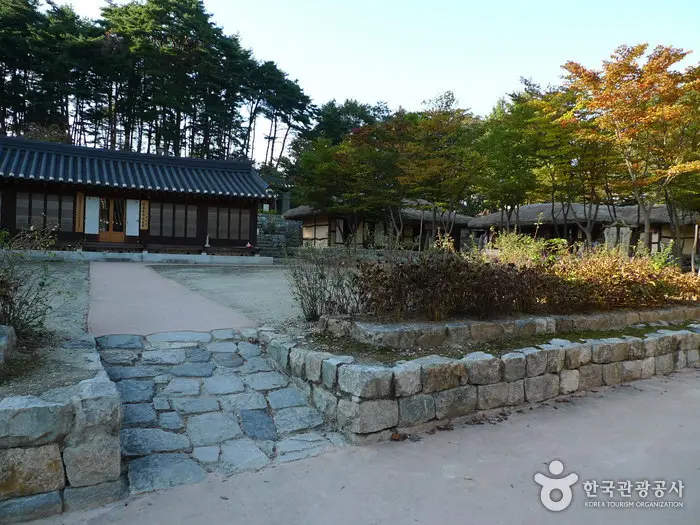
Seongyojang is the best-preserved and most dignified house of the noble (sadaebu) class remaining in Gangwon-do. Located about 4km from downtown Gangneung toward Gyeongpo, it represents the residences of the upper class during the Joseon dynasty and is designated Important Folklore Cultural Heritage No. 5. When Lake Gyeongpo was larger than it is today, this village was called 'Baedari Maeul' (船橋里, 'Boat Bridge Village') because people crossed the lake by boat — and the name Seongyojang comes directly from this. With its beautiful scenery of hanok blending with the surrounding pine trees, it's also well known as a filming location for dramas and movies. Selected as one of Korea's Top 10 traditional houses, this elegant hanok is a great place to feel the unique romance and culture of Gangneung.MoreLess
- 2Chodang Tofu Village
초당 두부마을
A little south of Gyeongpo Beach lies Chodang Sundubu Village, famous for its soft tofu (sundubu). Chodang sundubu, Gangneung's most famous food, is made by grinding soybeans and, through several steps, coagulating the mixture with East Sea seawater, giving it an especially soft, savory taste. You can enjoy a variety of tofu dishes here, including plain sundubu, tofu hot pot, and assorted tofu platters.MoreLess
- 3
Birthplace Site of Heo Nanseolheon
허난설헌생가터
Located in Chodang-dong, Gangneung, this is where Heo Nanseolheon — sister of Heo Gyun, author of 'The Tale of Hong Gildong,' and one of Korea's greatest female poets — was born and raised. The birthplace has a spacious garden and a main house built in a distinctive layout, surrounded by dense pine forest. Throughout the garden bloom modest, softly elegant flowers such as peonies, tree peonies, and irises, and the old trees that have always stood watch here, together with Heo Nanseolheon's poetry, invite visitors into deeper reflection. Every October, a cultural festival honoring her and her brother, the 'Heo Gyun, Heo Nanseolheon Festival,' is held here.MoreLess
- 4Gyeongpodae Pavilion
경포대
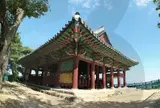
One of the Eight Scenic Views of Gwandong, Gyeongpodae is a pavilion on the hill north of Lake Gyeongpo. It was originally built in 1326, the 13th year of King Chungsuk of Goryeo, by Park Suk-jeong, a Gangwon-do official, on the old site of Inwolsa Temple behind what is now Banghaejeong Pavilion. In 1508, the 3rd year of King Jungjong of Joseon, Gangneung magistrate Han Geup moved it to its current location, and after several rounds of restoration it took on its present form. Pine and oak trees grow in just the right density around it, creating a picturesque scene. Gyeongpodae and the surrounding lake were designated a Gangwon-do provincial park in 1981, and along the coast lies the famous Gyeongpo Beach (6km long).MoreLess
- 5
Gangneung Jungang Market
강릉 중앙시장
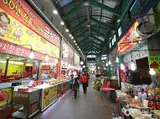
Located in the Seongnam-dong area of Gangneung, Jungang Market is a traditional public market registered and opened on January 18, 1980. It was the third market to open in Gangneung, after Dongbu Market to the east and Seobu Market to the west, and it thrives today, fully serving its role as a core distribution market.MoreLess
Source: Korea Tourism Organization (TourAPI) · Machine-translated