A Walking Journey into the Heart of Tongyeong
10 stops · 6 hours
To properly explore Tongyeong, a city renowned for its arts, a walking tour is the perfect way. Start your walk from Munhwa Madang at the edge of Ganggu-an, the heart of Tongyeong, then climb up to Nammangsan Sculpture Park to look out over Tongyeong Harbor. Follow the traces of Tongyeong-born artists — painters Kim Yong-ju and Lee Jung-seop, poet Yu Chi-hwan (pen name Cheongma), novelist Park Kyung-ni, poet Kim Chun-su, and composer Yun I-sang — and retrace the stories held within this land. After breakfast of jolbok-guk (baby pufferfish soup) or siragguk (dried radish greens soup) at Jungang Market, be sure to pick up Tongyeong specialties like Omisa honey bread and Chungmu gimbap as snacks along Ganggu-an.
- Duration
- 6 hours
- Distance
- About 13.2km
Along the way
- 1
Cheongma Street
청마거리
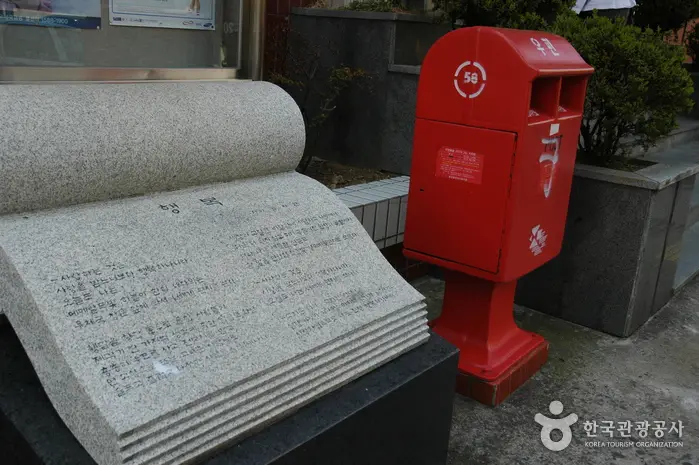
This street is steeped in the love story of poet Yu Chi-hwan (pen name Cheongma) and Lee Yeong-do (pen name Jeongun). Walking here, you can easily picture Cheongma sitting in a shop across from the post office, writing his heartfelt 'Love Letters.' It has become a must-visit spot for aspiring writers, and was officially designated Cheongma Street in 2001. Walking quietly along this street, you find yourself thinking about the timeless concerns of young love and romance, no matter how the times have changed.MoreLess
- 2
Cheongma Literature Museum
청마문학관
Built to honor the life of Cheongma, this site includes a literature museum (exhibition hall) and a restored version of his birthplace. His original birthplace was relocated here due to urban development. Though the location differs from the original, visitors can still see the kind of space where he was born and raised, making it a must-visit for admirers of Cheongma. On display are about 100 of his personal belongings and hundreds of literary documents.MoreLess
- 3Sebyeonggwan Hall
세병관
'Tongyeong' is a shortened form of 'Tongjeyeong,' the naval command headquarters. Sebyeonggwan is the guest hall of the Tongjeyeong, completed in 1605. It's a grand single-story building with a hip-and-gable roof, nine bays wide and five bays deep, notable for its open, airy structure. A section in the center of the otherwise flat floor is raised by one step, believed to be where the royal tablet (jeonpae) was enshrined. It's a space where you can trace the history of Tongyeong.MoreLess
- 4
Yun I-sang Street
윤이상거리
This street honors Yun I-sang, the gifted composer born in Tongyeong. It lies between the end of Seoho Market and the Undersea Tunnel. It's a must-see spot for music lovers. Near his birthplace in Docheon-dong stands the Yun I-sang Memorial Hall.MoreLess
- 5
Tongyeong Chungnyeolsa Shrine
통영 충렬사
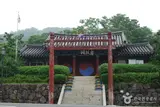
This shrine was built to honor and commemorate the achievements of Admiral Yi Sun-sin, the greatest general of the Joseon dynasty and Naval Commander of the Three Provinces. It's one of the few places where you can feel Admiral Yi's presence without traveling to Hansando Island. In addition to the shrine hall enshrining his memorial tablet, there are five gates, including the Naesammun and Jungmun gates.MoreLess
- 6Undersea Tunnel
해저터널
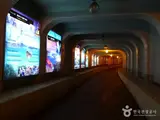
Connecting Tongyeong and Mireukdo Island, the Undersea Tunnel was built in 1931, during the Japanese colonial period, over the course of one year and four months. It was the first undersea tunnel in the East, measuring 483m long, 5m wide, and 3.5m high. That said, don't expect to see ocean scenery as you pass through — it's a concrete tunnel built by damming off the sea on both sides and digging beneath the seabed.MoreLess
- 7Ganggu-an
강구안
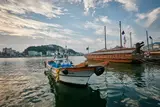
Ganggu-an is a harbor where the sea reaches into the land, and its waters feel more refreshing and lively than other harbors. The blue sea ripples and surges as if the whole bay were swaying. Fishing boats sit moored shoulder to shoulder in long rows. In front of the harbor, restaurants selling the famous Chungmu gimbap line up one after another. In workshops with bellows and forges, craftsmen work iron the old-fashioned way to make all kinds of tools, and Jungang Market has everything from seafood to manufactured goods. The residents who live here, the market people, and the travelers who visit all create and enjoy Ganggu-an's refreshing, lively atmosphere together. If Yeosu Harbor is the most beautiful harbor at night, then Tongyeong's Ganggu-an is the most beautiful harbor by day.MoreLess
- 8
Nammangsan Sculpture Park
남망산조각공원
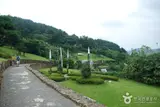
After a meal near Munhwa Madang, Nammangsan Sculpture Park is a great place for a leisurely walk. The night view of Tongyeong Harbor from here is the reason Tongyeong earned the nickname 'the Naples of Korea.' Ganggu-an, tucked into the land, spreads out before you in one sweeping view. Following the course as introduced, you'll pass through here while it's still light out. Since the route loops back to Munhwa Madang, come back up here once more later — comparing Tongyeong Harbor by day and by night makes for a unique experience.MoreLess
- 9
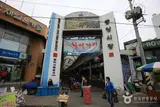
Tongyeong Jungang Traditional Market
통영중앙전통시장
Jungang Market is a living piece of Tongyeong's history, holding within it hundreds of years of time. It sits in an ideal spot, with Dongpirang behind it and Ganggu-an in front. Travelers never miss it, as it offers a wide variety of seafood, including fresh sashimi, at affordable prices.MoreLess
- 10
Lunch (Bunso Sikdang, Wonjo Siragguk)
점심식사(분소식당, 원조시락국)
[Bunso Sikdang] A restaurant specializing in jolbok (baby pufferfish), regarded as one of Tongyeong's specialties. It's located in Seoho Market, in front of the passenger ferry terminal serving Hansando and Somaemuldo islands. The refreshing broth of jolbok-guk has played a key role in making Tongyeong a paradise for drinkers — if you visit Tongyeong, don't miss it. [Wonjo Siragguk] Siragguk, a nourishing dish born from the wisdom of Tongyeong's ajumma (housewives), is a local specialty made by simmering eel bones with doenjang (soybean paste) and dried radish greens for a long time. This restaurant is considered the originator of siragguk, and is located inside Seoho Market. Set up in a long daejip (bar-style) layout, it's a self-serve setup where diners help themselves to side dishes. It opens from early dawn and is popular with people using the passenger ferry terminal.MoreLess
Source: Korea Tourism Organization (TourAPI) · Machine-translated