Meeting a Great Star of the Independence Movement
5 stops · 6.5 hours
Seeing firsthand the traces left behind by independence activists we once only read about in textbooks is a meaningful experience for both children and adults. Visit the birthplace of General Kim Jwa-jin (pen name Baegya), who fought across the plains of Manchuria as an independence fighter, and the birthplace of Manhae Han Yong-un, the anti-Japanese resistance poet who wrote 'The Silence of Love (Nimui Chimmuk).' Enjoy fun experiences with children at Sokdong Tidal Flat Village, and also visit a garden cultivated with a father's love for his son.
- Duration
- 6.5 hours
- Distance
- 45.9km
Along the way
- 1
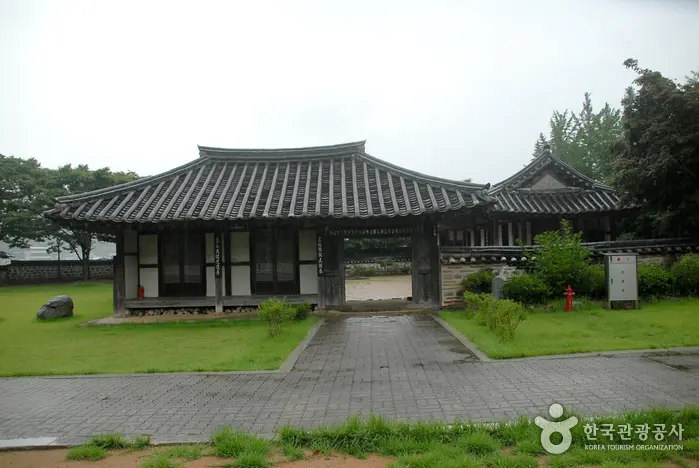
Birthplace of General Kim Jwa-jin
김좌진장군생가지
Independence activist General Kim Jwa-jin founded Homyeong School in Hongseong in 1905. He served three years in prison in 1915 in connection with an independence-related case, was a member of the Cheongnyeon Hakuhoe (Young Men's Study Society) and a director of the Hanseong Ilbo newspaper, then crossed into Manchuria at the time of the March 1st Movement, where he organized the Bungno Gunjeongseo (Northern Route Military Administration) and became its commander-in-chief. The house has a separate main hall (anchae), men's quarters (sarangchae), and storehouse, with a stable outside.MoreLess
- 2
Hongseong Sokdong Tidal Flat Village
홍성 속동갯벌마을
Sokdong Tidal Flat Village is a farming and fishing village located on Cheonsu Bay, a treasure trove of the West Sea coast. Situated right on the shore, it has run tidal-flat experience programs since 2004, which have continued to grow steadily. The village's tidal flats and the Sokdong Observatory, one of the Eight Scenic Views of Hongseong, draw many visitors from outside the area.MoreLess
- 3
Gosansa Temple
고산사
Gosansa Temple is located on Mt. Cheongnyong (235m). It is said to have been founded by the Silla monk Doseon Guksa. A record in the 'Dongguk Yeoji Seungnam' noting that Gosansa stood on Mt. Cheongnyong shows that the temple existed at least by the early Joseon period. During a 1974 survey, an inscription reading 'the sixth month of the sixth year of Tianqi' was found on a roof-end tile, suggesting that the Daeungjeon (main hall) was rebuilt in 1626, after the Japanese invasions of Korea (Imjin War).MoreLess
- 4
Birthplace of Han Yong-un
한용운선생 생가지
Restored with a wattle fence made of bush clover branches, Manhae Han Yong-un's birthplace has a thatched roof and a straight-line layout of two rooms and one kitchen. A nameplate reading 'Han Yong-un' hangs at the entrance, giving visitors the feeling that Manhae himself might still be living there. A short distance from the birthplace stands Manhaesa Shrine, which enshrines his memorial tablet and portrait, once again calling for a moment of quiet respect.MoreLess
- 5The Garden with Paintings
그림이 있는 정원
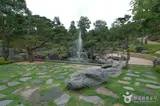
It is said that nature retains more of its natural beauty the further it stays from human touch. Yet with the thought that nature we can never experience holds little meaning in itself, 'The Garden with Paintings' is a nature-friendly cultural rest space that preserves the purity of nature as much as possible while cultivating its beauty to the fullest.MoreLess
Source: Korea Tourism Organization (TourAPI) · Machine-translated