Spend a Warm Time Meeting Villages and Their People
4 stops · 6 hours
Encountering the traces of life left behind by people of the past, and meeting those who still live amid them today, is another kind of learning that travel offers. Discover the beauty shaped by the passage of time at Maengssi Haengdan, the oldest privately owned house in Korea, and Oeam-ri Folk Village, a clan village of the Yean Yi family that has been inhabited for more than 500 years.
- Duration
- 6 hours
- Distance
- 27.7km
Along the way
- 1
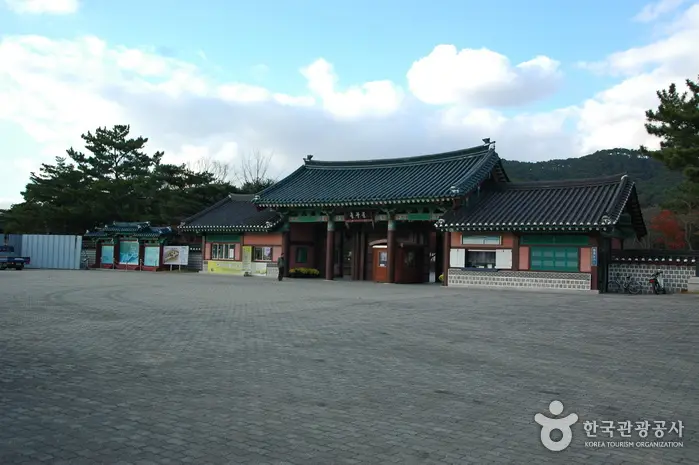
Hyeonchungsa Shrine
현충사
Located at the foot of Banghwasan Mountain, 4km from Onyang Hot Springs, this shrine honors Admiral Yi Sun-sin. It was first built in 1706, the 32nd year of King Sukjong's reign, and the following year the king personally bestowed the name 'Hyeonchungsa.' Within the grounds are Admiral Yi's former residence, an archery ground, and a memorial gate. In addition, Admiral Yi's tomb lies on Mt. Eorasan in Samgeo-ri, Eumbong-myeon, 9km northwest of Hyeonchungsa.MoreLess
- 2
Asan Maengssi Haengdan (Maeng Sa-seong's Old House)
아산 맹씨 행단(맹사성 고택)
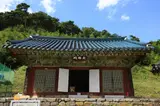
Maeng Sa-seong's old house sits with Mt. Seolhwa to its west and faces Mt. Baebang to the northeast. Preserved intact for several hundred years, it retains the oldest surviving form among Korea's residential houses. It is said to have been the home of General Choe Yeong, a loyal official of the late Goryeo period, who passed the house down to Maeng Sa-seong after Maeng became his granddaughter's husband.MoreLess
- 3Oeam-ri Folk Village
외암리민속마을
Designated Important Folklore Cultural Heritage No. 236, Oeam-ri Folk Village in Asan, Chungcheongnam-do, has existed as a village for about 500 years. It preserves old houses of the yangban class in the distinct Chungcheong style, stone-and-thatch walls (5.3km in total), and gardens, and holds a large collection of folk implements and artifacts. The houses are also known by household names taken from the official rank or hometown of their owners, such as Champan-daek, Byeongsa-daek, Gamchal-daek, Chambong-daek, Jongson-daek, Songhwa-daek, Yeongam-daek, and Sinchang-daek. Stream water flowing down from the Seolhwasan valley behind the village is channeled in to fill the ponds and serve as water for garden use and fire prevention.MoreLess
- 4
Bonggoksa Temple
봉곡사
This old temple lies in a valley on the northeastern side of Mt. Bongsu, at the southern end of Songak-myeon. Its entrance path lined with dense pine forest and the mountain behind it enhance its air of a pristine place of practice. While the Hyanggakjeon Hall and Sangseonggak Hall were built in more recent years, the Daeungjeon (main hall) and monks' quarters retain the structure of old wooden buildings, which is thought to be consistent with the 1891 renovation record attributed to the monk Seobong.MoreLess
Source: Korea Tourism Organization (TourAPI) · Machine-translated