Walking the Arame-gil Trail from the Seosan Rock-carved Buddha Triad to Gaesimsa Temple
5 stops · 4 hours
This path lets you encounter Baekje-era Buddhist statues and temples with their simple, gentle smiles. Combining the native Korean word 'ara' for sea and 'me' for mountain, Seosan Arame-gil offers a leisurely walk embraced by Seosan's sea and gentle terrain. In particular, the section from the Rock-carved Buddha Triad of Yonghyeon-ri, Seosan and the Boweonsa Temple Site to Gaesimsa Temple follows a quiet mountain path where you can truly feel at ease.
- Duration
- 4 hours
- Distance
- 9km
Along the way
- 1
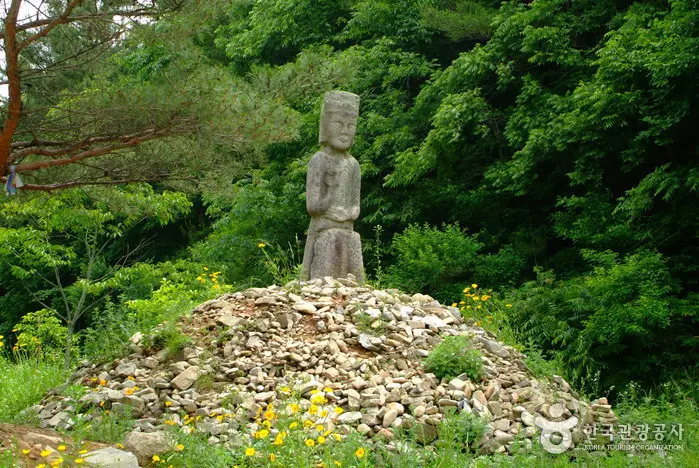
Gangdaengi Maitreya Buddha
강댕이미륵불
This Maitreya Buddha statue once stood about 100m north of Gangdang Bridge, at the entry point to Gangdaengi, inside what was formerly Gunjang-dong and is now within Gopung Reservoir. As the area is elevated, it still stands like an island today, covered in grass and easy to spot. It was moved to its current location after the area was submerged to create the reservoir. According to legend, it was erected along the route once traveled by Chinese envoys heading to the West Sea, or alternatively, it is said to have served as a guardian statue (bibo jangseung) protecting Boweonsa Temple. MoreLess
- 2
Rock-carved Buddha Triad of Yonghyeon-ri, Seosan
서산 용현리 마애여래삼존상
The Seosan Rock-carved Buddha Triad is carved into a large rock on the foothills of Gayasan, to the left of the entrance to the Boweonsa Temple Site. Discovered in 1958, it is the oldest and finest example of a rock-carved Buddha found in Korea. This area, in particular, lies along the route from the Taean Peninsula, the center of China-bound transportation routes during the Baekje era, to Buyeo, so this rock-carved Buddha is considered a masterpiece offering a glimpse of the lively cultural exchange with China at the time. MoreLess
- 3
Boweonsa Temple Site, Seosan
서산 보원사지
The exact dates of the founding and disappearance of the old Boweonsa Temple are unknown, as no written records survive. Based on tradition and excavated artifacts, it is presumed to have been founded during the Baekje period. The inscription on the stupa stele of State Preceptor Beobin, recording that some 1,000 monks once resided here, suggests that it was an exceptionally large temple in its time. MoreLess
- 4Gaesimsa Temple (Seosan)
개심사(서산)
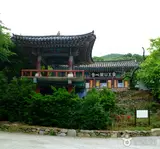
Nestled in the dense forest of Sangwangsan (307m), about 6km from Haemi-myeon, Gaesimsa is one of the four great temples of Chungcheongnam-do. The winding mountain path from the parking lot to the temple courtyard is quiet and beautiful, bursting with cherry blossoms in spring. The Daeungjeon Main Hall of Gaesimsa is a single-story gabled-roof building, three bays wide and three bays deep, its structural style a hybrid mixing techniques from both the dapo and jusimpo bracket systems. Built in 1484, the 15th year of King Seongjong's reign, it is designated Treasure No. 143. Notably, one building uses a naturally curved tree trunk as-is for a pillar. MoreLess
- 5
Yonghyeon National Recreation Forest
국립용현자연휴양림
Nestled in the middle of Yonghyeon Valley, between the ridgelines running from Seokmunbong Peak (653m) on the Gayasan range at 678m elevation, through Ilaksan and Sangwangbong, to Okyangbong and Sujeongbong, this forest recreation site boasts the scenery of a deep mountain valley. Trails and circular forest roads connect along the ridgeline to the Seosan pasture road, making it easy to walk or hike, with views stretching all the way to the distant West Sea. MoreLess
Source: Korea Tourism Organization (TourAPI) · Machine-translated