Visiting the Ports Where Boryeong's History and Life Are Woven
5 stops · 6 hours
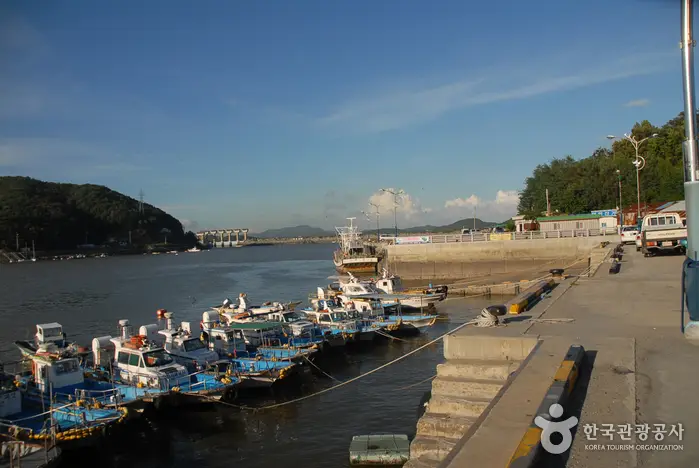
Climb up to Chungcheongsuyeongseong Fortress, built in the Joseon era, and Ocheonhang Port's coastal waters come into full view. Starting from Ocheonhang, follow the coastal road to meet the history and life of Boryeong. Visit Ocheonhang Port, which traded with China as far back as the Goryeo era; Galmaemot Shrine, where 500 believers were martyred during the 1866 Byeongin Persecution; and Daecheonhang Port, a forward base for West Sea fishing where countless fishing boats and passenger ferries come and go.
- Duration
- 6 hours
- Distance
- 25.3km
Along the way
- 1Ocheonhang Port
오천항
Ocheon has long been the center of life for the northern Boryeong region. This can be seen in the saying that all roads in northern Boryeong lead to Ocheon — indeed, there are as many as three approach roads into Ocheon, through Jupo, Jugyo, and Cheongso. Though much of its past glory has faded, Ocheonhang Port still fulfills its role as a major fishing port for the Cheonsuman Bay area. Located deep within the bay, its natural conditions are so favorable that it needs no separate breakwater or refuge facilities. MoreLess
- 2
Galmaemot Martyrs' Shrine
순교성지 갈매못
Once a sandy beach by the sea, Galmaemot was the execution ground where, during the Byeongin Persecution, Bishop Marie-Nicolas-Antoine Daveluy, Father Just de Bretenieres, Father Pierre Aumaitre, Deacon Hwang Seok-du (Luke), Deacon Jang Ju-gi (Joseph), and countless other unnamed martyrs were beheaded before the military and shed their blood (March 30, 1866, Good Friday). With views of the islands of the West Sea and Cheonsuman Bay, the sunset here feels deeply meaningful and beautiful, evoking the blood of the martyred saints. MoreLess
- 3Daecheonhang Port
대천항
Daecheonhang Port is both a hub for gathering seafood and a gateway for Boryeong's island residents and travelers. It is the departure and arrival point for passenger ferries bound for Wonsando, Oeyeondo, Sapsido, Nokdo, and other islands. As such, it bustles with travelers heading to the large and small islands of the West Sea during the summer vacation season and on weekends, and a steady stream of anglers chartering boats for fishing. The waters off Boryeong are especially known for rockfish and white croaker, and anglers fishing for mudskipper or black porgy from the railings of docked fishing boats are a common sight. MoreLess
- 4
Lunch (Kimgane Jeongtong Sagol Sujebi, Sinnamju Donghaejangguk)
점심식사(김가네 정통사골수제비, 신남주동해장국)
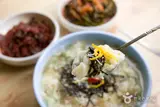
[Kimgane Jeongtong Sagol Sujebi] \nNot far from Seoul, with shallow water and a comfortable water temperature, Daecheon Beach is one of the most visited beaches in summer. Kimgane, a well-known restaurant near Daecheon Beach, is famous for its sujebi (hand-torn dough soup) made with a rich broth simmered from ox bones. \n[Sinnamju Donghaejangguk] \nAmong the many good restaurants in the area is Sinnamju Donghaejangguk. Its kongnamul haejangguk (bean sprout hangover soup), packed with bean sprouts for a refreshing broth, is perfect for soothing a hangover from the night before. MoreLess
- 5
Daecheon Beach
대천해수욕장
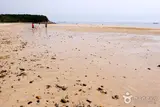
4km off the coast of Daecheon Beach floats Daboo Island, with its white pebble shore and scenic views, and pleasure boats run back and forth regularly. Also, Daecheonhang Port, located 1km north of the beach, is a key hub for West Sea tourism and shipping transport. To reach any of the more than 70 islands, including Wonsando, Sapsido, and Oeyeondo, one must pass through here. It is also famous as a sea fishing spot where sea bream, sea bass, rockfish, and greenling are commonly caught. MoreLess
Source: Korea Tourism Organization (TourAPI) · Machine-translated