From General Gyebaek to Wang Geon: Encountering the Ages from Baekje to Goryeo
8 stops · 6 hours
Along the low-lying fields of Nonsan lie historical sites spanning from Baekje to Goryeo. Visit the tomb of Gyebaek, who died a heroic death in the Battle of Hwangsanbeol against Silla; Gaetaesa Temple, built by King Taejo Wang Geon of Goryeo to commemorate the unification of the Three Kingdoms; and Gwanchoksa Temple, home to the Goryeo-era Eunjin Maitreya Buddha statue. Donamseowon, one of the 47 Confucian academies (seowon) that survived Heungseon Daewongun's abolition of such academies, and Tapjeong Reservoir are also meaningful stops.
- Duration
- 6 hours
- Distance
- 24.3km
Along the way
- 1
Gaetaesa Temple
개태사
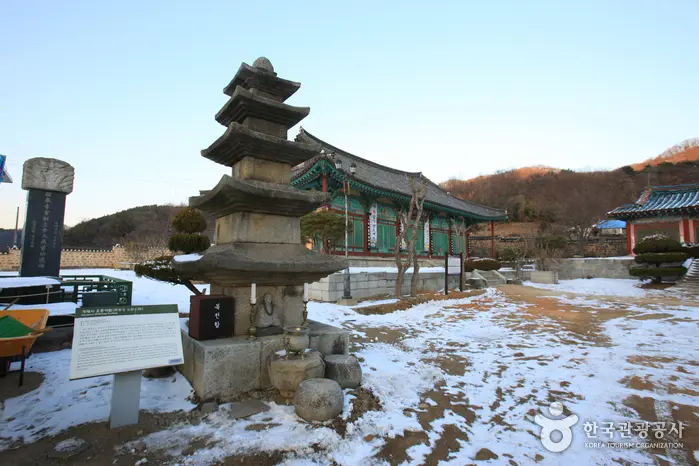
A temple located on Cheonhosan Mountain in Cheonho-ri, Yeonsan-myeon, Nonsan, Chungcheongnam-do, founded by King Taejo of Goryeo to commemorate his defeat of Singeom of Later Baekje and the unification of the Three Kingdoms, at which time he renamed Hwangsan to Cheonhosan. MoreLess
- 2
Donamseowon, Nonsan
논산 돈암서원
Donamseowon was originally built in the 12th year of King Injo's reign (1634), at Sumal, 1.5km from its present location. It received a royal charter (saaek) in the first year of King Hyeonjong's reign (1660), but because the site was low-lying and water would flood in as far as the courtyard during floods, it was relocated in the 17th year of King Gojong's reign (1880) to its present location at 74 Imni (Seowonmal). It was one of the seowon excluded from the order abolishing Confucian academies in the 3rd year of King Gojong's reign (1865). MoreLess
- 3
Tapjeong Reservoir
탑정저수지
Tapjeong Reservoir rarely freezes even in winter, and with large-scale farmland such as the Nonsan Plain nearby providing abundant food, it offers excellent habitat conditions for migratory birds, and has recently emerged as a new wintering ground for winter migratory birds. From late October to early March, roughly 100 species of migratory birds fly in to Tapjeong Reservoir, and it is notable for hosting a far greater variety of species overwintering here than at the Geumgang Estuary or the Seosan A/B districts, which are known for hosting large numbers of birds by population. MoreLess
- 4
Lunch (Gyemoui Haengbokhan Bapsang, Yeonsan Halmeoni Sundae Yeonpung Restaurant)
점심식사(계모의 행복한 밥상, 연산 할머니 순대 연풍식당)
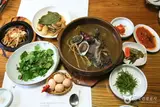
[Gyemoui Haengbokhan Bapsang] The Hwanggitang set menu consists of black-feathered chicken dishes, half-chicken ginseng soup, and porridge, and the samgyetang comes with either one small chicken (500–600g) or half of a large chicken (over 1kg) along with nutritious glutinous rice. [Yeonsan Halmeoni Sundae Yeonpung Restaurant] Sticking to native flavors and now in its third generation, this restaurant is the originator of the local sundae (Korean blood sausage) alley. Using broth made from simmered pork leg bones, its sundae differs from the usual kind made with glass noodles and tofu — made purely by hand from pig's blood and green onion, it lets you taste its distinctive original flavor.MoreLess
- 5
Gyebaek Janggun Yujeokji (General Gyebaek Historic Site)
계백장군유적지
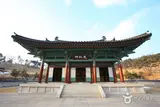
The historic site of Gyebaek, ranked among the three great loyal subjects of late Baekje along with Seongchung and Heungsu, lies near Hwangsanbeol, the site of his final battle. When his tomb was discovered in 1966, more than half of the burial mound had collapsed, exposing the inner chamber, with parts of the chamber walls damaged and left neglected; residents of Bujeok-myeon then placed the capstone, sealed the inner chamber's plastered walls, and restored the mound to a circumference of 47.6m, a diameter of 15.15m, and a height of 6.5m. MoreLess
- 6Gwanchoksa Temple
관촉사
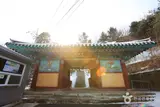
Gwanchoksa Temple sits at the foot of Banyasan Mountain (100m), just over 3km from downtown Nonsan. The temple houses the Stone Standing Maitreya Bodhisattva of Gwanchoksa (Treasure No. 218), whose construction began in the 19th year of King Gwangjong of Goryeo (967) and was completed 38 years later by the monk Hyemyeong. According to legend, a woman gathering bracken on Banyasan heard the cry of a baby and went to look, but found no child — instead, a great rock was rising up out of the ground. When the royal court heard of this, they had a Buddha statue carved from the rock. MoreLess
- 7
Gyebaek Janggun Yujeokji (General Gyebaek Historic Site)
계백장군유적지
The historic site of Gyebaek, ranked among the three great loyal subjects of late Baekje along with Seongchung and Heungsu, lies near Hwangsanbeol, the site of his final battle. When his tomb was discovered in 1966, more than half of the burial mound had collapsed, exposing the inner chamber, with parts of the chamber walls damaged and left neglected; residents of Bujeok-myeon then placed the capstone, sealed the inner chamber's plastered walls, and restored the mound to a circumference of 47.6m, a diameter of 15.15m, and a height of 6.5m. MoreLess
- 8Gwanchoksa Temple
관촉사
Gwanchoksa Temple sits at the foot of Banyasan Mountain (100m), just over 3km from downtown Nonsan. The temple houses the Stone Standing Maitreya Bodhisattva of Gwanchoksa (Treasure No. 218), whose construction began in the 19th year of King Gwangjong of Goryeo (967) and was completed 38 years later by the monk Hyemyeong. According to legend, a woman gathering bracken on Banyasan heard the cry of a baby and went to look, but found no child — instead, a great rock was rising up out of the ground. When the royal court heard of this, they had a Buddha statue carved from the rock. MoreLess
Source: Korea Tourism Organization (TourAPI) · Machine-translated