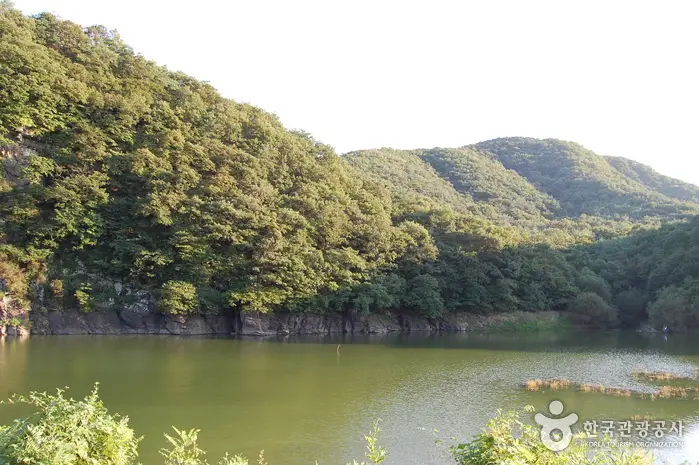
Enjoying a Bamboo Forest Bath in the River Breeze
4 stops · 5.5 hours
Along the Taehwagang River, the symbol of Ulsan, nature, history, and culture come together in harmony. Admire the Cheonjeon-ri Petroglyphs and the Bangudae Petroglyphs, remnants of prehistoric times, and enjoy a bamboo forest bath while walking through Sipni Daesup, a bamboo grove created during the Japanese colonial era. The towering Seonbawi Rock is one of the scenic highlights of the Taehwagang River. Climb the observation deck for a full view of the river's course as well.
- Duration
- 5.5 hours
- Distance
- 40.1km
Along the way
- 1
Cheonjeon-ri Petroglyphs, Ulju
울주 천전리 각석
Pictures drawn by carving, engraving, or painting objects or symbols onto rock faces, large cliffs, or cave walls are called petroglyphs (bawi-geurim, or 'rock pictures'). While petroglyphs have also been found at Late Paleolithic sites, typical examples are mostly found at Neolithic and Bronze Age sites. Petroglyphs are generally understood as products of rites for abundance and fertility. MoreLess
- 2
Bangudae Petroglyphs
반구대암각화
Petroglyphs are pictures carved into rock by prehistoric people, depicting various events from daily life around them. They were mainly carved on large, sacred rocks used by the community, where it is presumed people gathered to perform various rituals. The Bangudae Petroglyphs at Daegok-ri, Ulju, are carved at a spot called 'Geonneogakdan' along Daegokcheon Stream, a tributary of the Taehwagang River, and the rock surface where the carvings are concentrated measures 10m wide and 3m high. MoreLess
- 3
Taehwagang River (Sipni Daesup Bamboo Forest)
태화강(십리대숲)
The Taehwagang River flows through the heart of Ulsan. It winds around Hwaryongyeon, passes Hakseong, leaving behind the name of Isusansan, and flows into the East Sea at Ulsan Bay. Its basin, spanning about 36㎡ east-west and 28㎡ north-south, is mostly mountainous terrain, but fertile plains spread along both banks and the lower reaches of the river, and today it serves as an important source of drinking water for the citizens of Ulsan. MoreLess
- 4
Taehwagang Observatory
태화강전망대
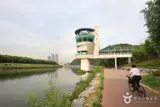
Built in 1963 but no longer operating since 1995, the Taehwa Water Intake Station and its tower were remodeled by K-water into the Taehwagang Observatory, opening on February 24, 2009. It is now operated and managed by Ulsan City as a space offering fine views of the Taehwagang River, migratory bird watching, and rest for citizens. MoreLess
Source: Korea Tourism Organization (TourAPI) · Machine-translated