Meeting the Landmarks of Seoul
6 stops · 6.5 hours
Explore downtown Seoul's many attractions together with your family. Visit Culture Station Seoul 284, a cultural space remodeled from the old Seoul Station building that now hosts uniquely themed exhibitions, and join in the various events held at Seoul Plaza. Enjoy traditional experiences at Namsangol Hanok Village, and climb N Seoul Tower for a panoramic view of the whole city.
- Duration
- 6.5 hours
- Distance
- 10km
Along the way
- 1Sungnyemun Gate
숭례문
Sungnyemun (崇禮門) was first built in the 5th year of King Taejo's reign (1396) and rebuilt in February 1398. As the main gate of Hanseong, the capital of the Joseon Dynasty, positioned in the south among the Four Great Gates, it is also known as Namdaemun (South Gate). MoreLess
- 2Culture Station Seoul 284 (former Seoul Station)
문화역서울 284(구, 서울역사)
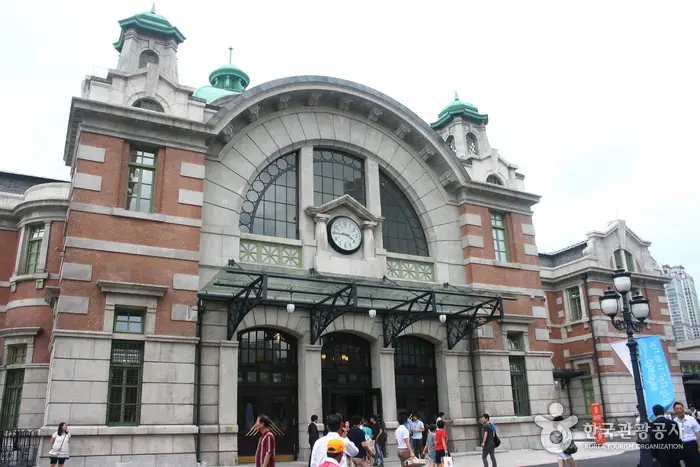
The old Seoul Station building was designed by Tsukamoto Yasushi, a professor at Tokyo Imperial University, with construction beginning in June 1922 and completed in September 1925. The newly built structure was considerable in scale for its time, and its domed roof and distinctive exterior became the talk of the town. The central hall on the first floor is now used as a space for performances, exhibitions, events, and a cafe, while the second floor serves as a multipurpose hall for performances, exhibitions, seminars, and meetings. MoreLess
- 3Deoksugung Palace
덕수궁
Deoksugung Palace, Historic Site No. 124, was not originally a royal palace. It was originally the residence of Grand Prince Wolsan (1454−1488), King Seongjong's older brother, but after the royal palaces were all burned down during the Japanese invasion in 1592, it began to be used as a temporary palace in 1593. Deoksugung once had many buildings, but of its present 18,635-pyeong grounds, only Daehanmun Gate, Junghwajeon Hall, Gwangmyeongmun Gate, Seogeodang Hall, Junmyeongdang Hall, Jeukjodang Hall, Hamnyeongjeon Hall, Deokhongjeon Hall, and Seokjojeon Hall remain. MoreLess
- 4
Seoul Plaza
서울광장
The history of Seoul Plaza (in front of City Hall) begins in 1897, when King Gojong returned from the Russian legation, where he had taken refuge, to Deoksugung Palace, once the private residence of Grand Prince Wolsan. Ascending to the position of emperor, Gojong laid out radial roads centered on the area in front of Daehanmun Gate at Deoksugung to establish a new foundation for the nation, and built a plaza and the Hwangudan Altar in front. From then on, the plaza in front of Daehanmun Gate became a central stage for citizens, from demonstrations to protect Gojong, to the March 1st Movement, the April 19 Revolution, protests against the Korea-Japan talks, and the June Democratic Uprising. MoreLess
- 5Namsangol Hanok Village
남산한옥마을
Opened on April 18, 1998, Namsangol Hanok Village covers a total site area of 79,934㎡ (24,180 pyeong) and consists of five traditional hanok houses, a traditional crafts exhibition hall, Cheonwoogak Plaza, a traditional garden, and Time Capsule Plaza. The Time Capsule Plaza was completed in 1994 as part of the 600th anniversary events marking Seoul's founding as the capital, and the traditional garden was created with the atmosphere of Namsangol in mind. The village consists of five traditional houses relocated and restored from various sites around Seoul. This was part of a project to restore Namsangol's original appearance, taking over the site of the Capital Defense Command in 1989, demolishing its buildings, and developing the area. MoreLess
- 6
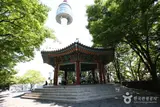
N Seoul Tower
남산서울타워
Seoul Tower is Korea's first tower-type tourist attraction. Standing 236.7m tall, when combined with the 243m elevation of Namsan itself, its total height reaches 480m, making it one of the tallest towers in Asia. Construction began in December 1969 and was completed in July 1975, and when the observation deck opened to the public on October 15, 1980, it emerged as one of Seoul's landmark attractions. Loved by tourists for 30 years, the tower's aging facilities were remodeled on December 9, 2005, giving it a fresh, dazzling new look.MoreLess
Source: Korea Tourism Organization (TourAPI) · Machine-translated