Strolling Through Hanyang's 500-Year Capital
4 stops · 6.5 hours
Walk along the traces of the 500-year-old capital nestled in the heart of Seoul. Passing through Insadong Culture Street and visiting Jogyesa Temple, the head temple of the Jogye Order representing Korean Buddhism, the path leads on to Gyeongbokgung Palace. After touring Gyeongbokgung Palace, which holds the history of the Joseon Dynasty, Buam-dong, which has recently emerged as a popular destination, is just a short distance away.
- Duration
- 6.5 hours
- Distance
- 5km
Along the way
- 1
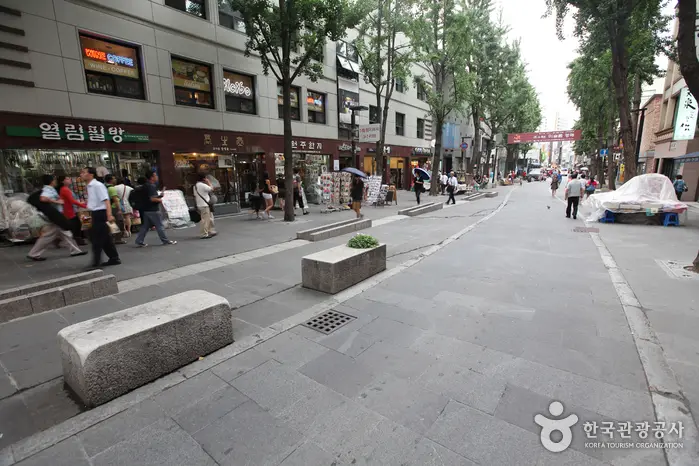
Insadong
인사동
Insadong is a precious space in the heart of the city where old yet valuable traditional items are traded. Around its main street, alleys weave together like a maze. Within this maze, art galleries, traditional craft shops, antique shops, traditional teahouses, traditional restaurants, and cafes are densely packed. In particular, Insadong's shops are highly popular with both young people and middle-aged visitors for their unique charm. Among them, the art galleries form the core that has carried on Insadong's tradition. MoreLess

- 2
Jogyesa Temple
조계사
Jogyesa Temple is the head temple of the Direct Jurisdiction District of Korean Buddhism and the central temple of Korean Buddhism, housing the headquarters of the Jogye Order and the Central Council. It was originally founded in the late Goryeo period (late 14th century) at the site of present-day Susong Park (formerly Jungdong High School), but was destroyed by fire (date unknown). It was rebuilt in 1910 under the name Gakhwangsa by monks Han Yong-un and Yi Hui-gwang, among others. It was later renamed Taegosa and served as the highest institution of Korean Buddhism from 1936, and after the Buddhist purification movement to remove remnants of Japanese colonial influence arose in 1954, it was renamed Jogyesa, its current name. MoreLess
- 3Gyeongbokgung Palace
경복궁
Gyeongbokgung Palace was built in 1395 by King Taejo Yi Seong-gye as the main palace of the new Joseon Dynasty. Because it is located to the north compared to the East Palace (Changdeokgung) and the West Palace (Gyeonghuigung), it was also called 'Bukgwol' (North Palace). Today, the National Palace Museum of Korea stands to the west outside Heungnyemun Gate, and the National Folk Museum of Korea is located east of Hyangwonjeong Pavilion within Gyeongbokgung Palace. MoreLess
- 4Buam-dong
부암동
Buam-dong, in Jongno-gu, is a neighborhood of winding alleys that retains both the refined atmosphere of Samcheong-dong and the old-fashioned, rustic charm of the past. It was once a quiet neighborhood where artists from various fields — painters, writers, professors — lived unhurried lives, but recently, from in front of the Buam-dong community office onward, it has drawn attention as a stylish area alongside Samcheong-dong and Sinsa-dong's Garosu-gil. It is a good walking course and a neighborhood with many different faces, carrying something of a tourist-spot atmosphere as well. MoreLess
Source: Korea Tourism Organization (TourAPI) · Machine-translated