The Scent of History Along the Namhan River
7 stops · 6.5 hours
Chungju was a fierce battleground during the Three Kingdoms period, as it was a key strategic point on the route crossing the Sobaek Mountains and using the Han River to reach the Han River basin. Along the Namhan River, a wide range of historical sites remain from the Three Kingdoms period through the Joseon Dynasty, making it an ideal course for exploring cultural heritage.
- Duration
- 6.5 hours
- Distance
- 32.1km
Along the way
- 1
Cheongnyongsa Temple Site
청룡사지
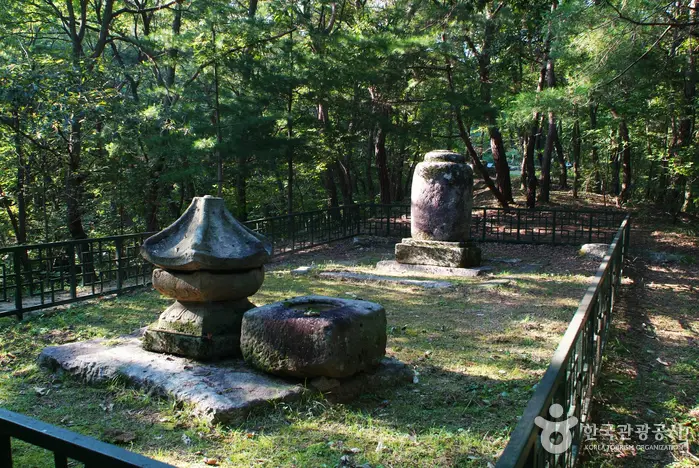
In the late Goryeo period, a small hermitage stood partway up Mt. Cheonggyesan; when State Preceptor Bogak, teacher of King Taejo of Joseon, retired there in seclusion, Taejo is said to have had a large temple built in its place. It is now in ruins, but nearby remain the Stupa of State Preceptor Bogak, called Jeonghye Wonyungtap, along with a stone lantern and the stupa's memorial stele. MoreLess
- 2Goguryeo Stele of Chungju
충주 고구려비
The only Goguryeo stele found on the Korean Peninsula, it is presumed to have been erected in the late 5th century. Of the roughly 700 characters inscribed, only about 200 can be deciphered, but based on their content the stele is believed to commemorate King Jangsu's expansion into the Han River basin. It was discovered on February 25, 1979 by the cultural heritage preservation group Yeseong Donghohoe, and confirmed as a Goguryeo-era stone stele on April 8 of the same year by an academic survey team from Dankook University Museum in Seoul. MoreLess
- 3
Jungangtap Park
중앙탑공원
The seven-story stone pagoda of Tappyeong-ri, Jungwon, National Treasure No. 6, is commonly called Jungangtap ('Central Pagoda') because it stands at the geographic center of Korea. Believed to have been built during the Unified Silla period (mid-9th century), it is the country's only seven-story stone pagoda, standing 14.5m tall. MoreLess
- 4
Lunch (Unjeong Restaurant, Silla-jeong)
점심식사(운정식당, 신라정)
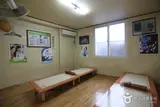
[Unjeong Restaurant] \nOlbaengi (olgaengi, small river snails) have long been believed to be good for the stomach and were a favorite food of Koreans in earlier generations. \n[Silla-jeong] \nA freshwater-fish restaurant with a 25-year tradition. The sauce is made by simmering eel bones with a variety of seasonings, and the eel is grilled three times over low charcoal heat while being basted with the sauce, then served hot on a heated stone plate topped with onions to keep it warm. MoreLess
- 5Tangeumdae and Tangeumdae Park, Chungju
충주 탄금대와 탄금대공원
Tangeumdae was originally a low hill called Mt. Daemunsan, and it offers stunning scenery where the leisurely flowing Namhan River winds around jagged cliffs beneath dense pine forests. The name Tangeumdae ('Gayageum-Playing Terrace') comes from the fact that Ureuk, one of Korea's three great musical sages, is said to have played the gayageum here during the reign of King Jinheung of Silla. MoreLess
- 6
Chungnyeolsa Shrine of Im Chung-min-gong, Chungju
충주 임충민공 충렬사
This shrine was built to honor the loyalty of General Im Gyeong-eop (1594-1646), posthumously titled Chungmin-gong. The shrine was built in 1679, the 23rd year of King Sukjong's reign, and the general was granted the posthumous title Chungmin in 1706. In 1727, the third year of King Yeongjo's reign, the shrine was renamed Chungnyeolsa. Today, Chungnyeolsa displays relics used by the general, and to the left in front of the shrine stands the 'Monument to the Chastity of Lady Wansan Yi, Jeongbuin,' erected in honor of the unwavering fidelity of the general's wife. MoreLess
- 7
Danhosa Temple
단호사
No matter its location or size, every temple has its own charm. Danhosa is home to a seated iron Buddha statue in Chungju. Iron Buddha statues are rare enough throughout the Goryeo and Joseon dynasties that you could count the surviving examples on one hand, yet Chungju is unusually rich in them. MoreLess
Source: Korea Tourism Organization (TourAPI) · Machine-translated