Heungdeoksa Temple Site, Where the World's Oldest Metal Type Was Printed
5 stops · 6 hours
Heungdeoksa Temple Site in Cheongju is well known as the place where the 'Jikji' (Buljo Jikji Simche Yojeol) was printed. The world's oldest book printed with movable metal type — 63 years earlier than Gutenberg's type of 1440 — was printed right here at Heungdeoksa. In the heart of downtown Cheongju also stands the Iron Flagpole of Yongdusa Temple Site, designated a National Treasure, with its stone supports and an inscribed iron pole still surviving. Sangdangsanseong Fortress, steeped in a long history, is likewise well worth a leisurely visit.
- Duration
- 6 hours
- Distance
- 12.5km
Along the way
- 1
Heungdeoksa Temple Site
흥덕사지
Heungdeoksa Temple Site lies in the old village of Yeondang-ri, on the southeastern foot of Mt. Yangbyeonsan. In 1985, numerous artifacts were unearthed during the Uncheon District housing development project carried out by the Korea Land Corporation, prompting construction to halt and the site to be excavated by the Cheongju University Museum. MoreLess
- 2
Yonghwasa Temple
용화사
Yonghwasa Temple stands at 216-1 Sajik-dong, Heungdeok-gu, Cheongju, North Chungcheong Province, along the Musimcheon Stream, and is a branch temple of Beopjusa, the head temple of the 5th District of the Jogye Order of Korean Buddhism. Many temples across Korea share the name Yonghwasa, and this one along the Musimcheon in Cheongju is one of them. MoreLess
- 3
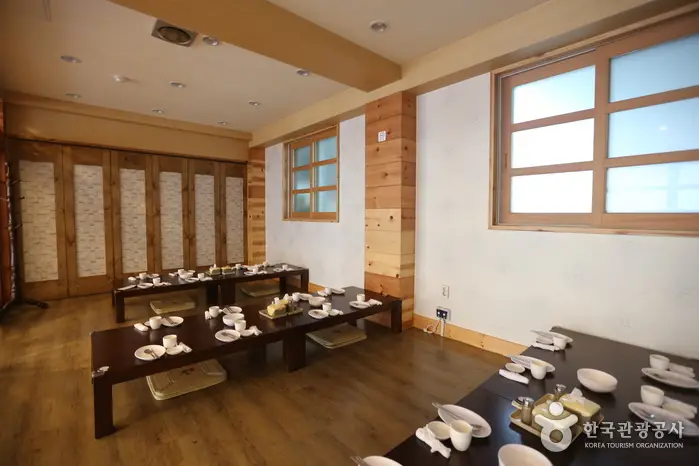
Lunch (Cheongsong Fried Chicken, Seonangol Stone-Pot Rice House)
점심식사(청송통닭, 성안골돌솥밥집)
[Cheongsong Fried Chicken] \nA restaurant with a 40-year tradition, specializing in samgyetang (ginseng chicken soup) and whole fried chicken. \n[Seonangol Stone-Pot Rice House] \nFamous for its nutritious stone-pot rice, where you can enjoy savory scorched rice (nurungji) or scorched-rice tea (sungnyung) served in an individual stone pot. MoreLess

- 4
Iron Flagpole of Yongdusa Temple Site, Cheongju
청주 용두사지 철당간
Designated National Treasure No. 41 on December 20, 1962. The granite supports stand 4.2m high, while the iron flagpole itself is 12.7m tall, with each iron cylinder segment 0.63m high and 0.4m in diameter. A danggan is a pole erected at a temple to fly a banner (dang) during prayers, dharma assemblies, and other rituals. Since the Silla period, many danggan poles were installed alongside the founding of temples, but in most cases only the stone supports survive today, the poles themselves having been lost. MoreLess
- 5Sangdangsanseong Fortress
상당산성
The name Sangdangsanseong appears to derive from Sangdang-hyeon, a Baekje-era administrative district during the Three Kingdoms period. It is a massive pogok-style stone fortress with a perimeter of more than 4km. The fortress is believed to have first been built as an earthen wall during the Baekje period, and records also mention that Kim Seo-hyeon (Lord Wonjeong), the third son of Kim Yu-sin, built Seowonsulseong Fortress. It was later rebuilt during the Japanese invasions of 1592, in the 29th year of King Seonjo's reign, and rebuilt again in stone during the reign of King Sukjong. MoreLess
Source: Korea Tourism Organization (TourAPI) · Machine-translated