Walking Along the Hwasun Dolmen Sites
4 stops · 6.5 hours
Along with Gochang in North Jeolla Province and Ganghwado Island, Hwasun is home to dolmen sites inscribed as a UNESCO World Heritage Site. Along the road from Daesin-ri to Hyosan-ri, you can see numerous dolmens, including Pingmae Rock, as well as traces of the quarries where the stones were cut. After touring the dolmen sites, discover another kind of stone beauty at the Thousand Buddhas and Thousand Pagodas of Unjusa Temple and the Stupa of State Preceptor Cheolgam at Ssangbongsa Temple.
- Duration
- 6.5 hours
- Distance
- 50km (incl. 6.1km Dolmen Trail)
Along the way
- 1
Hwasun Jeongam Jo Gwang-jo Memorial Stone
화순정암조광조선생적려유허비
The Jeokryeo Yuheobi Monument was erected in memory of Jeongam Jo Gwang-jo (1482-1519), who was exiled to Neungseong during the Gimyo Purge of 1519. 'Jeokryeo' refers to exile or banishment. This monument stands by the roadside near the site of the former north gate of Neungseong-hyeon, complete with a tortoise-shaped base, stele body, and dragon-carved capstone. MoreLess
- 2
Hwasun Dolmen Sites [UNESCO World Heritage]
화순 고인돌군 유적[유네스코 세계문화유산]
The Hwasun dolmens are distributed across the valleys on both sides of the ridge connecting Hyosan-ri in Dogok-myeon and Daesin-ri in Chunyang-myeon. Of the roughly 980 stones surveyed around Hyosan-ri in Dogok-myeon, 135 are presumed to be dolmens, and more than 100 stones retaining the shape of a capstone remain, whether their base is buried or the structure has collapsed. MoreLess
- 3Unjusa Temple
운주사
Unjusa Temple, on Datap Peak of Mt. Cheonbulsan, is widely known for its 'Thousand Buddhas and Thousand Pagodas.' Steeped in the deep spirit of Korean Buddhism, Unjusa holds a mysterious wonder found in no other temple in Korea, with Buddhist structures of a truly unusual form. MoreLess
- 4
Ssangbongsa Temple
쌍봉사
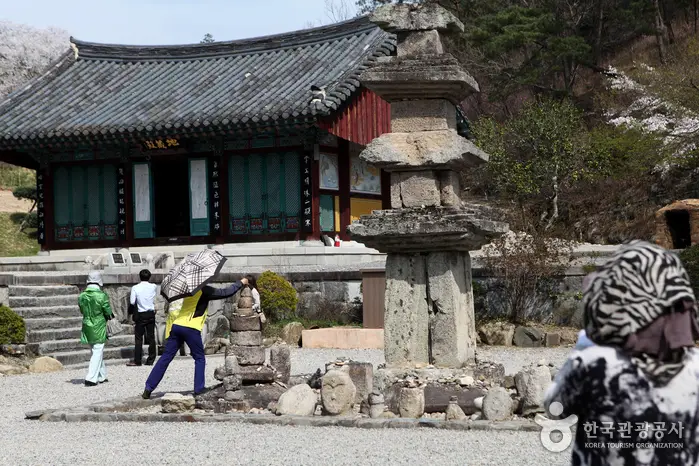
Ssangbongsa Temple was founded before 839, during the Unified Silla period; State Preceptor Hyecheol spent a summer there, and around 855 State Preceptor Cheolgam returned from China and spread his teachings at the temple. It was named 'Ssangbongsa' (Twin Peaks Temple) because two mountain peaks rise in front of and behind it. Today the temple has a Daeungjeon (main hall), Jijangjeon Hall, Geungnakjeon Hall, a newly built monks' quarters, and the Stupa of State Preceptor Cheolgam, National Treasure No. 57, along with its stele, Treasure No. 170. MoreLess
Source: Korea Tourism Organization (TourAPI) · Machine-translated