A History Experience from the Goryeo to the Joseon Dynasty
6 stops · 6 hours
It's no exaggeration to call Ganghwado an island of history. During the Goryeo dynasty it served as a de facto capital during the Mongol invasions and was also a stronghold of the Sambyeolcho; during the Joseon dynasty, the crown prince and his entourage took refuge here during the Manchu invasion. Oegyujanggak, whose contents were plundered during the French campaign against Korea (1866), was also located on Ganghwado. It's an ideal cultural heritage course for exploring the island's weighty history.
- Duration
- 6 hours
- Distance
- 32.6km
Along the way
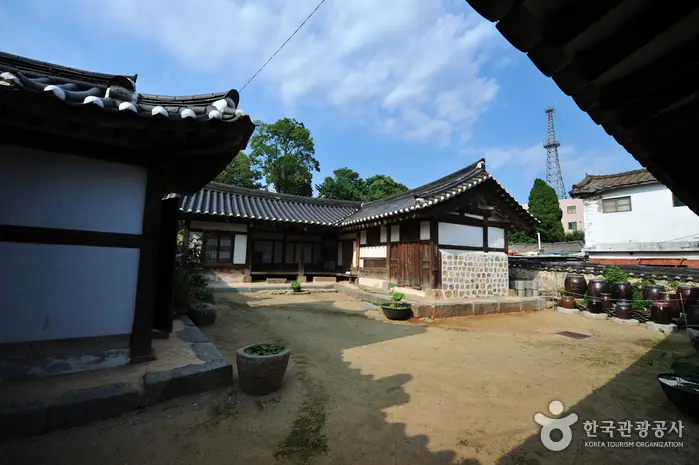
- 1Yongheunggung Palace
용흥궁
Built following the style of a residential house, like Yeongyeongdang and Nakseonjae at Changdeokgung, Yongheunggung has a simple, unpretentious feel. On the grounds stand a stele and stele pavilion marking it as the former home of King Cheoljong.\nMoreLess
- 2
Ganghwa Seodo Central Church
강화 서도 중앙교회
Ganghwado suffered many foreign invasions in the late Joseon period. When the French campaign against Korea broke out in 1866, the third year of King Gojong's reign, the French fleet stayed for about a month before withdrawing after being defeated in the Battle of Jeongjoksanseong; in 1871, during the U.S. campaign against Korea (the Sinmiyangyo), the American fleet successively captured Choji Fortress, Deokjin Fortress, and Gwangseong Garrison. In this way, Ganghwado served as the frontline base when Korea opened its doors to the West at the end of the 19th century, and it was also a place where Western missionary activity was vigorously carried out. \nMoreLess
- 3
Goryeo Palace Site
고려궁지
The Goryeo Palace Site marks the palace grounds used during the 39 years of relentless resistance against the Mongol invasions. In June 1232, during the reign of King Gojong of Goryeo, the capital was moved to Ganghwado under the banner of resistance against the Mongols, and two years later, in 1234, the government offices and palace complex were completed. Ibangcheong, a government office built by Ganghwa-bu in the 5th year of King Hyojong's reign (1654), is a U-shaped building of about 79 pyeong renovated during King Jeongjo's reign in 1783. The present-day palace site was restored and cleaned up in 1977.\nMoreLess
- 4Ganghwa Bugeun-ri Dolmen [UNESCO World Heritage Site]
강화 부근리 지석묘 [유네스코 세계문화유산]
One of the representative burial monuments of the Bronze Age, designated National Historic Site No. 137. Built with an enormous stone measuring 710cm long, 260cm high, and 550cm wide, it is a northern-style dolmen and serves as valuable material for research into prehistoric and ancient history. On November 29, 2000, it was registered as a UNESCO World Heritage Site along with the dolmens of Gochang and Hwasun at the 24th session of the UNESCO World Heritage Committee in Cairns, Australia.\nMoreLess
- 5
Ganghwa Peace Observatory
강화평화전망대
Ganghwa Peace Observatory, built on forested land in the Civilian Control Zone north of Cheolsan-ri, Yangsa-myeon -- an area strictly off-limits to the general public since the late 2000s -- was completed with a four-story structure plus one basement level, designed so visitors can experience and compare North Korea's distinctive culture and ecology up close in a way rarely possible elsewhere. It opened on September 5, 2008.\nMoreLess

- 6Yeonmijeong Pavilion
연미정
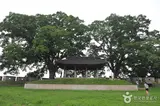
Located in Wolgot-ri, Ganghwa-eup, Ganghwa-gun, Yeonmijeong is a pavilion designated Incheon Metropolitan City Tangible Cultural Heritage No. 24 on March 1, 1995. Its original construction date is not precisely recorded; it suffered repeated hardship and damage through the Japanese invasions of 1592, the Manchu invasion of 1636, and the Korean War, and has since been restored to its current form. It is a mindori-style building with an octagonal roof and double eaves, its ten pillars set atop a stone foundation. \nMoreLess
Source: Korea Tourism Organization (TourAPI) · Machine-translated