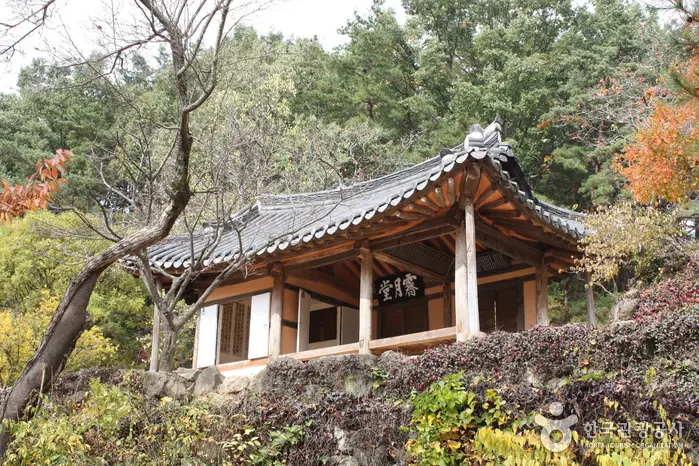
The Gasa Literature Road, Following the Fragrance of Gasa Literature
6 stops · 6.5 hours
Damyang is the home of Joseon-era gasa literature. Starting with Soswaewon, Korea's iconic traditional garden, this journey takes in Sigyeongjeong, Myeongokheon Wollim, Songgangjeong, and Myeonangjeong, letting visitors feel the modest lives and literary spirit of the scholars of old who embraced nature just as it was. Damyang's Samjinae Village is Korea's first Slow City, where every corner of the village lets visitors soak in the pure, unspoiled charm of the countryside.
- Duration
- 6.5 hours
- Distance
- 27.9km
Along the way
- 1Soswaewon Garden
소쇄원
Soswaewon is a byeolseo jeongwon (a garden attached to a retreat villa) built by Yang San-bo (梁山甫, 1503–1557) after his mentor, Jo Gwang-jo (趙光祖, 1482–1519), was exiled to Neungju during the Gimyo Purge of Scholars and died there — Yang gave up on a career in officialdom to live in seclusion amid nature. In terms of its relationship to the residence, it functions as a rear garden; in terms of spatial composition and function, it consists of the jeonwon (front garden) laid out near the entrance, the gyewon (stream garden) centered on the mountain stream, and the naewon (inner garden) centered on the main hall, Jewoldang. \nMoreLess
- 2Sigyeongjeong Pavilion
식영정
Sigyeongjeong is said to have originally been built by Seohadang Kim Seong-won for his friend Seokcheon Im Eok-ryeong; its name, meaning "the pavilion where a shadow rests," was given by Im Eok-ryeong himself. Records show that right next to Sigyeongjeong, Kim Seong-won also built another pavilion, which he named Seohadang after his own pen name — it was later lost but has recently been restored. \nMoreLess
- 3Myeongokheon Wollim
명옥헌원림
Myeongokheon is a modest pavilion, three bays wide and two bays deep, built in a form well suited for teaching. Walking around the right side of the building and following the stream uphill, you'll find the characters "Myeongokheon Gyechuk" carved into a small rock face. Behind the building, around the pond, stand crepe myrtle trees, and to the right is a grove of pines. Behind Myeongokheon lies the former site of Dojangsa, a shrine where noted local scholars were once honored with memorial rites. \nMoreLess
- 4
Changpyeong Samjinae Village, Damyang [Slow City]
담양 창평 삼지내마을[슬로시티]
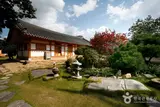
Changpyeong Samjicheon Village was formed around 1510, with Wolbongsan to the east and Guksubong to the south. Located amid open fields, it has long been an agriculturally rich area. Within the village, several well-preserved traditional hanok houses, centered on "Damyang Gojaeseon House" (City/Provincial Folklore Material No. 5), add to its value as a traditional village. \nMoreLess
- 5Songgangjeong Pavilion
송강정
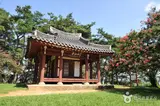
Songgang Jeong Cheol, after stepping down from the post of daesaheon amid political strife, renovated Jungnokjeong Pavilion and renamed it Songgangjeong (in 1585, the 18th year of King Seonjo). It was here that Songgang wrote works including "Samiingok." It was rebuilt by his descendants in 1955, and a monument inscribed with "Samiingok" now stands on the site. Jeong Cheol became daesaheon in 1584 (the 17th year of King Seonjo), but as the Dongin faction joined forces to fiercely attack the Seoin faction, he ultimately came under censure from the Yangsa (the two censorate offices) and stepped down from court the following year, returning to Changpyeong, where he spent four years in quiet reclusion as an ordinary man and, above all, as a poet.\nMoreLess
- 6Myeonangjeong Pavilion
면앙정
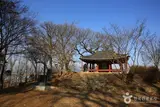
Located on the slopes of Jebongsan in Jewol-ri, Bongsan-myeon, Myeonangjeong is a pavilion built in 1533 (the 28th year of King Jungjong) by Song Sun, well known as a place where he discussed scholarship with figures including Yi Hwang (Toegye) and other prominent scholars, and trained the next generation of students.\nMoreLess
Source: Korea Tourism Organization (TourAPI) · Machine-translated