Discovering the Charm of Mountain Temples in Jirisan
6 stops · 7 hours
Gurye is one of the areas that shares Jirisan, a mountain spanning five counties and cities. In the foothills of Jirisan around Gurye, thousand-year-old temples with deep history remain, including Hwaeomsa, Cheoneunsa, Munsusa, and Yeongoksa, making this a journey to truly experience the charm of mountain temples. Visitors can also take part in nature education programs at a sanctuary that is home to the Natural Monument Asiatic black bear, which calls Jirisan home.
- Duration
- 7 hours
- Distance
- 44.2km
Along the way
- 1
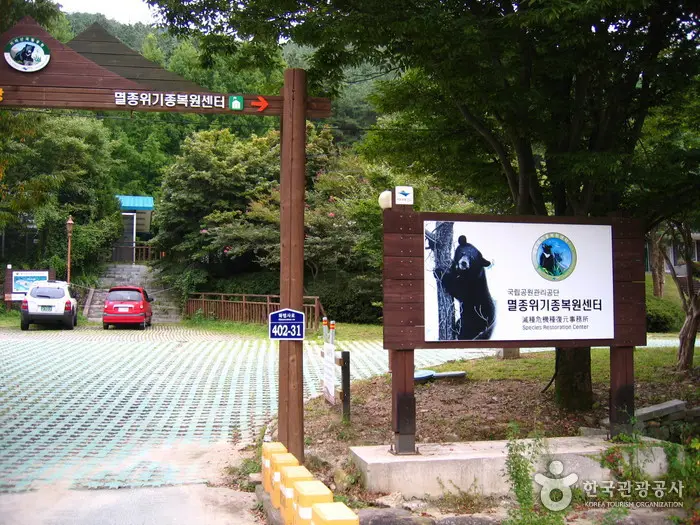
National Park Species Restoration Center
국립공원종복원센터
The National Park Species Restoration Center (formerly the Endangered Species Restoration Center) is a specialized institution dedicated to protecting and restoring wildlife that is disappearing from around us, and is leading Korea's first efforts to restore mid-to-large mammals such as the Asiatic black bear and the goral. \nMoreLess
- 2
Hwaeomsa Temple
화엄사
Located 5.4km east of Gurye-eup on the slopes of Jirisan, a mountain revered as sacred to the Korean people, Hwaeomsa is a thousand-year-old temple founded in 544 (the 22nd year of King Seong of Baekje) by Master Yeongi, who is said to have named the temple by taking the characters "Hwaeom" from the Avatamsaka (Flower Garland) Sutra. Burned down during the Imjin War, it began to be rebuilt in 1630 (the 8th year of King Injo) by Great Master Byeogam, and was completed seven years later, in 1636 (the 14th year of King Injo). \nMoreLess
- 3
Lunch (Jirisan Daetongbap, Yewon)
점심식사(지리산대통밥, 예원)
[Jirisan Daetongbap] \nSelected by the Ministry of Culture and Tourism as one of the nation's 100 best foods, "Jirisan Daetongbap" is served with over 20 side dishes, along with rice cooked inside a fragrant bamboo tube. \n[Yewon] \nDishes found only at Yewon, such as "gomchwi sol-ip hyoso bogimchi" and "saengtae eodu baengnyeoncho nabak-kimchi," are patented specialties made using enzymes the owner developed personally. Clean in flavor with a refreshing aftertaste, they should suit international palates well. \nMoreLess
- 4
Saseongam Hermitage
사성암
Saseongam (四聖庵) is a small, still little-known hermitage — neither grand nor imposing, but unmatched in charm. Said to have been first built by Master Yeongi, it is set into the rock face. Every structure, from Yaksajeon, which looks as though it grew out of the rock, to the elegant Daeungjeon, perched delicately atop the stone, blends seamlessly with the mountain to show off its graceful form. \nMoreLess
- 5Unjoru House
운조루
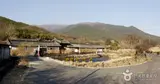
Unjoru sits on an auspicious plot of land, with the mountain forms of the Blue Dragon to the left and White Tiger to the right, and both an inner watercourse (the front ditch) and an outer watercourse (the Seomjin River) properly in place. The Obongsan peak in front of the house is said to take the shape of vassals bowing in obeisance, and the lotus pond was created to guard against fire, since the mountain forms to the south are said to take the shape of flame. According to geomantic theory, this area is said to hold auspicious sites known as geumgwimolli, geumhwallakji, obogyochwi, or obongwiso. \nMoreLess
- 6
Piagol Valley
피아골계곡
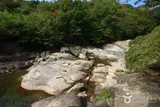
Piagol is a valley nestled between Nogodan and Banyabong. Its blood-red autumn foliage earns it a place among the "Ten Scenic Views of Jirisan." In truth, though it's famous for its fiery autumn colors, Piagol is beautiful in every season. Royal azaleas that bloom in spring reflect their faces in the mirror-clear valley streams, and in summer the foliage grows so lush it hardly lets a single ray of sunlight through. \nMoreLess
Source: Korea Tourism Organization (TourAPI) · Machine-translated