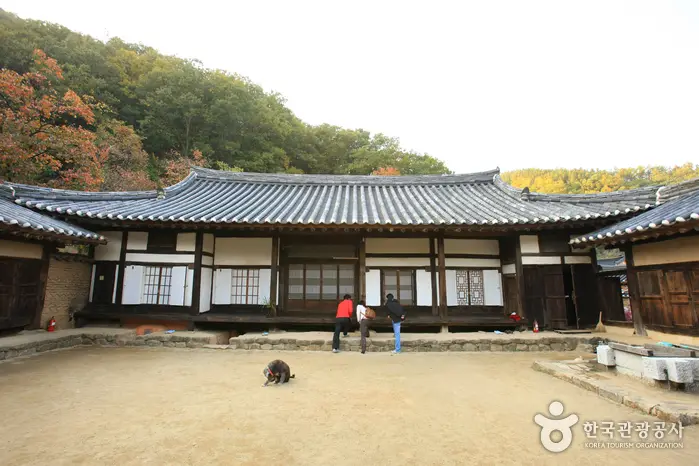
A Healing Trip to Cheongsong via Juwangsan and Dalgi Mineral Spring
4 stops · 7 hours
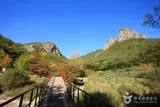
Cheongsong is home to Juwangsan National Park, famed for its beautiful rock cliffs. Following Jubang Valley, which carries the legend of King Ju, visitors can trek not only to the First, Second, and Third Falls but all the way to Naewon Village, once known as the "village without electricity" and now marked only by traces of its past. Dalgi Mineral Spring, ranked among Korea's three great mineral springs, is renowned for its efficacy against stomach ailments, and visitors can also enjoy a variety of dishes made with the spring water — a destination that truly delights both the eyes and the palate.
- Duration
- 7 hours
- Distance
- 34.3KM(incl. 5.1KM Juwangsan trekking)
Along the way
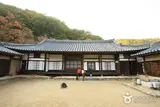
- 1Songso Historic House
송소고택
This house is said to have been built around 1880 by Songso Sim Ho-taek, the 7th-generation descendant of Sim Cheo-dae, who amassed a fortune of ten thousand seok of rice during the reign of King Yeongjo of Joseon, when he relocated from Hobakgol to Deokcheon-dong, his ancestors' home base. \nMoreLess
- 2
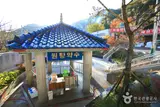
Dalgi Mineral Spring
달기약수탕
The distinctive feature of Dalgi Mineral Spring is that its flow stays constant through all four seasons regardless of drought, it never freezes even in winter, and it has no color or smell. The water tastes like sugar-free cider and is said to be effective for stomach ailments, neuralgia, and anemia, drawing a steady stream of visitors. Legend has it the spring's name, "Dalgi," comes from the "go-go-go" bubbling sound of the water, which resembles a chicken's cry; today, in keeping with that story, chicken restaurants line the area around Dalgi Mineral Spring.\nMoreLess
- 3
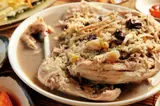
Lunch (Dalgi Yaksu Dak-baeksuk, Busan Sikdang)
점심식사(달기약수닭백숙, 부산식당)
[Dalgi Yaksu Dak-baeksuk] \nOne of Cheongsong's representative foods is "Dalgi Yaksu Dak-baeksuk" (whole chicken soup simmered with Dalgi mineral water). Chicken simmered long and slow in iron-rich Dalgi mineral water is especially famous for its supposed benefit to the stomach, and its flavor is outstanding. \n \n[Busan Sikdang] \nOn the road to Haeinsa Temple in Hapcheon, Gyeongnam, famous for the Tripitaka Koreana woodblocks, there are many restaurants centered on wild mountain greens, perhaps to give visitors a taste of temple food. Among them, Busan Sikdang specializes in sanchae jeongsik (wild greens set meal), bibimbap, and deodeok (bonnet bellflower root) dishes. \nMoreLess
- 4Juwangsan National Park
주왕산국립공원
Juwangsan (720.6m) sits on a ridge branching off from the Taebaek Mountains, the central spine of the Baekdu-daegan that forms the backbone of the Korean peninsula, extending into the southeastern part of the country. With a total area of 105.582㎢, the park spans two counties and five townships across Cheongsong-gun and Yeongdeok-gun. Seoraksan and Odaesan lie to the north, Gyeongju to the south, and Songnisan and Deogyusan to the west, among other neighboring national parks. Along with peaks such as Taehaengsan, Dusuram, and Gamebong, the park also holds Jubang Valley, Jeolgol Valley, Woloe Valley, and other valleys scattered throughout.\nMoreLess
Source: Korea Tourism Organization (TourAPI) · Machine-translated