A Historical Journey Through Uiseong, from Dinosaur Footprints to a Traditional Village
7 stops · 6 hours
Uiseong is a region that preserves the history of Somun-guk and Jomun-guk, tribal states of the Samhan period. It also boasts the Jeo-ri Dinosaur Footprint Fossil Site, the Uiseong Tapri Five-Story Stone Pagoda — a National Treasure and a Silla-era stone pagoda that imitates the technique of brick pagodas — the Natural Monument-designated Sachon Roadside Grove, and Sanun Village, a representative aristocratic village of the Joseon period, making it an ideal destination for a history trip. The five-story stone pagoda at the Bingsansa temple site in Bingye Valley, known for its wind holes and ice holes, is another cultural heritage not to be missed.
- Duration
- 6 hours
- Distance
- 16km
Along the way
- 1
Dinosaur Footprint Fossils at Jeo-ri, Uiseong
의성제오리의 공룡발자국화석
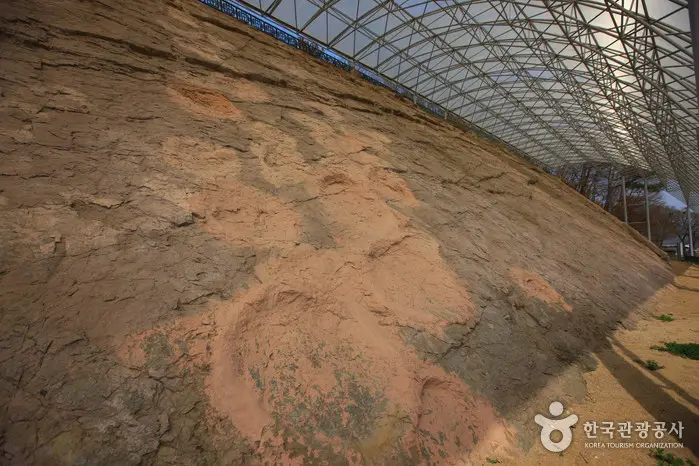
These are dinosaur footprint fossils from the Cretaceous period of the Mesozoic era, dating back roughly 115 million years. They were designated a Natural Monument on June 1, 1993. "Dinosaur" broadly refers to the massive reptiles, 5 to 25m long, that flourished from the Jurassic through the Cretaceous of the Mesozoic era. The dinosaur footprint fossils at Jeo-ri, Uiseong were discovered while cutting into a hillside during road-widening work.\nMoreLess
- 2
Tomb of King Gyeongdeok, Uiseong
의성경덕왕릉
Among a cluster of ancient tombs located in Daeri-ri, Geumseong-myeon, just under 4km south of Uiseong-eup, is a tomb presumed to be that of King Gyeongdeok of Jomun-guk. Jomun-guk was a tribal state of the Samhan period, centered around what is now Geumseong-myeon, Uiseong-gun, Gyeongsangbuk-do, said to have existed until it was annexed by Silla in 185 CE (the 2nd year of King Beolhyu of Silla). However, records confirming that Jomun-guk actually existed are only briefly mentioned in historical texts, with almost no other documentation surviving. \nMoreLess
- 3
Uiseong Tapri Five-Story Stone Pagoda
의성 탑리리 오층석탑
A Unified Silla-era stone pagoda designated a National Treasure, standing 9.56m tall with a base 4.51m wide. It partially imitates the technique of brick pagodas while also showing elements of wooden-building style. \nBuilt with a five-story pagoda body atop a low single-tier granite base, the pagoda is especially notable for its first-story body, which follows wooden-building technique with entasis-shaped square pillars, a niche on the south face, and capital-style carvings atop the pillars. \nMoreLess
- 4
Lunch (Namseonok)
점심식사(남선옥)
Namseonok Sikyuk Sikdang is a Korean beef charcoal-grill restaurant with 50 years of tradition, using only pure domestic Korean beef.\n

- 5
Sanun Village, Uiseong
의성 산운마을
A traditional village located in Sanun-ri, Geumseong-myeon, Uiseong-gun, Gyeongsangbuk-do. It became a clan settlement of the Yeongcheon Yi clan after Hakdong Yi Gwang-jun, who served as governor of Gangwon-do during the reign of King Myeongjong of Joseon, settled here. The name "Sanun" dates back to the Silla period; it is said to come from clouds seen drifting below Sujeong Valley on Geumseongsan, behind the village, giving rise to the name "Sanun Village" (山雲, "mountain cloud").\nMoreLess
- 6
Uiseong Sanun Ecological Park
의성산운생태공원
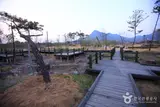
Built on the site of the former (now-closed) Sanun Elementary School, this space was created to help the younger generation learn about nature and form values around the environment. Serving as a hands-on educational site for observing natural ecology and experiencing traditional culture, it sits along the route to Geumseongsan, Uiseong's famous mountain, and Sujeongsa, a temple founded by Master Uisang during the Silla period.\nMoreLess
- 7
Bingye Valley
빙계계곡
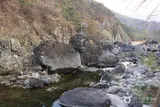
Bingye Valley, one of the "Eight Scenic Views of Gyeongbuk," was designated a county park on September 25, 1987. It gets its name "Bingsan" (ice mountain) from its ice holes and wind holes, with the stream winding around the mountain called "Bingye" and the surrounding village called Bingye-ri. Bingye Valley is located in the village of Seowon, Bingye 3-ri. It's a mysterious valley where cool wind blows and ice forms during the hottest days of summer, while warm steam rises from it in the depths of winter. \nMoreLess
Source: Korea Tourism Organization (TourAPI) · Machine-translated