A Journey Through Namyangju's History, Cradled in Nature
6 stops · 8 hours
Namyangju is dotted with historic sites and also offers a range of cultural, artistic, and ecological facilities, making it a great destination for family trips. Gwangneung and Bongseonsa are historic sites that also hold beautiful forests, lovely in every season. At Hong-Yureung and the Dasan Heritage Site, visitors can enjoy nature alongside stories from history.
- Duration
- 8 hours
- Distance
- 56km
Along the way
- 1
Namyangju Gwangneung
남양주 광릉
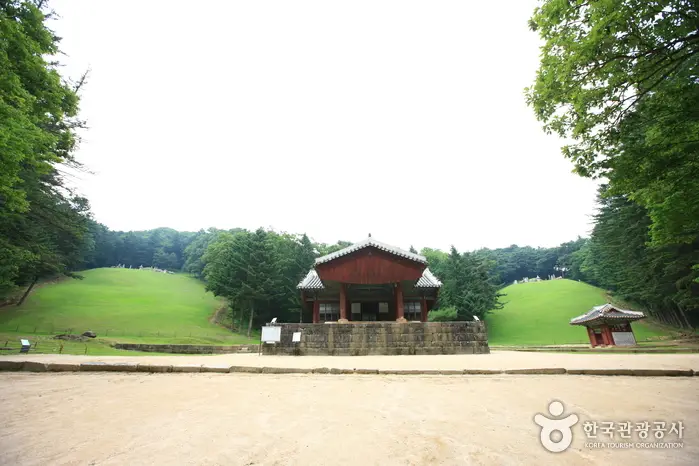
Historic Site No. 197, Gwangneung is the tomb of King Sejo, the 7th king of Joseon, and his queen, Queen Jeonghui of the Yun clan. It was the first Joseon royal tomb built in the "dongwon-igang" style, in which the king's and queen's mounds sit on separate hills, with a single jeongjagak (T-shaped ritual hall) built between the two.\nMoreLess
- 2
Bongseonsa Temple
봉선사
Bongseonsa is very close to Gwangneung, well known for its black woodpeckers and arboretum. From the Gwangneung ticket office, walking about 1.5km southeast along the fir tree path that is one of Gwangneung's prides, you'll come to a village lined with dozens of restaurants. From there, going about 300m down the road to the right brings you to Bongseonsa.\nMoreLess
- 3
Mieum-naru Folk Village
미음나루 풍속마을
Mieum-naru Folk Village is located in Suseok-dong, Namyangju, Gyeonggi-do. Together with Gaun-dong and Jigeum-dong, it forms the legal dong of Jigeum-dong, an administrative division. Its cultural heritage includes the Suseok-ri Earthen Fortress (Gyeonggi-do Monument No. 94). The folk village has many restaurants where visitors can enjoy a variety of food along with the cool scenery of the Han River. It's also conveniently connected by the Topyeong riverside road. Cultural heritage in the area includes the Suseok-ri Earthen Fortress (Gyeonggi-do Monument No. 94), a mountain fortress from the Baekje era.\nMoreLess

- 4
Lunch (Mieum Maeuntang, Chodae Hanjeongsik)
점심(미음매운탕, 초대한정식)
[Mieum Maeuntang] \nMieum Maeuntang is the originator of the spicy fish stew that has shared its history with the Mieum-naru ferry crossing. Its belief that skimping on ingredients loses customers is the secret behind serving generous portions of fresh ingredients for 30 years running. \n[Chodae Hanjeongsik] \nA hanjeongsik (Korean set-course) restaurant that carefully selects only high-quality ingredients, with every dish prepared fresh to order by a specialist chef for each course.\nMoreLess

- 5
Namyangju Hongneung and Yureung
남양주 홍릉과 유릉
Designated Historic Site No. 207, this site holds the tombs of the last two emperors of the Joseon dynasty and their consorts. Hongneung is the tomb of Emperor Gojong, the 26th ruler of Joseon, and Empress Myeongseong of the Min clan; Yureung is the tomb of Emperor Sunjong, the 27th ruler, his first consort Empress Sunmyeong of the Min clan, and his second consort Empress Sunjeong of the Yun clan. \nMoreLess
- 6
Dasan Heritage Site at Maje (Mahyeon Village)
마재(마현부락)의 다산유적지
Located about 3km from Yangsu-ri toward Paldang Dam, Maje (Mahyeon Village) is Gyeonggi-do Monument No. 7 and the site of the grave of Dasan Jeong Yak-yong, as well as the birthplace of Dasan and his three brothers. About 200m from Maje, the Dasan Heritage Site preserves a shrine, memorial hall, and the site of the family home, and on the hill above stands Dasan's grave. Looking down from the grave, the village and the Han River stretch out below, with the valley of Aengjabong, where Cheonjinam is located, unfolding beyond. \nMoreLess
Source: Korea Tourism Organization (TourAPI) · Machine-translated