An Eco-Friendly Pilgrimage Through Namyangju
6 stops · 9 hours
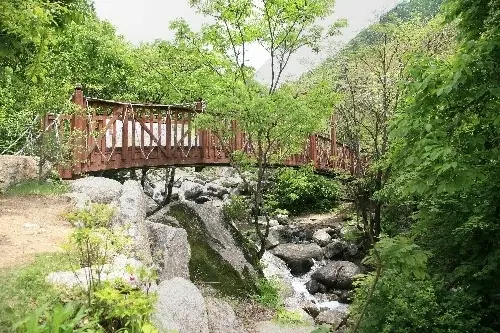
Namyangju has many mountains and beautiful valleys, and is home to several historic temples with deep roots. Sudong National Tourist Site was developed early on and remains a popular summer retreat. Nearby, Mongolian Cultural Village offers an exotic experience along with horseback riding. Piano Falls and Namyangju Organic Farm Theme Park have become new attractions in Namyangju. The view of the Bukhan River from Sujongsa, looking down from above, is superb.
- Duration
- 9 hours
- Distance
- 44km
Along the way
- 1
Chungnyeongsan Recreational Forest
축령산자연휴양림
Straddling Namyangju and Gapyeong, Chungnyeongsan is an 886m mountain known for its dense forest and beautiful valleys. According to legend, when Yi Seong-gye, founder of the Joseon dynasty, came here to hunt at the end of Goryeo, he failed to catch a single animal until his beaters told him this was a sacred mountain that required a mountain-spirit rite. After holding the rite at the summit, he caught a wild boar. Because a ritual was held here, the mountain came to be called Chungnyeongsan (mountain of the ritual).\nMoreLess
- 2
Mongolian Cultural Village
몽골문화촌
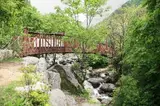
Nestled on the slopes of Cheonmasan in Namyangju, Gyeonggi-do, Mongolian Cultural Village was established under a 1998 friendship and cooperation treaty between Namyangju and Ulaanbaatar, and offers visitors a taste of traditional Mongolian culture and art. Inside the exhibition hall, visitors can view around 800 items — traditional Mongolian clothing, instruments, everyday objects, and more — that illustrate Mongolia's history and culture, and the roughly 320-seat auditorium hosts a variety of Mongolian performing arts. Resident performers stage traditional Mongolian songs and dances as well as instrumental music, acrobatics, tightrope walking, and other varied performances.\nMoreLess
- 3
Sudong National Tourist Site
수동국민관광지
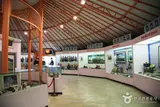
The area around Songcheon-ri, Unsu-ri, Ipseok-ri, Susan-ri, and Bigeum-ri in Sudong-myeon, Namyangju, is, as its name suggests, a picture-perfect landscape. Cool streams run everywhere, earning it the nickname "Mulgol-an" (valley of water). Surrounded by Jugeumsan, Seorisan, and Chungnyeongsan, Sudong National Tourist Site combines dense forest with clear valleys, making it an ideal summer retreat. \nMoreLess
- 4
Lunch (Yetgohyang, Tongnamu Sanbang)
점심(옛고향, 통나무산방)
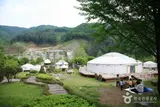
[Yetgohyang] \nIngredients are brought directly from Mongolia so visitors can taste authentic traditional Mongolian food. \n[Tongnamu Sanbang] \nBecause of its location, popular with hikers, the restaurant's standard group menu centers on dishes like dakbokkeumtang (braised spicy chicken), but its strength is offering dishes the whole family can enjoy together. The signature dish is an assortment of wild greens, served heaped by variety on a large tray of 100% domestic mountain greens.\nMoreLess

- 5Piano Falls
피아노폭포
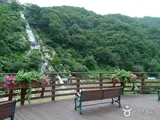
Piano Falls, located at the Hwado Sewage Treatment Plant in Namyangju, Gyeonggi-do, was built by erecting a separate steel frame on a cut slope and using an artificial rock-face mold to create a man-made cliff. With a vertical drop of 61m and a slope length of 91.7m, treated water discharged from the sewage plant is pumped up and released to cascade down the falls.\nMoreLess
- 6Sujongsa Temple
수종사
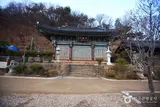
Sujongsa is a branch temple of Bongseonsa, located near the summit of Ungilsan in Songchon-ri, Joan-myeon. As the Gwangju mountain range descends toward the southwest, Ungilsan rises with an air of sanctity — not towering, but deeply serene. The view from Sujongsa in particular is spectacular, with peaks of varying heights rising in the distance and a magnificent stretch of the Bukhan River just before it merges with the Han River.\nMoreLess
Source: Korea Tourism Organization (TourAPI) · Machine-translated