A Journey Through Gimpo's Culture and History, Dreaming of Unification
6 stops · 8 hours
From Ganghwado Jejeokbong Peace Observatory, Gaeseong feels close enough to touch. It's a good place to talk with children about unification while looking out over land in the North that cannot be visited. This course evenly weaves together Gimpo's major attractions: Gimpo Sculpture Park, Daemyeong Port with its lively fish market, Deokpojin — a fortress built in the Joseon dynasty to defend against foreign invasion — and Jangneung, a royal tomb designated a UNESCO World Heritage Site.
- Duration
- 8 hours
- Distance
- 40km
Along the way
- 1Ganghwado Jejeokbong Peace Observatory
강화도제적봉평화전망대
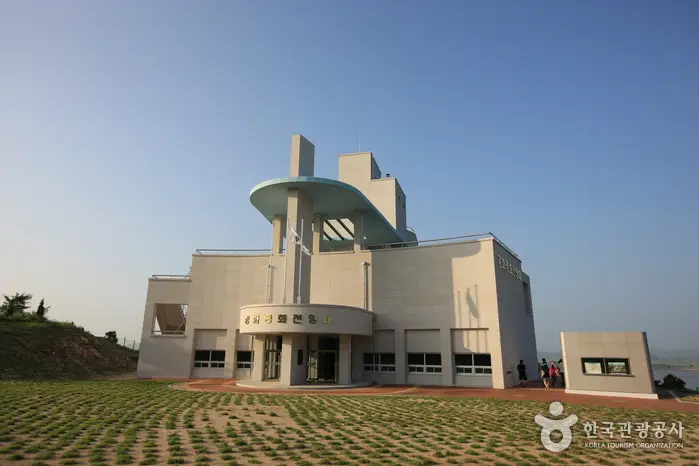
Ganghwa Peace Observatory was built in the hills of the Civilian Control Line's northern area in Cheolsan-ri, Yangsa-myeon — an area whose public access had been strictly controlled since late 2006 — with one basement level and four floors above ground, so that visitors could experience and compare North Korea's distinctive culture and landscape up close in a way not possible elsewhere. It opened on September 5, 2008. The basement and 4th floor are for military use only; the 1st floor has a shop selling Ganghwa specialty products and North Korean goods, a restaurant, an administrative office, a Unification Wish Room, and a lounge; the 2nd floor has high-powered telescopes and an exhibition hall showing the ravages and traces of war; and the 3rd floor has viewing facilities for taking in the whole of the North Korean landscape at close range, plus a screen that shows footage of the North Korean scenery even on cloudy days.MoreLess
- 2
Hanjaedang
한재당
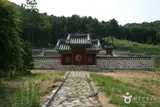
Hanjaedang (寒齋堂) is a shrine housing the memorial tablet of Yi Mok, a mid-Joseon official who met a tragic end at age 28 during the Muo Literati Purge. It comprises an old shrine building erected in 1849 and a new shrine building built in 1974. \nMoreLess
- 3
Gimpo International Sculpture Park
김포국제조각공원
Sitting at the gateway to Ganghwa, Gimpo is often seen by outsiders as little more than a place to pass through. But look more closely around Gimpo and that impression changes. Bordered above by the Han River estuary and facing the Yellow Sea to the west, the city has, across its long history, many historic sites, relics, legends, and folktales, as well as a good number of popular excursion spots.\nMoreLess
- 4Gimpo Daemyeong Port
김포 대명항
The salty tang in the air, fish flopping fresh off the boat, fishing boats returning from distant waters with the tides, and people browsing the fish market and sashimi restaurants — this is the lively, unvarnished scene of daily life at Daemyeong Port in Daegot-myeon, Gimpo. The sashimi restaurants lining the entrance to the port keep their tanks filled with freshly caught fish, and the sight of nets being spread out and mended everywhere gives a vivid sense of what a fishing port is really like.\nMoreLess
- 5
Gimpo Deokpojin
김포 덕포진
Deokpojin was a strategic military stronghold that made use of the natural terrain at Sondolhang, the passage from the Yellow Sea through Ganghwa Bay into Seoul; it is presumed to have been established under King Seonjo of the Joseon dynasty, following the bitter experience of the Japanese invasions of Korea (Imjin War). Excavations uncovered the Pasucheongji, a site used to store embers for supplying fire to the ammunition depot and gun batteries, along with small and medium cannons, cannonballs, and sangpyeong-tongbo coins. Of the six cannons unearthed, five are kept at the National Museum of Korea and one is displayed at the Deokpojin exhibition hall. \nMoreLess
- 6
Gimpo Jangneung
김포 장릉
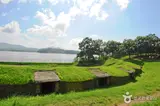
Jangneung, Historic Site No. 202, is the tomb of King Wonjong, father of the 16th Joseon king Injo (r. 1623–1649), and his consort Queen Inheon of the Gu clan. The scale and layout of the tomb reflect the typical style of the mid-Joseon period; below the tomb stands a jaesil, a hall used for ancestral rites, which was also where the 21st king Yeongjo and 22nd king Jeongjo came each year to hold memorial services.\nMoreLess
Source: Korea Tourism Organization (TourAPI) · Machine-translated