A Historical Journey Retracing Goguryeo History
8 stops · 7 hours
Since there are very few Goguryeo-related historic sites in Korea, the value of Guri's Goguryeo Blacksmith Village stands out all the more. It serves as an excellent hands-on learning site for elementary school students. Meet a variety of insects at the Insect Ecology Hall, take in a refreshing view from Guri Tower, and finish with a visit to Donggureung, a UNESCO World Heritage site, for a fully packed family travel course.
- Duration
- 7 hours
- Distance
- 17km
Along the way
- 1
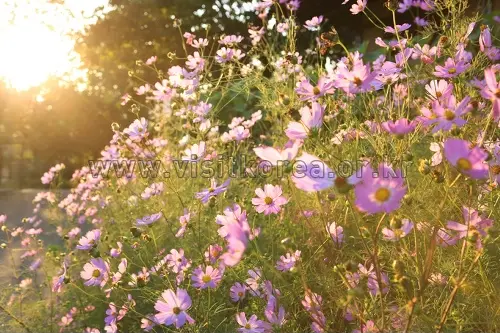
Guri Hangang Citizens' Park (Cosmos Park)
구리한강시민공원(코스모스공원)
The flower fields planted in Guri Hangang Citizens' Park are a place where citizens can share enjoyable moments together. In this park, where a cool river breeze adds to the freshness of the greenery, children can learn the value of nature while adults can get away from the city to relax. With rapeseed flowers blooming in May and cosmos in September, the vast 132,232m²(about 40,000 pyeong) flower field has become a well-known attraction, drawing not only Guri residents but also people from Seoul, making it a popular destination in the greater Seoul area.\nMoreLess
- 2
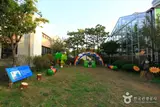
Insect Ecology Hall
곤충생태관
A place where you can see live butterflies even in winter, the Insect Ecology Hall is located at the Guri Sewage Treatment Plant, and consists of a roughly 100-pyeong glass greenhouse where insects can live year-round, and a 70-pyeong specimen exhibition and video room. It houses a wide variety of trees and flowers, and is home to butterflies, aquatic insects, and land insects including rhinoceros beetles, along with various freshwater fish that serve as indicators of water pollution, aquatic plants, and carnivorous plants, all coexisting together.\nMoreLess
- 3
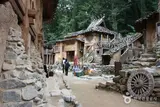
Goguryeo Blacksmith Village
고구려대장간마을
Goguryeo Blacksmith Village consists of an exhibition hall and outdoor exhibits (the blacksmith village itself). The exhibition hall displays Goguryeo relics excavated from Achasan Mountain. The history of the great Goguryeo empire, which governed a vast territory with a brilliant culture, could only have been possible thanks to an outstanding and powerful iron culture. This iron culture, the driving force behind the national development and growth of Goguryeo — which secured the largest territory in Korean history — is being revived at 'Goguryeo Blacksmith Village,' built on a Goguryeo historic site at the foot of Achasan Mountain in Guri, Gyeonggi-do. Near Umi-nae Village in Acheon-dong, Guri has recreated a Goguryeo ironworks, the Damdeok and Hogyejinyeongchae military camps, a Khitan tribal village, and Geomeulchon village, among other features.MoreLess
- 4
Insect Ecology Hall
곤충생태관
A place where you can see live butterflies even in winter, the Insect Ecology Hall is located at the Guri Sewage Treatment Plant, and consists of a roughly 100-pyeong glass greenhouse where insects can live year-round, and a 70-pyeong specimen exhibition and video room. It houses a wide variety of trees and flowers, and is home to butterflies, aquatic insects, and land insects including rhinoceros beetles, along with various freshwater fish that serve as indicators of water pollution, aquatic plants, and carnivorous plants, all coexisting together.\nMoreLess
- 5
Guri Tower
구리타워
The Guri Resource Recovery Facility, home to Guri Tower, is an eco-friendly incineration facility capable of processing 200 tons of household waste per day, with its incineration process disclosed transparently to the public. Known at home and abroad as an outstanding example of overcoming NIMBY-ism, the facility receives more than 80,000 visitors each year, including local governments, related organizations, and members of the public. Notably, the smokestack of what was once seen purely as an unwelcome facility has been fitted with an observation deck and restaurant 100 meters above the ground, and the facility also includes an indoor swimming pool, soccer field, and gateball court, making it a leisure space for Guri residents. \nMoreLess
- 6Guri Donggureung Royal Tombs
구리 동구릉
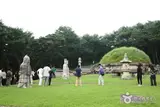
This is the site chosen as a royal tomb ground after King Taejo Yi Seong-gye, founder of the Joseon dynasty, died in 1408 (the 8th year of King Taejong), when King Taejong ordered a search for an auspicious burial site in areas such as Paju and Goyang; Kim In-gwi, then serving as Geomgyo Chamchan of the State Council, recommended the site, and it was finalized by Chief State Councillor Ha Ryun. Donggureung was built up gradually over the entire span of the Joseon dynasty, and it came to be called Donggureung ('Nine Eastern Tombs') only after Sureung, the tomb of the posthumously honored King Ikjong, became its ninth tomb in 1855 (the 6th year of King Cheoljong); before that, it was called Dongoreung ('Five Eastern Tombs') and later Dongchilleung ('Seven Eastern Tombs'). \nMoreLess
- 7
Guri Tower
구리타워
The Guri Resource Recovery Facility, home to Guri Tower, is an eco-friendly incineration facility capable of processing 200 tons of household waste per day, with its incineration process disclosed transparently to the public. Known at home and abroad as an outstanding example of overcoming NIMBY-ism, the facility receives more than 80,000 visitors each year, including local governments, related organizations, and members of the public. Notably, the smokestack of what was once seen purely as an unwelcome facility has been fitted with an observation deck and restaurant 100 meters above the ground, and the facility also includes an indoor swimming pool, soccer field, and gateball court, making it a leisure space for Guri residents. \nMoreLess
- 8Guri Donggureung Royal Tombs
구리 동구릉
This is the site chosen as a royal tomb ground after King Taejo Yi Seong-gye, founder of the Joseon dynasty, died in 1408 (the 8th year of King Taejong), when King Taejong ordered a search for an auspicious burial site in areas such as Paju and Goyang; Kim In-gwi, then serving as Geomgyo Chamchan of the State Council, recommended the site, and it was finalized by Chief State Councillor Ha Ryun. Donggureung was built up gradually over the entire span of the Joseon dynasty, and it came to be called Donggureung ('Nine Eastern Tombs') only after Sureung, the tomb of the posthumously honored King Ikjong, became its ninth tomb in 1855 (the 6th year of King Cheoljong); before that, it was called Dongoreung ('Five Eastern Tombs') and later Dongchilleung ('Seven Eastern Tombs'). \nMoreLess
Source: Korea Tourism Organization (TourAPI) · Machine-translated