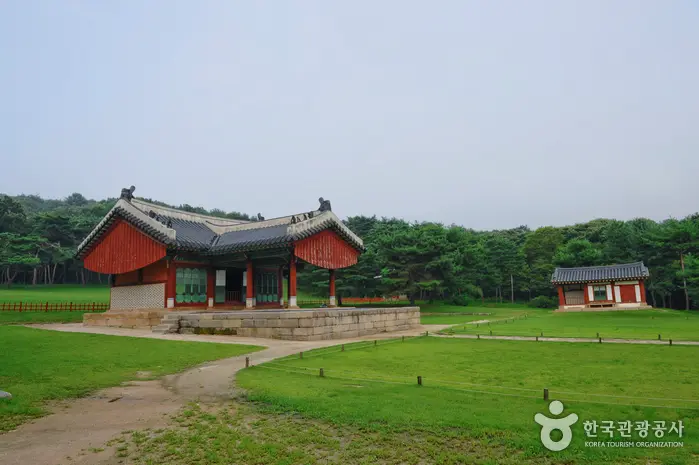
Strolling Through UNESCO-Designated Cultural Heritage Sites
6 stops · 7 hours
Goyang is a region rich in natural and cultural heritage. Seooreung and Seosamneung Royal Tombs, designated UNESCO World Heritage sites, are wonderful places for a quiet, contemplative stroll. Bukhansanseong Fortress, Haengjusanseong Fortress, and Ilsan Lake Park are also perfect spots for a light walk. The Horse Training Institute is renowned as a photography spot, and Wondang Herb Land lets you fill body and mind with the scent of herbs.
- Duration
- 7 hours
- Distance
- 32km
Along the way
- 1Goyang Seooreung Royal Tombs
고양 서오릉
Seooreung refers collectively to five royal tombs of the Joseon dynasty: Gyeongneung, Changneung, Ingneung, Myeongneung, and Hongneung. In addition to these five tombs, the grounds also include Sunchangwon, the tomb of Crown Prince Sunhoe, King Myeongjong's eldest son; Sugyeongwon, the tomb of Royal Consort Yeongbin Yi (birth mother of Crown Prince Sado); and, more recently, the relocated tomb of Lady Jang Hui-bin, a royal consort of King Sukjong. Given its location, almost as close as being within Seoul itself, it makes a great course for walking or jogging.\nMoreLess
- 2
Goyang Seosamneung Royal Tombs
고양 서삼릉
Seosamneung, Historic Site No. 200, gets its name from the fact that its three tombs — Huireung, Hyoreung, and Yereung — lie west of Seoul. Huireung is the tomb of Queen Janggyeong (of the Yun clan), second queen of King Jungjong, the 11th king of Joseon; Hyoreung is the tomb of King Injong, the 12th king, and his queen, Queen Inseong (of the Bak clan); and Yereung is the tomb of King Cheoljong, the 25th king, and his queen, Queen Cheorin (of the Kim clan). The grounds also include the tombs of three crown princes — Uiryeongwon (Crown Grandson Uiso, eldest son of Crown Prince Sado), Hyochangwon (Crown Prince Munhyo, eldest son of King Jeongjo), and Sogyeongwon (Crown Prince Sohyeon, eldest son of King Injo) — as well as 51 tombs of successive royal consorts, princes, and princesses, and a placenta chamber where the placentas of successive kings are interred. \nMoreLess
- 3Horse Training Institute (Wondang Stud Farm)
경마교육원(원당종마목장)
Wondang Stud Farm became widely known to the public after being used frequently as a filming location for popular dramas. Because it contains many hazardous facilities, the areas open to the public are limited, and rather than special attractions, visitors can mainly enjoy strolling through the pastoral scenery of horses grazing freely. However, since Wondang Stud Farm was not originally built for 'tourism' purposes, visitors should keep in mind that parking facilities, restrooms, and resting spaces such as benches are limited. \nMoreLess
- 4
Lunch (Wondanggol, Jwinuni Kong Maeul)
점심식당(원당골, 쥐눈이콩마을)
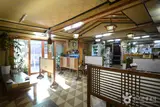
[Wondanggol] \nSpecializes in rice steamed in bamboo tubes. It has a quiet, cozy atmosphere and directly grows and supplies its own pesticide-free rice and vegetables. \n[Jwinuni Kong Maeul] \nA restaurant serving a Korean set meal (hanjeongsik) featuring jwinuni-kong (small black soybeans) as the main ingredient, popular as a well-being food known to be highly effective for the bladder, kidneys, and osteoporosis. The set meal includes doenjang stew made with jwinuni-kong, jwinuni-kong tofu pancakes, and a jwinuni-kong sauce salad, among other dishes. \nMoreLess
- 5
Haengjusanseong Fortress
행주산성
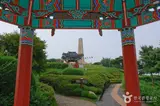
Haengjusanseong Fortress (Historic Site No. 56), built atop Deogyangsan Mountain, is the site of the Battle of Haengju, one of the three great victories of the Imjin War, in which some 2,300 defenders — including righteous army volunteers and monk soldiers — decisively defeated over 30,000 Japanese troops.\nMoreLess
- 6
Ilsan Lake Park
일산호수공원
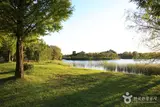
Ilsan Lake Park is the largest artificial lake park in Asia, covering an area of about 300,000 pyeong. With a waterside plaza, an artificial island, a 4.7km bicycle-only path circling the park, a children's playground, a nature study area, red-crowned cranes, a music fountain, over 100 species of wildflowers, and a dense forest of about 200,000 trees, it serves as a resting space for families and a learning ground where schools of all levels teach students about nature, earning its reputation as a popular resting spot in the greater Seoul area, and it is also famous as the venue for the Goyang Flower Fair and exhibitions.\nMoreLess
Source: Korea Tourism Organization (TourAPI) · Machine-translated