A Historical Journey Through the Joseon Dynasty and Modern History
5 stops · 8 hours
Gwangju, adjacent to Seoul, was home to a dense cluster of royal kilns that produced Joseon white porcelain from the 15th century onward. Today, as many as 82 sites related to Joseon white porcelain remain, and potters carrying on the legacy of their ancestors are still actively at work here. The area around Namhansanseong Fortress, the site of the Second Manchu Invasion, is popular as a hiking trail in the greater Seoul area, and Paldangho Lake, which supplies Seoul's drinking water, offers superb, refreshing scenery.
- Duration
- 8 hours
- Distance
- 60km
Along the way
- 1Namhansanseong Provincial Park
남한산성도립공원
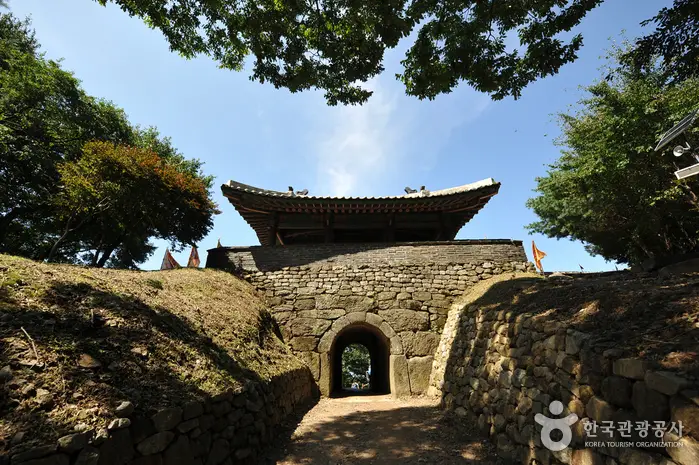
Four great fortresses once guarded the outskirts of Seoul: Gaeseong to the north, Suwon to the south, Ganghwa to the west, and Gwangju to the east. Namhansanseong Fortress stood at the eastern site, in Gwangju. Records indicate it was originally the royal citadel of Onjo, founder of Baekje and son of King Dongmyeong of Goguryeo, some 2,000 years ago, and there is also a record that it was built as Jujangseong Fortress in Hansanju during the Silla-Tang War, in the 13th year of King Munmu of Silla (673). Using this old site, the fortress was rebuilt and repaired several times over later generations, and it is said that full-scale construction began in earnest during the reign of King Gwanghae of Joseon (1621). \nMoreLess
- 2
Namhansanseong Traditional Food Village
남한산성 전통음식마을
Namhansanseong Fortress, a key military stronghold in Korean history since the Three Kingdoms period, served as a bastion of national defense from King Seonjo to King Sunjo of Joseon; completed under the 16th king, Injo, it is a cultural heritage site with over 300 years of history. At restaurants built in traditional hanok style, visitors can enjoy traditional foods such as steamed rice, acorn jelly, and native chicken. There are currently about 70 restaurants in the Namhansanseong Traditional Food Village.\nMoreLess
- 3
Cheonjinam Holy Site
천진암 성지
While the Catholic Church in most countries around the world began through the missionary work of foreign missionaries, Korea's Catholic Church began in 1779 through prominent scholars of the time — Yi Byeok, Gwon Il-sin, Jeong Yak-jong, Gwon Cheol-sin, and Yi Seung-hun. What began as an academic study of 'heavenly learning' (cheonhak) was elevated and developed at Cheonjinam, through 6-7 years of voluntary scholarly gatherings pursuing truth, into the religious faith of the Catholic Church, and that very site is Cheonjinam Holy Site. \nMoreLess

- 4
Paldangho Lake
팔당호
Paldangho Lake is an artificial lake spanning Toechon-myeon and Namjong-myeon in Gwangju City, Gyeonggi-do, holding about 250 million tons of water since the completion of Paldang Dam in 1973. Paldangho Lake has a water intake plant that supplies tap water to the Seoul and Gyeonggi region, and the scenery viewed from around the lakeshore is outstanding, making the area around Paldang Dam a tourist attraction in Gwangju. In particular, the road running along Paldangho Lake makes for a great drive. \nMoreLess
- 5
Gwangju Joseon White Porcelain Kiln Site
광주 조선백자 요지
The kiln sites throughout Gwangju County, densely packed with royal kilns that served as the center of Joseon white porcelain production from the 15th century onward, are a cradle of research into Joseon white porcelain and a living historical site that vividly preserves the traces of its development. Today in Gwangju, many later-generation potters, carrying on and developing this splendid ceramic art and culture, have set up 26 ceramic kilns and are pouring their heart and soul into recreating the porcelain of that era. \nMoreLess
Source: Korea Tourism Organization (TourAPI) · Machine-translated