A Day at a Charming Mountain Temple
7 stops · 8 hours
A day spent at charming mountain temples deep in nature. Simply sitting quietly inside a temple gives you a naturally healing feeling. Not all temples share the same atmosphere — from the small, cozy Jeonghyesa Temple to Seonamsa Temple, famous for its wild tea, to Songgwangsa Temple, one of Korea's Three Jewel Temples, immerse yourself in each temple's distinct charm. Enjoy a light, roughly 30-minute walk to Seonamsa Temple, and take in a drive around Juamho Lake as well.
- Duration
- 8 hours
- Distance
- 77km (incl. 2km walking trail)
Along the way
- 1
Jeonghyesa Temple
정혜사
Jeonghyesa is a branch temple of Hwaeomsa within the 19th district of the Jogye Order of Korean Buddhism. It originally belonged to Seungju County but was recently incorporated into Suncheon City, and nearby stand other historic temples such as Songgwangsa, Hwaeomsa, and Seonamsa. The temple was built on two stone terraces — the first terrace holds the dining hall, while the temple's main buildings were built on the second terrace, dividing the site into two spaces. Fitting the refined appearance of its Daeungjeon Hall, designated Treasure No. 804, Jeonghyesa is also known by the alternate name 'Gosa,' meaning 'old temple.' \nMoreLess
- 2
Seonamsa Valley
선암사 계곡
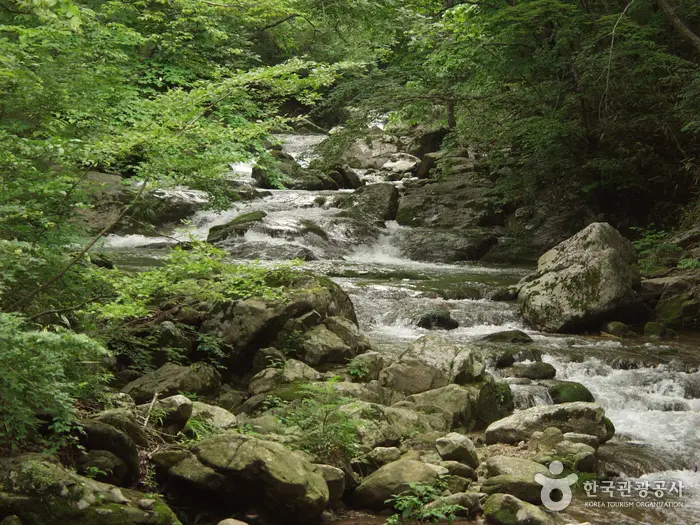
Located 27km from Suncheon along the eastern foot of Jogyesan Mountain, Seonamsa Valley is clear, pristine, and quiet. Spanning the valley is Seunseongyo Bridge (Treasure No. 400), a semicircular stone bridge said to have been built by the monk Hoam in the 39th year of King Sukjong of Joseon (1713). \nMoreLess
- 3
Seonamsa Temple
선암사
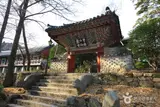
Located on the eastern foot of Jogyesan Mountain, Seonamsa traces its origins to Biroam, built by the monk Ado in the 7th year of King Seong of Baekje (529), while the present-day Seonamsa was founded by State Preceptor Doseon in the 1st year of King Gyeongmun of Silla, in the Dongni school tradition, one of the Nine Mountain Seon Schools. Around Seonamsa grow dense stands of centuries-old oak, camellia, maple, and chestnut trees, and its autumn foliage is especially famous. As one of the temples that best preserves traditional temple culture, it holds 7 Treasures as well as 12 local cultural assets, including its grand and ornate Daeungjeon Hall, Palsangjeon Hall, Wontongjeon Hall, gilt-bronze incense burner, and Iljumun Gate. Following the trail up from the left side of the main temple, visitors can see a rock-carved Buddha statue on a massive boulder 7m tall and 2m wide.\nMoreLess
- 4
Lunch (Jangwon Sikdang, Gilsang Sikdang)
점심식사(장원식당, 길상식당)
[Jangwon Sikdang] \nLocated in Suncheon, Jeollanam-do — the home of Korean flavor — Jangwon Sikdang is a long-established restaurant representative of the Seonamsa area. \nThe menu includes a wild greens set meal served with about 25 flavorful side dishes such as assorted greens, perilla leaves, pickled peppers, and cockles, as well as native chicken dishes and a simple yet filling wild greens bibimbap. \n[Gilsang Sikdang] \nA restaurant serving wild greens set meals, grilled deodeok (bellflower root) set meals, and whole boiled chicken (dakbaeksuk).\nMoreLess

- 5Traditional Wild Tea Experience Center
전통야생차 체험관
Located along the path to Seonamsa Temple on Jogyesan Mountain, this cozy center — surrounded by the sounds of sky, water, and wind — is a space where visitors can make and taste fragrant tea themselves, and experience the mountain hermitage atmosphere and meditation. Visitors can sample tea produced in Suncheon, and groups can make reservations to directly participate in various programs such as a tea ceremony experience.\nMoreLess
- 6
Juamho and Sangsaho Lakes
주암호와 상사호
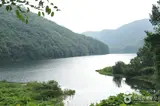
Completed over 8 years from 1984 to 1992 and holding about 770,700 tons of water, Juamho and Sangsaho lakes serve water regulation functions for the Gwangju and Jeonnam region, and are bordered by 145.5km of lakeside roads. With the Honam Expressway as its hub, National Routes 15, 18, and 27 connect Songgwangsa Temple and the Dolmen Park while encircling Juamho Lake, and Local Routes 818 and 857 lead on to Naganeupseong Folk Village and Sangsaho Lake, adding yet more beauty. Spread beneath the foothills of Jogyesan and Mohusan mountains, these lakes are an important tourism resource of Suncheon, offering the beauty of leisurely, abundant nature.\nMoreLess
- 7
Songgwangsa Temple
송광사
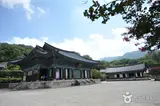
Located on the northern foot of Jogyesan Mountain, Songgwangsa, together with Haeinsa Temple in Hapcheon (the Dharma Jewel Temple) and Tongdosa Temple in Yangsan (the Buddha Jewel Temple), is known as one of Korea's Three Jewel Temples. It began when the monk Hyerin built a small hermitage in the late Silla period and called it Gilsangsa; it became the Sangha Jewel Temple after State Preceptor Bojo Jinul moved the Jeonghye Community here and made it a training ground for practice and meditation. It has produced 16 State Preceptors, including State Preceptor Bojo Jinul. \nMoreLess
Source: Korea Tourism Organization (TourAPI) · Machine-translated