Nature's Gift: White Lotus Pond and Pristine Tidal Flats
7 stops · 9 hours
Explore both Muan Hoesan White Lotus Pond, known as the largest natural habitat of white lotus in Asia, and the Muan tidal flats, Korea's first designated wetland protection area. The course begins at the historic site of Master Choui, the figure who established Korea's tea ceremony tradition, then passes the White Lotus Pond and the birthplace of pumba (a traditional street performance) before continuing on to the pristine tidal flats. Among these, the Muan Tidal Flat Ecology Center makes for a great learning space for children. Since this course covers considerable distance, it is recommended to take breaks along the way as needed.
- Duration
- 9 hours
- Distance
- 93.4km
Along the way
- 1
Master Choui Historic Site
초의선사 유적지
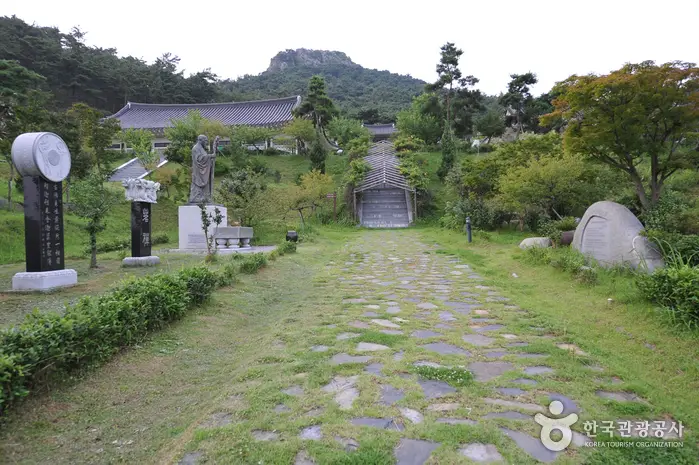
At the foot of Bongsusan Mountain in Wangsan-ri, Samhyang-myeon — the birthplace of the great monk Choui (Jang Ui-sun) — a memorial site has been established to honor his lofty spirit. On the grounds of his birth house, a restored birth home, a memorial hall, a memorial stele, a relics exhibition hall, and a tea ceremony hall have been built. \nMoreLess
- 2Muan Hoesan White Lotus Pond
무안 회산 백련지
Muan Hoesan White Lotus Pond is located in Bogyong-ri, Illo-eup, Muan County, Jeollanam-do. Covering an area of about 100,000 pyeong (roughly 330,000㎡), this pond is widely known as the largest natural habitat of white lotus in Asia. \nThis once perfectly ordinary pond was transformed into Korea's foremost white lotus habitat entirely thanks to the late Jeong Su-dong. One summer day in 1955, shortly after the Korean War ended, Jeong planted 12 lotus root stalks found by children along the edge of the reservoir. Having dreamed the night before of twelve cranes descending from the sky to land on the reservoir, Jeong is said to have protected and tended the white lotuses with great devotion and care. \nMoreLess
- 3
Birthplace of Pumba
품바 발상지
Cheonsachon, located in Uisan-ri, Illo-eup, is the historic site where 'Pumba' was born — the pioneering situational theater piece embodying the shared hope of ending the sorrow and grief of Korean history and welcoming the dawn of a hopeful new era. Pumba premiered in 1981 at the Illo-myeon public hall, adapted and directed by the late local poet and playwright Kim Si-ra, who had been engaged in cultural activities through the Inui Arts Association, and starring Jeong Gyu-su as the first Pumba. It has since set a record as the longest-running production, with over 4,000 performances at home and abroad and the largest cumulative audience.\nMoreLess
- 4
Lunch (Muan Sikdang)
점심식사(무안식당)
Thinly sliced beef with a deep yet bright, translucent red color, a chewy and clean flavor — this is Muan's proud onion-fed Hanwoo beef. Since Muan is the region with the highest onion production, even the cattle are fed onions. Muan Sikdang, the very first onion Hanwoo restaurant near the Muan-eup office, uses taebatji, a cut from the cow's foreleg, for its raw beef. Free of fat, chewy, and clean-tasting, it is the best of the best. It pairs wonderfully with raw crab marinated in soy sauce.\nMoreLess
- 5
Jogeumnaru Beach
조금나루 해수욕장
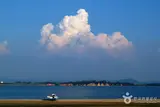
Jogeumnaru Beach is located in Songhyeon-ri, Mangun-myeon, about 12km southwest of Muan-eup. It is a beach blessed by nature, with a white sand beach over 4km long jutting out from the end of the village, backed by a dense pine forest. It was once an island that could only be reached by boat during low tide, but it is now connected to the mainland and offers ample space for activities, making it a popular destination for groups and gatherings during the summer vacation season. It is also well equipped with amenities such as showers, water stations, and restrooms, making it a great spot to camp overnight and enjoy the seaside atmosphere.\nMoreLess
- 6
Muan Tidal Flat Ecology Center
무안 생태갯벌센터
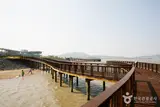
Located in Muan, Jeollanam-do, the Muan Tidal Flat Ecology Center is Korea's largest natural ecology learning center, established as part of the Yellow Sea ecosystem conservation project to teach visitors about the importance of wetland environments and tidal flats. The center consists of an indoor exhibition facility with a total floor area of 3,277㎡ across one basement and two above-ground floors, along with a 48,100㎡ tidal flat ecology park. Inside the exhibition hall is a 100-seat multipurpose theater where visitors can encounter tidal flat creatures through 3D imagery, and various facilities such as the Tidal Flat Ecology Hall and Tidal Flat Exploration Hall allow visitors to learn about the diverse characteristics of tidal flats and their inhabitants. \nMoreLess
- 7Doripo
도리포
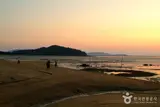
This is a resort area located at Doripo, the northwestern tip of the Haeje Peninsula, which forms the boundary between Muan County and Yeonggwang and Hampyeong Counties. With its long sandy beach, dense pine forest, and wide shoreline, it is well suited for swimming. \nA little further past the sandy beach lies Doripo Harbor, which juts far out into the sea, allowing you to watch the sunrise, while on the opposite side facing the Chilsan Sea, the sunset is spectacular — making this a place where you can enjoy both sunrise and sunset. \nMoreLess
Source: Korea Tourism Organization (TourAPI) · Machine-translated