A Taste of Mokpo's History, Culture, Nature, and Art
5 stops · 8 hours 30 minutes
A course experiencing the full breadth of Mokpo's nature, history, culture, and art. After admiring the uniquely scenic Gatbawi Rock, head to Mokpo's Culture Street for a museum tour. Along the neatly arranged street stand the Mokpo Culture & Art Center, the Mokpo Natural History Museum, the Mokpo Literature Museum, the Namnong Memorial Hall, and more. Samhakdo Island makes for a pleasant outdoor stop to rest along the way. Nojeokbong Peak, imbued with the spirit of Admiral Yi Sun-sin, and the Yudalsan Outdoor Sculpture Park offer the best views for taking in the whole of Mokpo at a glance.
- Duration
- 8 hours 30 minutes
- Distance
- 14.8km
Along the way
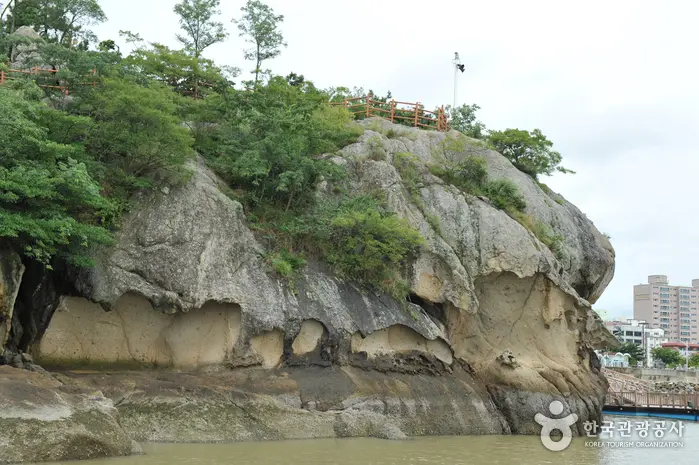
- 1Mokpo Gatbawi Rock
목포 갓바위
Gatbawi comprises Jungbawi ('monk rock') and Satgatbawi ('bamboo-hat rock'), though people commonly refer to Satgatbawi as either Jungbawi or Satgatbawi. The rock facing the sea is called Gatbawi because it looks like two monks wearing bamboo hats, while Jungbawi is said to be named for a great hermit monk who once lived there. \nMoreLess
- 2
Mokpo Culture Street
목포 문화의 거리
Mokpo Culture Street refers to the street where the Mokpo Culture & Art Center is located. Designated a model culture street of Jeollanam-do, it is home to a variety of exhibition halls befitting a city of museums. \nFirst, there is the National Maritime Relics Exhibition Hall, displaying ships salvaged from the seas off Sinan and Wando, and the Natural History Museum, which exhibits dinosaur models, fossils, minerals, and natural culture. The Namnong Memorial Hall, where you can experience the essence of Southern School painting, is also located here. \nMoreLess
- 3
Samhakdo Island
삼학도
Though it is now reclaimed land, Samhakdo Island, together with Yudalsan Mountain, was once the dream and future of the people of Mokpo. It is a place infused with the loneliness of wives who sent their husbands off onto the vast open sea, the hopes of merchants awaiting fishing boats, and the sorrow of the departed crossing from this world to the next. In this way, Samhakdo is a place woven through with the joys and sorrows of the people of Mokpo, and the grief of citizens who lived alongside it. \nMoreLess
- 4Nojeokbong Peak
노적봉
Nojeokbong refers to the massive rock peak on Yudalsan Mountain in Mokpo. This peak is famous for having been used by Admiral Yi Sun-sin during the Imjin War to repel the enemy, and it stands as a striking example of his sophisticated psychological warfare making use of the terrain.\nTo make up for a military disadvantage during the Imjin War, straw thatch was woven and draped over the rock so that it resembled a stack of stored grain, making it appear as though vast stores of military provisions were stockpiled there. Legend holds that the tactic of circling Nojeokbong at the time was later transformed into a cultural art form, developing into the folk dance Ganggangsullae.\nMoreLess
- 5Yudalsan Sculpture Park
유달산 조각공원
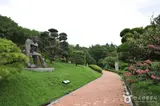
Located on a sunny slope of Yudalsan Mountain below Idungbong Peak, with a sweeping view over the city of Mokpo, Yudalsan Sculpture Park was Korea's first outdoor sculpture park, spanning about 14,000 pyeong (roughly 46,000㎡), and opened in October 1982. It features amenities such as an outdoor concert hall, fountain, and rest area, as well as the Buddhist temple Gwaneumsa. A traditional Korean hanok house is preserved in its original form, rare trees are planted around the sculptures, and doves — a symbol of peace — add to the harmony of the scene.\nMoreLess
Source: Korea Tourism Organization (TourAPI) · Machine-translated