Capturing the Highlights of a Trip to Jeongeup
14 stops · 8 hours
Jeongeup is a city embracing Naejangsan National Park. It is the birthplace of the Goryeo Dynasty folk ballad "Jeongeupsa" and home to the birthplace of General Jeon Bong-jun (the "Nokdu General"), who led the vanguard of the Donghak Peasant Revolution. The tour features Pihyangjeong Pavilion, a designated treasure nicknamed the "Foremost Pavilion in Honam"; Museongseowon Confucian Academy, commemorating the great Silla scholar Choe Chi-won; and the Kim Dong-su Historic House, showcasing late Joseon residential architecture. The scenic beauty of Lake Okjeongho, blooming with Gujeolcho (Siberian chrysanthemums), is also exceptional.
- Duration
- 8 hours
- Distance
- Approx. 70 km
Along the way
- 1
Jeongeupsa Park
정읍사공원
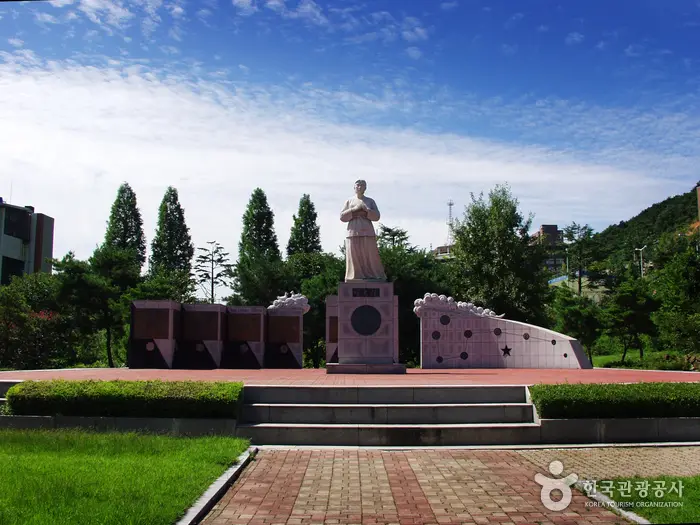
Jeongeup is the cradle and main stage of the 1894 Donghak Peasant Revolution, home to numerous related historical sites including the Hwangtoyeon Battle Site in Deokcheon-myeon, Gobu Gwana (government office) Site, Manseokbo Site, Malmok Market Site, and General Jeon Bong-jun's Historic House. Jeongeupsa Park is located in Sigi 3-dong in downtown Jeongeup, hugging Naejangsan Mountain of Naejangsan National Park, a famous mountain formed by the Noryeong Mountain Range branching off from the Sobaeksan Mountain Range. A Mangbuseok (faithful wife stone) and a memorial shrine are erected here. Built on a site of over 50,000 pyeong (approx. 165,000 m²), the park features sports facilities, and the nearby Art Center and Korean Traditional Music Institute are also well worth exploring.MoreLess
- 2
Donghak Peasant Revolution Centennial Monument
동학혁명100주년기념탑
Erected on May 11, 1997, to commemorate the 100th anniversary of the Donghak Peasant Revolution, this monument is situated overlooking Naejang Reservoir, right next to Naejangsan Sculpture Park. Made of granite, marble, and black stone, it consists of a main tower and a secondary tower. The quadrangular pyramid of the main tower made of Geochang granite symbolizes the ideals of the 1894 Donghak Peasant Revolution, while the white marble represents the spirit of national uprising. It was built to a height of 18.94 meters (recorded as 1,894m) to commemorate 1894, the year the Donghak Peasant Revolution broke out. MoreLess
- 3
Donghak Peasant Revolution Centennial Monument
동학혁명100주년기념탑
Erected on May 11, 1997, to commemorate the 100th anniversary of the Donghak Peasant Revolution, this monument is situated overlooking Naejang Reservoir, right next to Naejangsan Sculpture Park. Made of granite, marble, and black stone, it consists of a main tower and a secondary tower. The quadrangular pyramid of the main tower made of Geochang granite symbolizes the ideals of the 1894 Donghak Peasant Revolution, while the white marble represents the spirit of national uprising. It was built to a height of 18.94 meters (recorded as 1,894m) to commemorate 1894, the year the Donghak Peasant Revolution broke out.MoreLess
- 4
Okjeongho Gujeolcho Theme Park
옥정호 구절초 테마공원
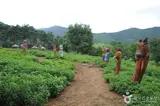
The Gujeolcho Park, historically known as Manggyeongdae, was first developed as an athletic park in 2003 and reborn as the Gujeolcho Theme Park in 2006. Located at the uppermost reaches of Lake Okjeongho with its splendid lakeside scenery, about 5 hectares of Gujeolcho (Siberian chrysanthemums) grow naturally in the pine forest across a total park area of 12 hectares, making it a beloved spot for nearby city dwellers to take relaxing strolls and unwind. MoreLess
- 5Museongseowon Confucian Academy, Jeongeup
정읍 무성서원
Museongseowon is located at the foot of Seonghwangsan Mountain, about 800 meters across a stream from Chilbo Elementary School. It was originally built as Taesansa by the local people to commemorate Goun Choe Chi-won, a Confucian scholar of the late Silla period who achieved great administrative accomplishments while serving as magistrate of Taesan-gun before being reassigned to Hapcheon-gun. During the reign of King Sukjong of Joseon, Shin Jam, who was the magistrate of Taein-hyeon at the time, was also enshrined here, and the name was changed to Museongseowon. In particular, valuable research materials related to seowon (Confucian academies) are preserved here. MoreLess
- 6
Lunch (Biwon Hanjeongsik, Baekhak Farm Horong Village)
점심식사(비원한정식, 백학농원 호롱마을)
[Biwon Hanjeongsik] Located right next to the Jeongeup Intercity Bus Terminal in Jeonbuk, Biwon Hanjeongsik is a renowned restaurant visited by many celebrities. It offers a variety of dishes such as seasoned smoked duck, samgyetang (ginseng chicken soup), sashimi, braised mackerel, grilled neobiani (marinated beef slices), butterfish stew, bossam (boiled pork wraps), fried oysters, and yukhoe (beef tartare), with sujeonggwa (cinnamon punch) served for dessert. [Baekhak Farm Horong Village] As the name "Farm" suggests, nearly all ingredients for the food served at the table are cultivated directly without pesticides. Fermented soybean paste (doenjang), red chili paste (gochujang), sesame oil, muk (acorn jelly), and tofu are all made in-house. Cattle and pigs are raised on food scraps and kept antibiotic-free.MoreLess
- 7
Jeongeupsa Park
정읍사공원
Jeongeup is the cradle and main stage of the 1894 Donghak Peasant Revolution, home to numerous related historical sites including the Hwangtoyeon Battle Site in Deokcheon-myeon, Gobu Gwana (government office) Site, Manseokbo Site, Malmok Market Site, and General Jeon Bong-jun's Historic House. Jeongeupsa Park is located in Sigi 3-dong in downtown Jeongeup, hugging Naejangsan Mountain of Naejangsan National Park, a famous mountain formed by the Noryeong Mountain Range branching off from the Sobaeksan Mountain Range. A Mangbuseok (faithful wife stone) and a memorial shrine are erected here. Built on a site of over 50,000 pyeong (approx. 165,000 m²), the park features sports facilities, and the nearby Art Center and Korean Traditional Music Institute are also well worth exploring. MoreLess
- 8Pihyangjeong Pavilion
정읍 피향정
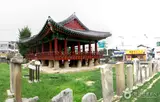
The name Pihyangjeong comes from the fragrant aroma of lotus flowers filling the surroundings from Sangyeonji (Upper Lotus Pond) and Hayeonji (Lower Lotus Pond) dug on the east and west sides. One of the most representative pavilions in the Honam region, it was originally built by the pond where Goun Choe Chi-won recited poetry and strolled while serving as magistrate of Taesan-gun in the 1st year of King Jeonggang of Silla (887). It is said to have been expanded during the reign of King Hyeonjong of Goryeo, and its current appearance is from its renovation by Magistrate Yu Geun during the reign of King Injo of Joseon.MoreLess
- 9Museongseowon Confucian Academy, Jeongeup
정읍 무성서원
Museongseowon is located at the foot of Seonghwangsan Mountain, about 800 meters across a stream from Chilbo Elementary School. It was originally built as Taesansa by the local people to commemorate Goun Choe Chi-won, a Confucian scholar of the late Silla period who achieved great administrative accomplishments while serving as magistrate of Taesan-gun before being reassigned to Hapcheon-gun. During the reign of King Sukjong of Joseon, Shin Jam, who was the magistrate of Taein-hyeon at the time, was also enshrined here, and the name was changed to Museongseowon. In particular, valuable research materials related to seowon (Confucian academies) are preserved here.MoreLess
- 10
Kim Dong-su's Historic House in Jeongeup
정읍김동수씨가옥
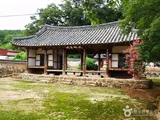
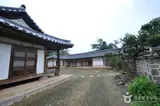
Showcasing the characteristics of a mid-Joseon upper-class residence, this house is a typical high-class dwelling often referred to as a "99-kan house." It was built in the 8th year of King Jeongjo (1784) by Kim Myeong-gwan, the sixth-generation ancestor of Kim Dong-su. It is said that Kim Myeong-gwan moved down from Hanyang, selected an auspicious site below Cheonghasan Mountain, and spent over 10 years completing this house, digging a pond of about 30 pyeong in front of the main gate. The house faces southeast on a typical auspicious site with Cheonghasan Mountain behind it and the clear waters of the upper Dongjingang River flowing in front. Entering through the sossuldaemun (elevated main gate) of the outer servants' quarters, one can see the harmoniously composed sarangchae (men's quarters). MoreLess
- 11
Kim Dong-su's Historic House in Jeongeup
정읍김동수씨가옥
Showcasing the characteristics of a mid-Joseon upper-class residence, this house is a typical high-class dwelling often referred to as a "99-kan house." It was built in the 8th year of King Jeongjo (1784) by Kim Myeong-gwan, the sixth-generation ancestor of Kim Dong-su. It is said that Kim Myeong-gwan moved down from Hanyang, selected an auspicious site below Cheonghasan Mountain, and spent over 10 years completing this house, digging a pond of about 30 pyeong in front of the main gate. The house faces southeast on a typical auspicious site with Cheonghasan Mountain behind it and the clear waters of the upper Dongjingang River flowing in front. Entering through the sossuldaemun (elevated main gate) of the outer servants' quarters, one can see the harmoniously composed sarangchae (men's quarters).MoreLess
- 12
Lunch (Biwon Hanjeongsik, Baekhak Farm Horong Village)
점심식사(비원한정식, 백학농원 호롱마을)
[Biwon Hanjeongsik] Located right next to the Jeongeup Intercity Bus Terminal in Jeonbuk, Biwon Hanjeongsik is a renowned restaurant visited by many celebrities. It offers a variety of dishes such as seasoned smoked duck, samgyetang (ginseng chicken soup), sashimi, braised mackerel, grilled neobiani (marinated beef slices), butterfish stew, bossam (boiled pork wraps), fried oysters, and yukhoe (beef tartare), with sujeonggwa (cinnamon punch) served for dessert. [Baekhak Farm Horong Village] As the name "Farm" suggests, nearly all ingredients for the food served at the table are cultivated directly without pesticides. Fermented soybean paste (doenjang), red chili paste (gochujang), sesame oil, muk (acorn jelly), and tofu are all made in-house. Cattle and pigs are raised on food scraps and kept antibiotic-free. MoreLess
- 13Pihyangjeong Pavilion
정읍 피향정
The name Pihyangjeong comes from the fragrant aroma of lotus flowers filling the surroundings from Sangyeonji (Upper Lotus Pond) and Hayeonji (Lower Lotus Pond) dug on the east and west sides. One of the most representative pavilions in the Honam region, it was originally built by the pond where Goun Choe Chi-won recited poetry and strolled while serving as magistrate of Taesan-gun in the 1st year of King Jeonggang of Silla (887). It is said to have been expanded during the reign of King Hyeonjong of Goryeo, and its current appearance is from its renovation by Magistrate Yu Geun during the reign of King Injo of Joseon. MoreLess
- 14
Okjeongho Gujeolcho Theme Park
옥정호 구절초 테마공원
The Gujeolcho Park, historically known as Manggyeongdae, was first developed as an athletic park in 2003 and reborn as the Gujeolcho Theme Park in 2006. Located at the uppermost reaches of Lake Okjeongho with its splendid lakeside scenery, about 5 hectares of Gujeolcho (Siberian chrysanthemums) grow naturally in the pine forest across a total park area of 12 hectares, making it a beloved spot for nearby city dwellers to take relaxing strolls and unwind.MoreLess
Source: Korea Tourism Organization (TourAPI) · Machine-translated