A Thorough Look Around Jeonju Hanok Village and Nearby Attractions
15 stops · 6 hours
Jeonju Hanok Village, where hanok houses with black-tiled roofs and stone walls cluster together, is a place to encounter traditional culture and history. This course gathers the must-visit spots within the hanok village. Attractions await along every stretch of the path from Gyeonggijeon Shrine and Jeondong Cathedral up to Omokdae Pavilion. To taste bibimbap, Jeonju's signature dish, you'll need to head out to the city center where Jeonju Gaeksa (guesthouse) stands.
- Duration
- 6 hours
- Distance
- Approx. 12km (incl. distance within Jeonju Hanok Village)
Along the way
- 1
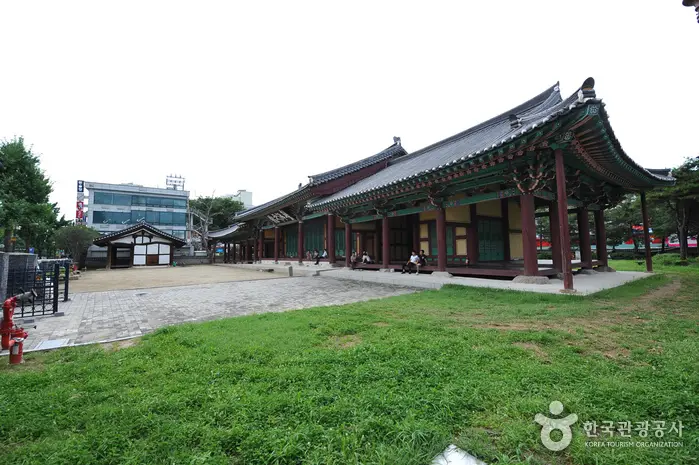
Jeonju Pungpaejigwan (former Jeonju Gaeksa)
전주 풍패지관 (구, 전주객사)
Pungpaejigwan was designated Treasure No. 583 on March 31, 1975. A gaeksa, also called gaekgwan, was a type of government guesthouse during the Goryeo and Joseon periods where officials were received and lodged by royal order. Inside its shrine chamber, a wooden tablet (gwolpae) representing the king was enshrined, before which officials performed the "manggwollye" rite of paying respects to the monarch from afar. It consists of a four-bay-wide, two-bay-deep building with a gabled roof joined to another four-bay-wide, two-bay-deep building with a hip-and-gable roof. MoreLess
- 2Jeonju Pungnammun Gate
전주 풍남문
When the Joseon dynasty was founded, Jeonju was regarded as important as the dynasty's ancestral home and was elevated to Wansanyusubu in the first year of King Taejo's reign (1392), becoming the capital of Jeolla-do overseeing the Honam region. After the Qin dynasty, the man who reunified China was Emperor Gaozu of Han, Liu Bang, who hailed from Pungpae (present-day Pei County, Jiangsu Province). Jeonju was the ancestral hometown of King Taejo Yi Seong-gye, founder of the Joseon dynasty. For this reason, in comparison with Liu Bang's hometown of Pungpae, Jeonju was often called by names such as "Pungpaehyang" or "Pungpaejihyang" in the past.MoreLess
- 3
Jeonju Pungpaejigwan (former Jeonju Gaeksa)
전주 풍패지관 (구, 전주객사)
Pungpaejigwan was designated Treasure No. 583 on March 31, 1975. A gaeksa, also called gaekgwan, was a type of government guesthouse during the Goryeo and Joseon periods where officials were received and lodged by royal order. Inside its shrine chamber, a wooden tablet (gwolpae) representing the king was enshrined, before which officials performed the "manggwollye" rite of paying respects to the monarch from afar. It consists of a four-bay-wide, two-bay-deep building with a gabled roof joined to another four-bay-wide, two-bay-deep building with a hip-and-gable roof.MoreLess
- 4Jeonju Pungnammun Gate
전주 풍남문
When the Joseon dynasty was founded, Jeonju was regarded as important as the dynasty's ancestral home and was elevated to Wansanyusubu in the first year of King Taejo's reign (1392), becoming the capital of Jeolla-do overseeing the Honam region. After the Qin dynasty, the man who reunified China was Emperor Gaozu of Han, Liu Bang, who hailed from Pungpae (present-day Pei County, Jiangsu Province). Jeonju was the ancestral hometown of King Taejo Yi Seong-gye, founder of the Joseon dynasty. For this reason, in comparison with Liu Bang's hometown of Pungpae, Jeonju was often called by names such as "Pungpaehyang" or "Pungpaejihyang" in the past. MoreLess
- 5Gyeonggijeon Shrine
경기전
This is a representative heritage site of King Taejo Yi Seong-gye, founder of Joseon. Within the grounds, designated Historic Site No. 339, stands the royal portrait of Yi Seong-gye (designated Treasure No. 931) and Jogyeongmyo Shrine (designated Tangible Cultural Heritage No. 16). It was founded in the 10th year of King Taejong's reign (1410) to enshrine the portrait of King Taejo, founder of the Joseon dynasty. MoreLess
- 6
Lunch (Gajok Hoegwan, Seongmidang)
점심식사(가족회관, 성미당)
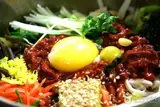
[Gajok Hoegwan] Gajok Hoegwan's bibimbap is made with rice cooked in ox-bone broth richer than milk. Cooking rice in ox-bone broth coats the grains with protein and fat, giving it full nutrition and keeping the rice from clumping so it mixes well when stirred. [Seongmidang] Seongmidang, designated as a Jeollabuk-do local food restaurant, has kept its old-fashioned flavor unchanged for 48 years. Its main dishes specialize in yukhoe bibimbap (raw beef bibimbap), samgyetang (ginseng chicken soup), and tteokguk (rice cake soup).MoreLess
- 7Jeondong Cathedral
전주전동성당
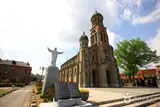
Jeondong Cathedral in Jeonju, designated Historic Site No. 288, was built on the site where Catholics were martyred during the Joseon period. This cathedral stands just outside Pungnammun Gate in Jeondong, Jeonju-si, Jeollabuk-do, where Catholic believers were once executed. The cathedral building was constructed during the Japanese colonial period; the design was entrusted to Father Poinel, who also designed Myeongdong Cathedral in Seoul, and it was completed after 23 years. MoreLess
- 8Omokdae and Imokdae
오목대와 이목대
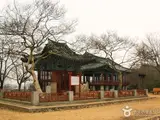
Omokdae, built on a cliff-like hill along the four-lane road north of Hanbyeokdang Pavilion and Jeonju Hyanggyo, is the place where Yi Seong-gye stopped by in the 6th year of King U of late Goryeo (1380) while returning from defeating Japanese pirates at Hwangsan, Unbong. He stopped here, where his ancestor Mokjo had once lived, to celebrate his victory; later, Emperor Gojong erected a stele in his own handwriting commemorating King Taejo's visit here. Crossing the pedestrian overpass from here leads to Imokdae, located at the foot of Seungamsan Mountain, home to Chimyeongjasan, a Catholic holy site. MoreLess
- 9Gyeonggijeon Shrine
경기전
This is a representative heritage site of King Taejo Yi Seong-gye, founder of Joseon. Within the grounds, designated Historic Site No. 339, stands the royal portrait of Yi Seong-gye (designated Treasure No. 931) and Jogyeongmyo Shrine (designated Tangible Cultural Heritage No. 16). It was founded in the 10th year of King Taejong's reign (1410) to enshrine the portrait of King Taejo, founder of the Joseon dynasty.MoreLess
- 10
Jeonju Hanok Village
전주한옥마을
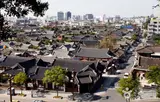
Jeonju Hanok Village is located in Pungnam-dong and Gyo-dong, Jeonju. Some 800 hanok, Korea's traditional houses, are clustered densely here. Preserving the old amid a rapidly changing city, Jeonju Hanok Village is famous as a place to experience Korea's old traditions.MoreLess
- 11
Jeonju Traditional Hanji Center
전주전통한지원
At the Jeonju Traditional Hanji Center, traditional hanji (Korean paper) making techniques are faithfully reproduced, and only pure Korean hanji infused with a thousand years of spirit is produced here. More than 80% of the hanji produced here is exported to Japan, with the rest consumed domestically. Unlike other papers, hanji is a precious heritage steeped in the craftsmanship of our ancestors, and hanji itself is a work of art. Here you can learn the process of making hanji, including sheet-forming, pattern-making, and drying. MoreLess
- 12
Lunch (Gajok Hoegwan, Seongmidang)
점심식사(가족회관, 성미당)
[Gajok Hoegwan] Gajok Hoegwan's bibimbap is made with rice cooked in ox-bone broth richer than milk. Cooking rice in ox-bone broth coats the grains with protein and fat, giving it full nutrition and keeping the rice from clumping so it mixes well when stirred. [Seongmidang] Seongmidang, designated as a Jeollabuk-do local food restaurant, has kept its old-fashioned flavor unchanged for 48 years. Its main dishes specialize in yukhoe bibimbap (raw beef bibimbap), samgyetang (ginseng chicken soup), and tteokguk (rice cake soup). MoreLess
- 13
Jeonju Traditional Hanji Center
전주전통한지원
At the Jeonju Traditional Hanji Center, traditional hanji (Korean paper) making techniques are faithfully reproduced, and only pure Korean hanji infused with a thousand years of spirit is produced here. More than 80% of the hanji produced here is exported to Japan, with the rest consumed domestically. Unlike other papers, hanji is a precious heritage steeped in the craftsmanship of our ancestors, and hanji itself is a work of art. Here you can learn the process of making hanji, including sheet-forming, pattern-making, and drying.MoreLess
- 14Omokdae and Imokdae
오목대와 이목대
Omokdae, built on a cliff-like hill along the four-lane road north of Hanbyeokdang Pavilion and Jeonju Hyanggyo, is the place where Yi Seong-gye stopped by in the 6th year of King U of late Goryeo (1380) while returning from defeating Japanese pirates at Hwangsan, Unbong. He stopped here, where his ancestor Mokjo had once lived, to celebrate his victory; later, Emperor Gojong erected a stele in his own handwriting commemorating King Taejo's visit here. Crossing the pedestrian overpass from here leads to Imokdae, located at the foot of Seungamsan Mountain, home to Chimyeongjasan, a Catholic holy site.MoreLess
- 15
Jeonju Hanok Village
전주한옥마을
Jeonju Hanok Village is located in Pungnam-dong and Gyo-dong, Jeonju. Some 800 hanok, Korea's traditional houses, are clustered densely here. Preserving the old amid a rapidly changing city, Jeonju Hanok Village is famous as a place to experience Korea's old traditions. MoreLess
Source: Korea Tourism Organization (TourAPI) · Machine-translated