From the Three Kingdoms to Modern Times: The Stories Held by Iksan
17 stops · 7 hours
Iksan is a gem of a town that holds within it history spanning from ancient times through the Three Kingdoms period to the modern era. Explore Mireuksaji Temple Site, which keeps many secrets, Seodong Park with its legend of King Mu of Baekje, and the National Treasure Wanggung-ri Five-Story Stone Pagoda along with its relics exhibition hall. Modern-era buildings registered as cultural heritage - such as the former Ikok Irrigation Association office, Chunpo Station, and the former Japanese farm house - are also well preserved.
- Duration
- 7 hours
- Distance
- Approx. 40km
Along the way
- 1
Iksan Ssangneung (Twin Tombs)
익산 쌍릉
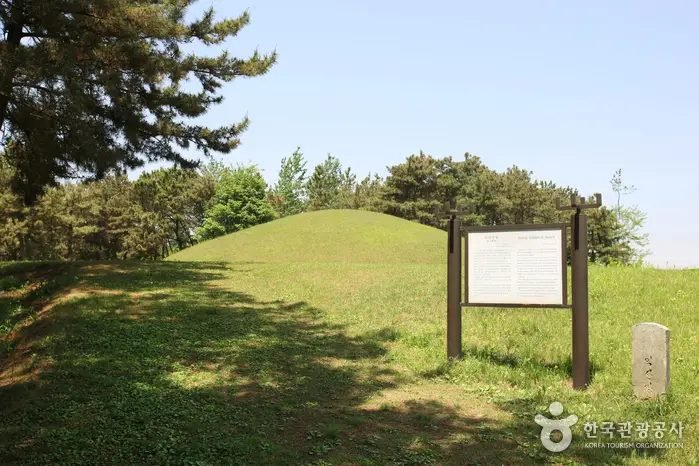
Iksan Ssangneung is a pair of late-Baekje corridor-style stone-chamber tombs, designated a Historic Site on January 21, 1963. The two burial mounds sit about 200m apart from east to west; the eastern tomb is called "Daewangmoe" and the western tomb "Sowangmoe." Both interiors follow the same style as the stone chambers of the Neungsan-ri tombs in Buyeo, a style from the early 7th century, the late Baekje period. Given that the nearby Mireuksaji Temple Site was founded during the reign of King Mu of Baekje, this tomb is thought likely to be the burial site of King Mu and his queen.MoreLess
- 2
Iksan Mireuksaji (Mireuksa Temple Site)
익산 미륵사지
The founding of Mireuksa Temple, the largest temple complex of Baekje, is recorded in historical records. Madong, who became king after marrying Princess Seonhwa of Silla and is known as King Mu (the 30th king of Baekje, r. 600-641), was traveling with Princess Seonhwa to visit Master Jimyeong at Sajasa Temple on Yonghwasan Mountain (present-day Mireuksan Mountain). At that moment, the Mireuk Triad suddenly appeared from within a pond, and this became the occasion for founding Mireuksa Temple.MoreLess
- 3
Seodong Park
서동공원
Seodong Park is a refreshing sculpture park bordering Geumma Reservoir where you can enjoy cycling and strolling through the height of summer. It features 98 sculptures, including statues of Princess Seonhwa and Prince Seodong and a sculpture based on the "Seodongyo" (Song of Seodong). A statue of King Mu stands in the central plaza, and the sculptures of the twelve zodiac guardians add extra enjoyment as you reflect on their meaning while taking photos.MoreLess
- 4
Iksan Chunpo Station
익산 춘포역사
Iksan Chunpo Station is a station building located in Deoksil-ri, Chunpo-myeon, Iksan-si, Jeollabuk-do. It was designated a Registered Cultural Heritage on November 11, 2005, and is owned by the Korea Railroad Corporation. With a canopy over the entrance facing the plaza and a projecting perpendicular gabled roof along the tracks, it is regarded, along with Impi Station in Gunsan, as a building that well illustrates the typical form of small railway stations during the Japanese colonial period, and it holds both architectural and railway-history value. MoreLess
- 5
Iksan Ssangneung (Twin Tombs)
익산 쌍릉
Iksan Ssangneung is a pair of late-Baekje corridor-style stone-chamber tombs, designated a Historic Site on January 21, 1963. The two burial mounds sit about 200m apart from east to west; the eastern tomb is called "Daewangmoe" and the western tomb "Sowangmoe." Both interiors follow the same style as the stone chambers of the Neungsan-ri tombs in Buyeo, a style from the early 7th century, the late Baekje period. Given that the nearby Mireuksaji Temple Site was founded during the reign of King Mu of Baekje, this tomb is thought likely to be the burial site of King Mu and his queen.MoreLess
- 6
Lunch (Bonhyang)
점심식사(본향)
Bonhyang, which opened for business in October 2002, specializes in dishes made with yam (ma). It has been designated a Master by the Korea Grand Masters Association for Seodong yam cuisine and was selected as one of the Ministry of Culture, Sports and Tourism's Top 100 Foods in 2007. Bonhyang serves "maeyak-bap" (yam rice) with every hanjeongsik (Korean set meal), and hanjeongsik is served for a minimum of 3 people. Besides hanjeongsik, Bonhyang also offers a variety of dishes through its a la carte menu. MoreLess
- 7
Iksan Mireuksaji (Mireuksa Temple Site)
익산 미륵사지
The founding of Mireuksa Temple, the largest temple complex of Baekje, is recorded in historical records. Madong, who became king after marrying Princess Seonhwa of Silla and is known as King Mu (the 30th king of Baekje, r. 600-641), was traveling with Princess Seonhwa to visit Master Jimyeong at Sajasa Temple on Yonghwasan Mountain (present-day Mireuksan Mountain). At that moment, the Mireuk Triad suddenly appeared from within a pond, and this became the occasion for founding Mireuksa Temple. MoreLess
- 8
Lunch (Bonhyang)
점심식사(본향)
Bonhyang, which opened for business in October 2002, specializes in dishes made with yam (ma). It has been designated a Master by the Korea Grand Masters Association for Seodong yam cuisine and was selected as one of the Ministry of Culture, Sports and Tourism's Top 100 Foods in 2007. Bonhyang serves "maeyak-bap" (yam rice) with every hanjeongsik (Korean set meal), and hanjeongsik is served for a minimum of 3 people. Besides hanjeongsik, Bonhyang also offers a variety of dishes through its a la carte menu.MoreLess
- 9
Iksan Wanggung-ri Five-Story Stone Pagoda
익산 왕궁리 오층석탑
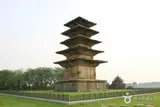
This stone pagoda was designated a National Treasure on January 1, 1997. It stands about 2km south of Wanggung-myeon, Iksan-si, Jeollabuk-do, known as the capital of the Mahan period. It consists of a five-story pagoda body set on a single-tier base; the base, which had been buried, was dismantled and repaired in 1965 to restore the pagoda to its original form.MoreLess
- 10
Seodong Park
서동공원
Seodong Park is a refreshing sculpture park bordering Geumma Reservoir where you can enjoy cycling and strolling through the height of summer. It features 98 sculptures, including statues of Princess Seonhwa and Prince Seodong and a sculpture based on the "Seodongyo" (Song of Seodong). A statue of King Mu stands in the central plaza, and the sculptures of the twelve zodiac guardians add extra enjoyment as you reflect on their meaning while taking photos. MoreLess
- 11
Iksan Wanggung-ri Five-Story Stone Pagoda
익산 왕궁리 오층석탑
This stone pagoda was designated a National Treasure on January 1, 1997. It stands about 2km south of Wanggung-myeon, Iksan-si, Jeollabuk-do, known as the capital of the Mahan period. It consists of a five-story pagoda body set on a single-tier base; the base, which had been buried, was dismantled and repaired in 1965 to restore the pagoda to its original form.MoreLess
- 12
Wanggung-ri Relics Exhibition Hall
왕궁리 유적전시관
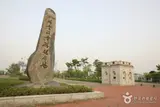
This site, designated a Historic Site on September 17, 1998, covers an area of 216,862m2. Also known as "Wanggung-ri Fortress Site," it is associated with several theories: that it was the capital of Mahan, that King Mu of Baekje moved the capital here or built a secondary capital here, that it was the site of An Seung's Bodeok Kingdom, or that it was the capital of Later Baekje's Gyeon Hwon. Excavation surveys suggest the site was formed over at least three periods, from the late Baekje through the late Unified Silla period. Two roof-tile kilns believed to date from the Unified Silla period were discovered 30m east of the stone pagoda.MoreLess
- 13
Wanggung-ri Relics Exhibition Hall
왕궁리 유적전시관
This site, designated a Historic Site on September 17, 1998, covers an area of 216,862m2. Also known as "Wanggung-ri Fortress Site," it is associated with several theories: that it was the capital of Mahan, that King Mu of Baekje moved the capital here or built a secondary capital here, that it was the site of An Seung's Bodeok Kingdom, or that it was the capital of Later Baekje's Gyeon Hwon. Excavation surveys suggest the site was formed over at least three periods, from the late Baekje through the late Unified Silla period. Two roof-tile kilns believed to date from the Unified Silla period were discovered 30m east of the stone pagoda.MoreLess
- 14
Iksan Former Ikok Irrigation Association Office and Warehouse
익산 구 익옥수리조합 사무실 및 창고
The former office and warehouse of the Ikok Irrigation Association in Iksan was designated a Registered Cultural Heritage in 2005. This building served as the office of the Ikok Irrigation Association, which was established by Japanese landlords to increase rice production. Founded under the pretext of land improvement and irrigation projects, the association burdened local farmers with excessive construction costs and water taxes, driving many into ruin - bearing witness to the history of Japan's exploitation of Korea's modern agriculture during the colonial period.MoreLess
- 15
Iksan Former Ikok Irrigation Association Office and Warehouse
익산 구 익옥수리조합 사무실 및 창고
The former office and warehouse of the Ikok Irrigation Association in Iksan was designated a Registered Cultural Heritage in 2005. This building served as the office of the Ikok Irrigation Association, which was established by Japanese landlords to increase rice production. Founded under the pretext of land improvement and irrigation projects, the association burdened local farmers with excessive construction costs and water taxes, driving many into ruin - bearing witness to the history of Japan's exploitation of Korea's modern agriculture during the colonial period. MoreLess
- 16
Iksan Chunpo Station
익산 춘포역사
Iksan Chunpo Station is a station building located in Deoksil-ri, Chunpo-myeon, Iksan-si, Jeollabuk-do. It was designated a Registered Cultural Heritage on November 11, 2005, and is owned by the Korea Railroad Corporation. With a canopy over the entrance facing the plaza and a projecting perpendicular gabled roof along the tracks, it is regarded, along with Impi Station in Gunsan, as a building that well illustrates the typical form of small railway stations during the Japanese colonial period, and it holds both architectural and railway-history value.MoreLess
- 17
Iksan Chunpo-ri Former Japanese Farm House
익산 춘포리 구 일본인 농장 가옥
The former Japanese (Sechon) farm house in Chunpo-ri, Iksan is an old Japanese farmhouse located in Chunpo-ri, Chunpo-myeon, Iksan-si, Jeollabuk-do. It is a two-story building constructed within the farm in the 1940s, with a building area of 106.78m2 and a total floor area of 139.83m2, built in Japanese style with wooden planks joined together. It stood within the Hosokawa (細川) Farm, one of the representative large-scale farms in the Jeollabuk-do region. The farm was owned by the father of former Japanese Prime Minister Hosokawa Morihiro (細川護熙), and it was home to a Japanese farm overseer. MoreLess
Source: Korea Tourism Organization (TourAPI) · Machine-translated